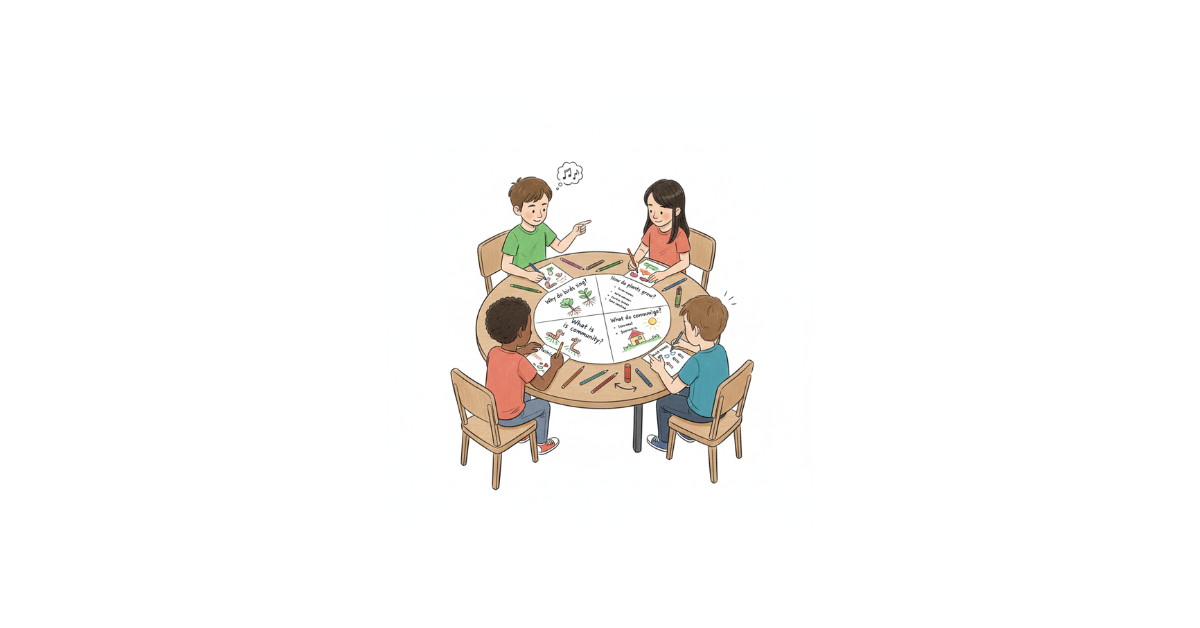
In my last post, I shared silent station ideas for secondary classrooms. A number of those activities translate well to elementary with the right scaffolding, and this post expands on them with additional ideas specifically designed for younger students.
One key difference in elementary station rotation is the role of independence. Quiet work only happens when students feel confident about what to do, how to do it, and what the finished product should look like. For this reason, I recommend introducing each activity during whole-group instruction or a teacher-led station before expecting students to complete it on their own.
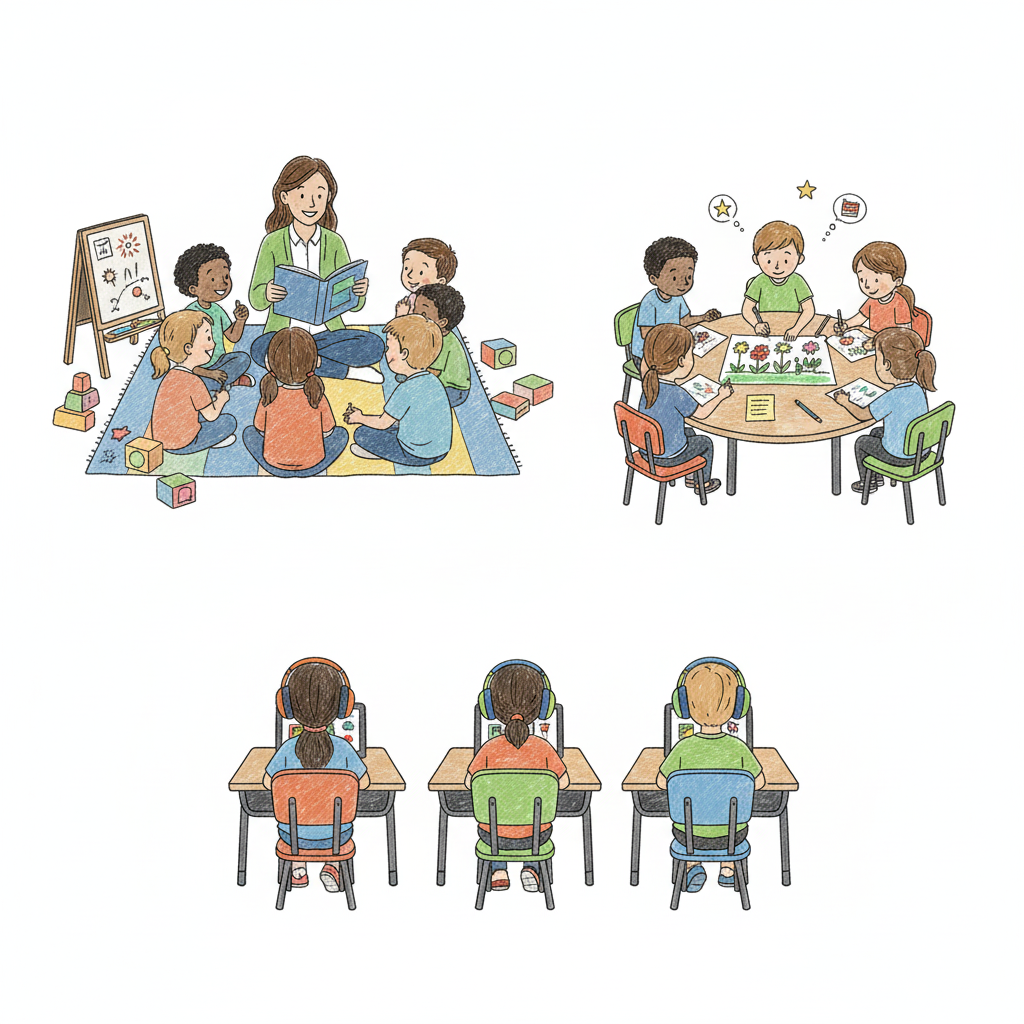
Once those foundations are in place, here are six station ideas that invite collaboration while keeping the noise level down.
1. Virtual (or Offline) Scavenger Hunt
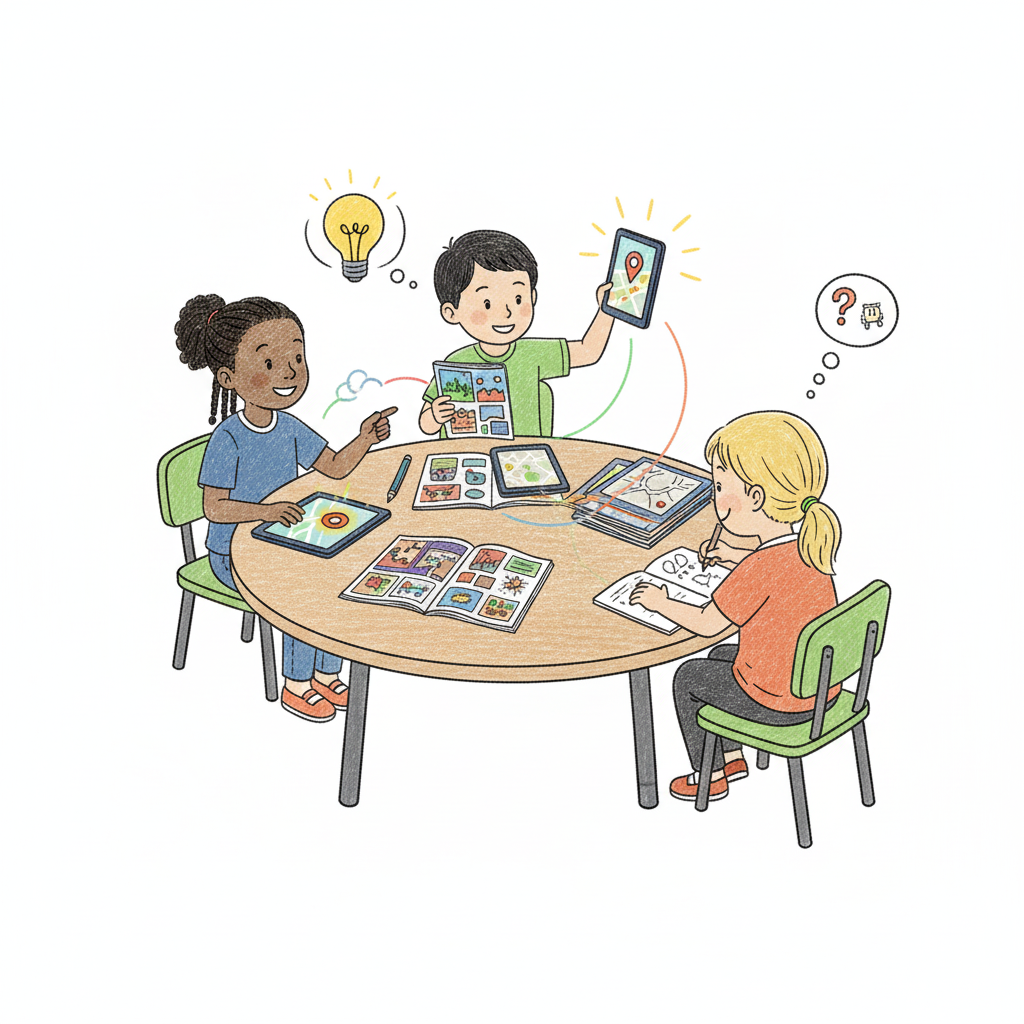
The activity starts the same way it did in the secondary blog post: Give students a series of clues to research online. At the station, they can collaborate on a shared Google Slides deck where each slide answers one clue. There are so many uses for this activity, but I’ve found it works especially well at the start or end of a unit. Teachers can use this strategy at the beginning of a learning cycle to help students build background knowledge or explore new content. Alternatively, it works well at the end of a unit to provide students with a meaningful review of important information.
There are three ways to do this effectively, depending on the students’ ages. First, teachers can provide a list of curated resources via their learning management system (LMS) for students to explore. Second, teachers who want students to practice online searching can create a customized Google search engine to limit the websites students see when searching for information. Third, teachers who want to provide students with a break from the screen can make this entire experience a silent, offline scavenger hunt, with students exploring books, magazines, and other offline sources at an offline station to find information. Instead of a Google Slides presentation, they can write and draw on poster paper with clues written at the top.
Example: Grade 3 Science — Exploring Plant and Animal Needs
Objective: Students identify what living things need to survive.
Station Setup:
- Each group silently adds one image and one sentence per clue.
- Provide a shared Google Slides deck or set of poster papers with one clue per slide or page:
- Find a picture of a place where animals get water.
- Add a picture of something plants need to grow.
- Show an example of an animal’s shelter.
- Students draw or pull images from a teacher-approved image bank or from a set of printed resource materials.
- Each group silently adds one drawing or image and one sentence per clue.
2. Collaborative Collage
For this elementary spin on Graffiti Team Time, you’ll ask students to contribute ideas to a poster using images and words from magazines and print resources rather than generating their own. Pose a question or the name of a concept at the top of a poster paper and provide magazines, scissors, and glue sticks so they can paste clippings that connect to the idea. These clippings might show the theme of a story, examples of even and odd quantities, or visuals that explain a concept you are introducing.
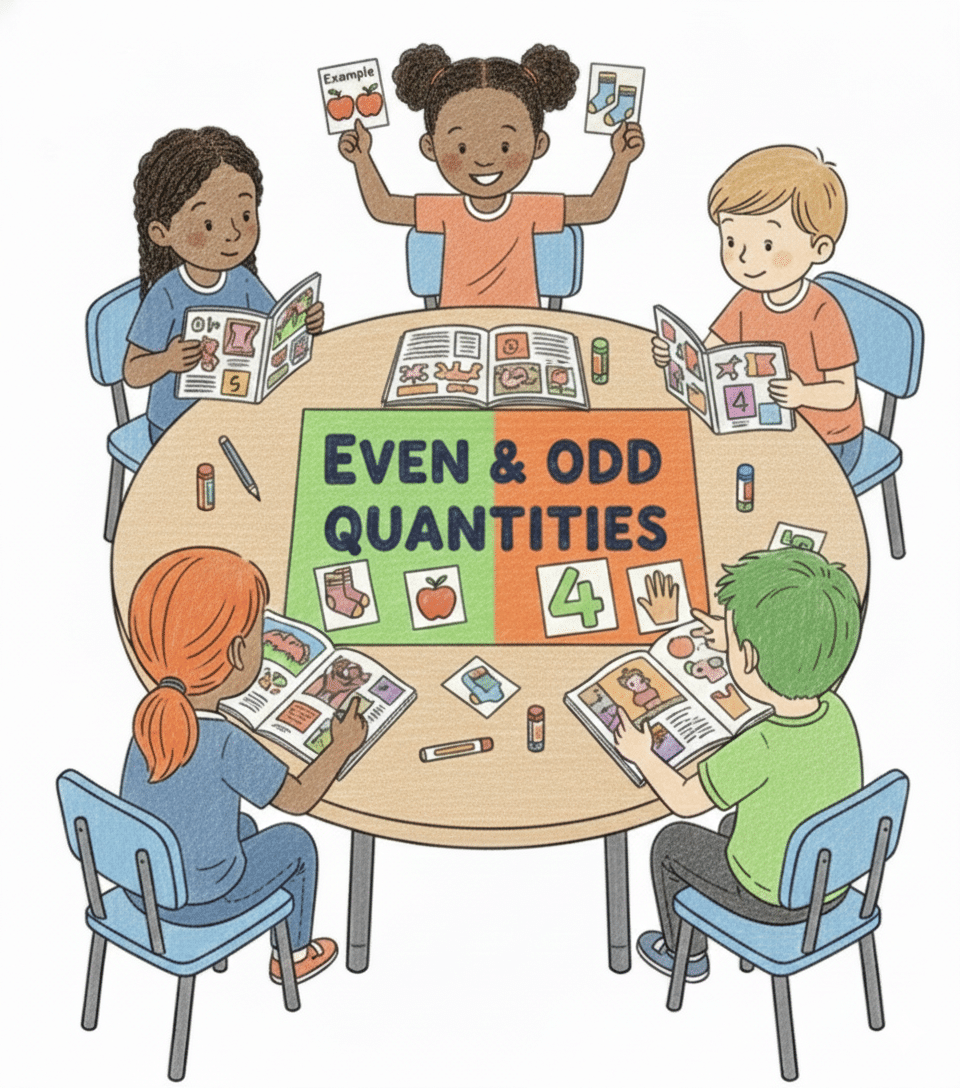
Example: Grade 2 Math — Sorting Items by Attributes
Objective: Students sort objects into categories based on a shared feature.
Station Setup:
- At the top of each poster, write a category such as shapes, colors, or amounts (even/odd).
- Students flip through magazines to find, cut, and glue pictures that match the category.
- They silently add more items or adjust the layout if something is misplaced.
- When they rotate away, the next group expands the collage.
3. Read Aloud (or Podcast) + Sketch
As I shared in the secondary version of this activity: Have students listen to a podcast segment (with headphones!) at a station covered in butcher paper. As they listen, they sketch images, quotes, or symbols that capture key ideas.
There are plenty of elementary-friendly podcasts out there (e.g., But Why: A Podcast for Curious Kids, Story Seeds, and Story Pirates), so feel free to implement this activity as is. Teachers looking for a great list of kid-friendly podcasts by grade level should check out 50 Best Podcasts for Kids and Teens.
When I thought about adapting this strategy for younger students, I immediately pictured the classic read-aloud listening station, a mainstay of elementary station rotation lessons. Make listening to the same story collaborative by encouraging students to react with drawings and notes to both the story and each other’s ideas.
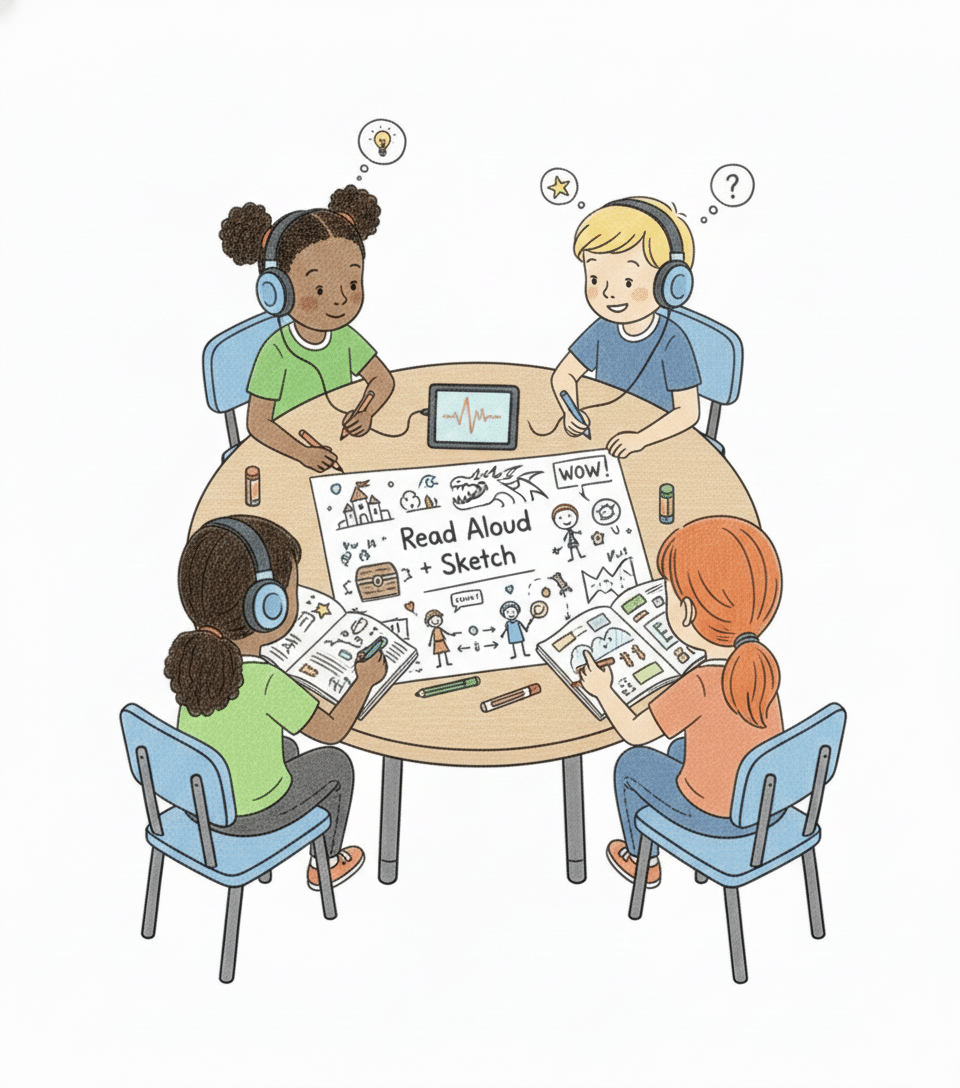
Example: Grade 5 ELA — Identifying Main Ideas and Details
Objective: Students determine the main idea and supporting details of an informational text.
Station Setup:
- At the end, the paper becomes a shared visual summary of the text.
- Start an audio recording of a short informational paragraph.
- Students sketch symbols or images that represent the main idea and details.
- As they rotate around the butcher paper, they circle or add small notes responding to classmates’ sketches (“detail,” “important,” “connects to…”).
- At the end, the paper becomes a shared visual summary of the text.
4. Story Quilt
A story quilt turns individual thinking into a shared piece of artwork, allowing students to build understanding through pictures. Instead of responding verbally to a story or informational text, students capture their ideas visually on small “quilt squares.” This structure works especially well in elementary classrooms because it gives every student a manageable task while still contributing to a larger whole.
When the group assembles their squares into one quilt, they can see how each piece adds to the bigger picture of the topic, making it a flexible activity for any subject: illustrating math strategies, documenting stages in a science cycle, showing examples of a social studies concept, or highlighting key moments in a text.
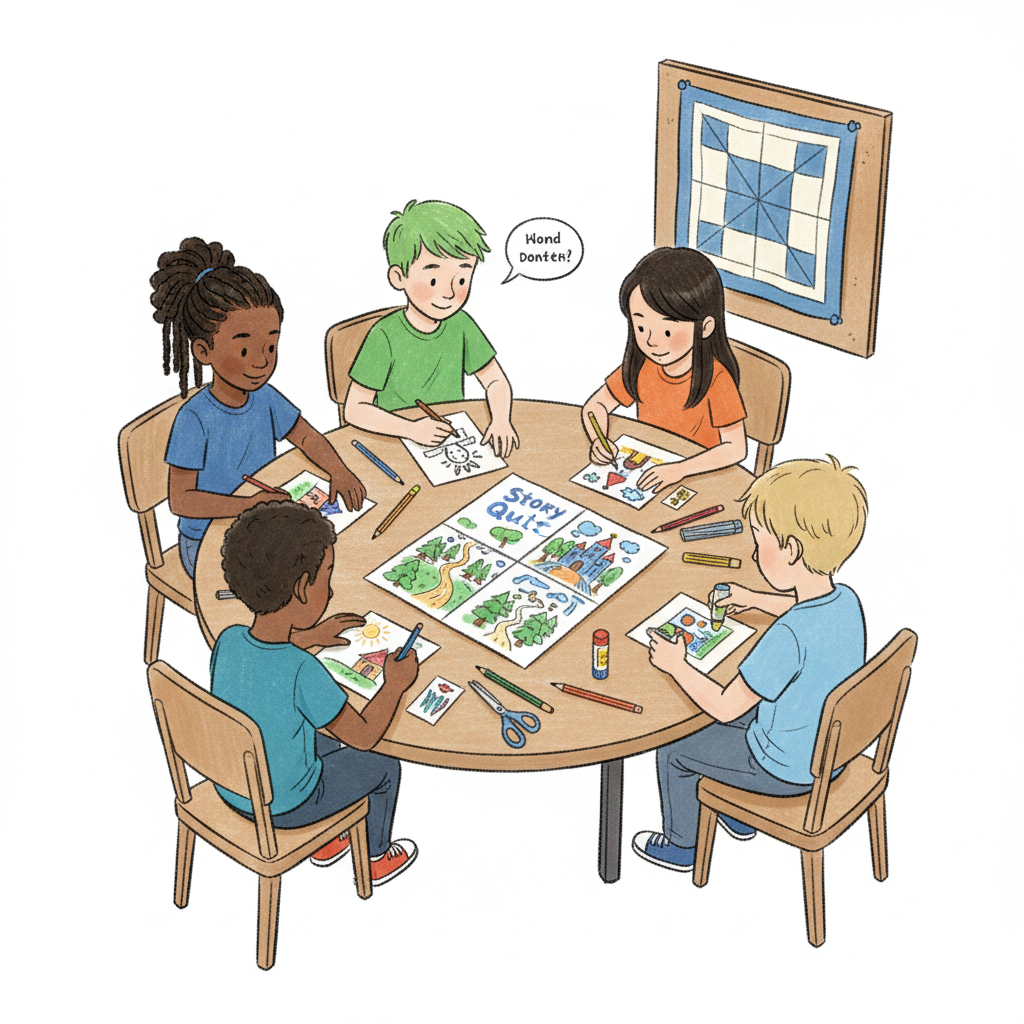
Example: Grade 4 Social Studies — Regions of the United States
Objective: Students identify key physical and cultural characteristics of U.S. regions.
Station Setup:
- Each student creates one quilt square representing an important feature of a region, such as landforms, climate, natural resources, landmarks, or cultural traditions.
- Each square includes a drawing and a brief label (e.g., “Rocky Mountains,” “farming,” “warm + humid,” “lighthouse,” “desert plants”).
- When assembled, the quilt becomes a visual map of regional differences and similarities across the country.
5. Question Carousel
A Question Carousel is a great way for students to ask and answer questions together, silently and thoughtfully. Instead of calling out answers or competing to be heard, students rotate through different questions and leave written responses, sketches, or symbols that show their thinking. This structure is especially effective in elementary classrooms because it helps students practice forming open-ended questions, noticing what peers wonder about, and contributing ideas in a low-pressure way.
Tip: Before implementing this activity, spend some time discussing open-ended questions as a class. It will take some practice before students can move beyond yes/no or factual questions. Providing sentence stems is another way to support thoughtful questions.
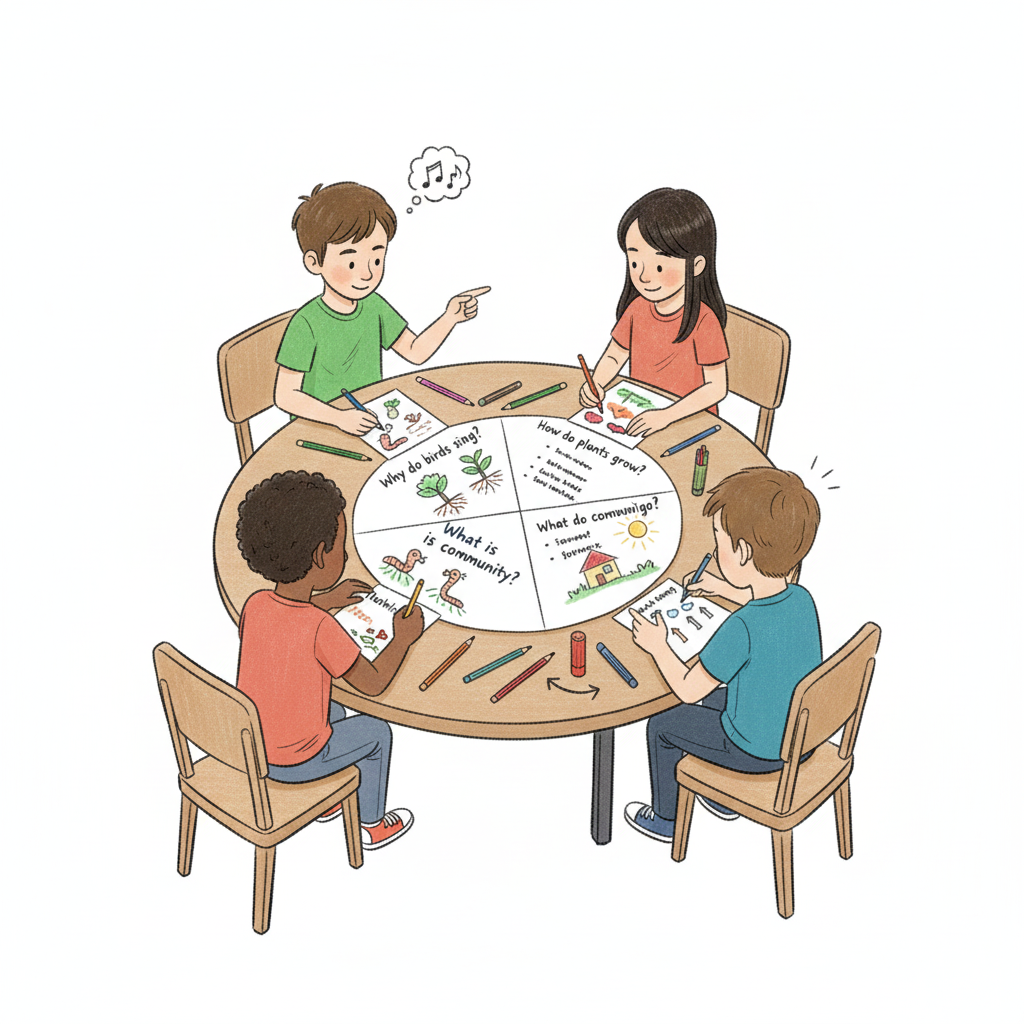
Example: Grade 3 Social Studies — Communities and Their Features
Objective: Students ask and answer questions to deepen their understanding of community life.
Station Setup:
- Each student writes one question at the top of a large paper (e.g., “Why do people choose to live in certain places?” “What helps a community stay safe?”).
- Students then rotate among the papers, adding facts, drawings, or written responses to others’ questions.
- They can also star or underline ideas they agree with.
6. Connection Cards
Support reading comprehension with a silent, student-driven activity that encourages students to make meaningful textual connections. Students create a small set of cards, one for each type of connection: text-to-self, text-to-text, or text-to-world. On each card, they write a short description of their connection and add a quick sketch or symbol to represent their connection.
Once students finish their cards, they silently rotate them around the table so each student can read one another’s connections. They should look for similarities, differences, patterns, shared experiences, new perspectives, and unexpected connections. Teachers can encourage students to quietly interact with each other’s cards by providing post-its for them to make comments and ask questions.
Once all of the cards have rotated through the group, students take a few minutes to reflect on the activity. They can write a brief reflection answering the following questions:
- What connection stood out the most? Why?
- What did you notice after reading everyone’s cards?
- Did any of the connection cards help you understand something in the text that you hadn’t noticed before?
The final collection of cards becomes a visual anchor chart for the class, growing as students add their thinking.
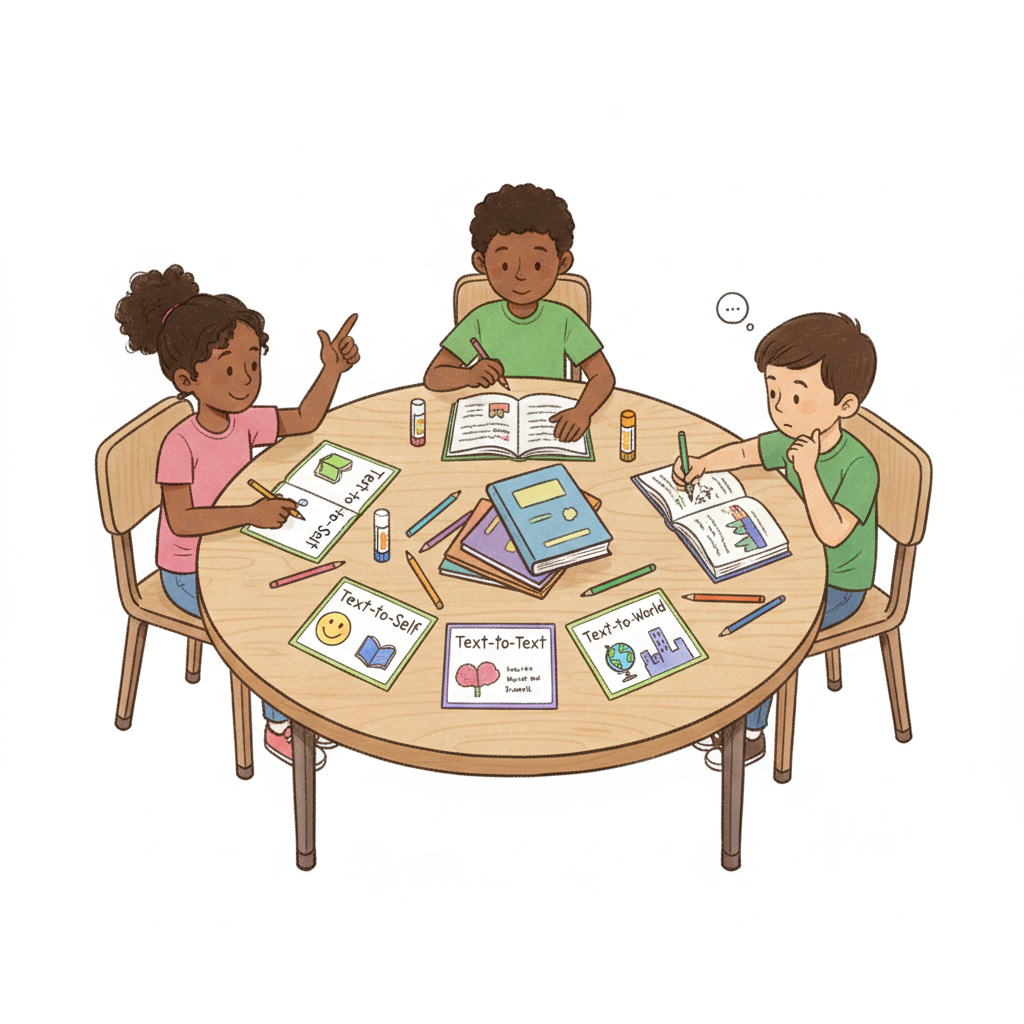
Example: Grade 2 English Language Arts — Making Text Connections
Objective: Students make text-to-self, text-to-text, or text-to-world connections.
Station Setup:
- Students have three separate cards.
- They write and draw one type of connection on each card.
- Cards go in the center of the station.
- Students silently pick up peers’ cards.
- Optional: Students can add a sticker, symbol, or sticky note.
- Connections are displayed on a wall.
Keeping the Energy Up and the Volume Down
With intentional design choices, station rotation can actively engage groups of students in meaningful learning without becoming noisy. Silent collaboration gives students time to notice details, make connections, and respond to their classmates’ ideas in simple but meaningful ways. These station activities give students opportunities to think together, and they help you promote a classroom environment where learning feels focused and manageable.
Want to Make Time for Small-Group Instruction?
If you’re looking for a better way to meet the needs of all your students, reclaim your time for small-group instruction, and design more intentional learning experiences, I wrote The Station Rotation Model and UDL: Elevate Tier 1 Instruction and Cultivate Learner Agency for you!
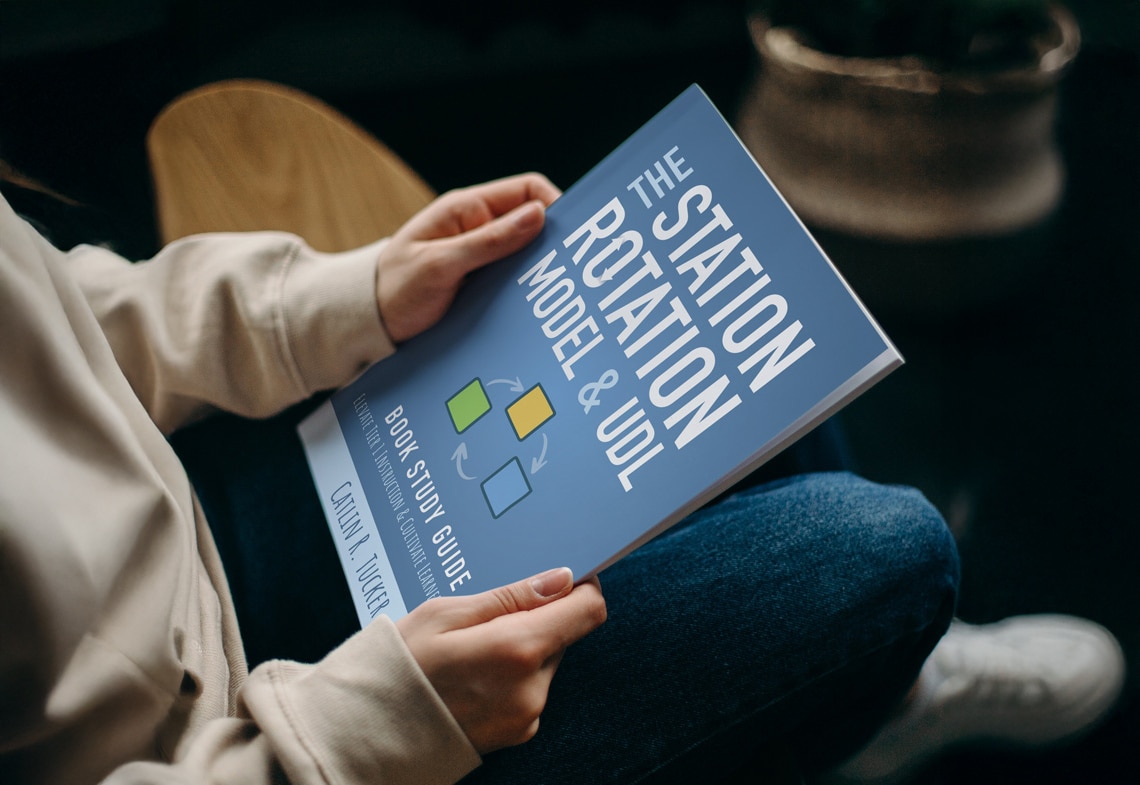
School leaders interested in using the book for a staff-wide study can place a discounted bulk order for 10 or more copies. If you and your teachers need additional support, I offer customized professional learning that is hands-on, practice-based, and tailored to your team’s needs. Together, we can support your teachers in developing their UDL practice, differentiating instruction more effectively, and elevating Tier 1 instruction. We can even utilize the Station Rotation Model to create space for Tier 2 support and Tier 3 intervention within general education classrooms.
No responses yet