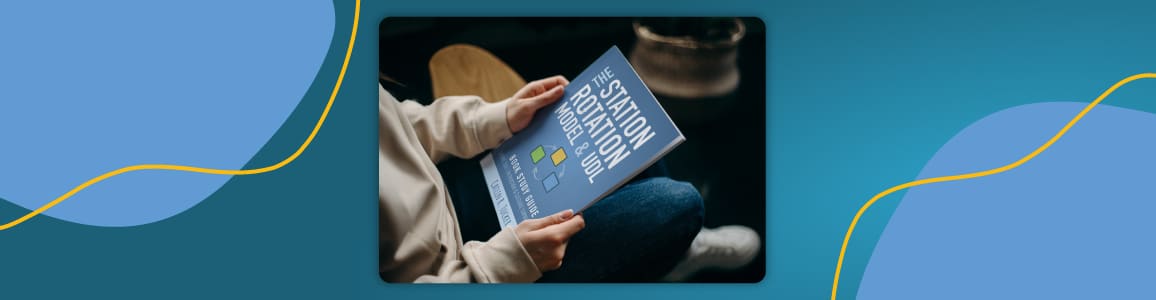
When I wrote The Station Rotation Model & UDL: Elevating Tier 1 Instruction and Cultivating Learner Agency, I set out to address one of the most persistent challenges in education: how do we meet the wide range of learner needs in every classroom, every day?
The answer, in part, lies in rethinking how we design and facilitate lessons and learning experiences. Too often, whole-group instruction is expected to meet the needs of every student. However, learners bring a diverse mix of strengths, skill levels, learning preferences, and language proficiencies to class. When we rely too heavily on teacher-led, one-size-fits-all lessons, we risk leaving students behind or inadvertently holding others back. That’s where the Station Rotation Model can be a game-changer.
By strategically designing for small-group, differentiated instruction and embracing blended learning structures that support flexibility and choice, we can create more inclusive learning environments. We can shift control over the pace and path of learning to students without sacrificing rigor or engagement.
Why A Study Guide?
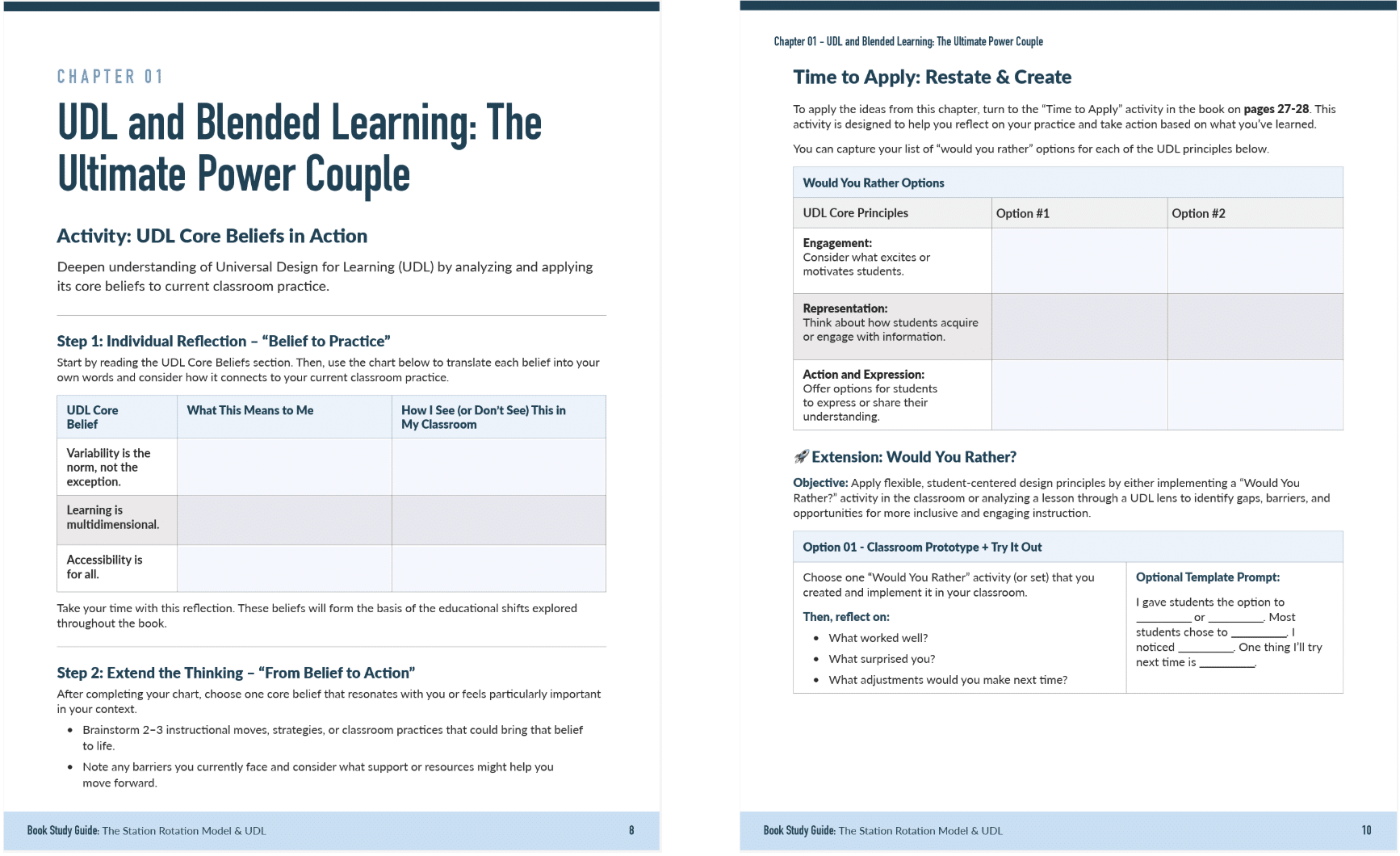
I created this free, interactive study guide to help educators, instructional coaches, PLCs, and school leaders encourage thoughtful application of the ideas in the text. Whether you are reading the book on your own, diving into it with a team, or leading a campus-wide book study, this guide is designed to support deeper reflection, collaboration, and implementation.
It is packed with:
- Engaging prompts and activities to help you connect the book’s ideas to your classroom practice.
- “Would you rather” extensions that offer flexible, choice-based pathways for further learning.
- Templates and tools you can copy, customize, and use right away.
Who Is It For?
This study guide is for any educator, school, or district that is ready to:
- Meet the diversity of student needs in today’s classrooms.
- Move beyond whole-group instruction and make time for responsive small-group instruction.
- Foster more critical thinking, communication, collaboration, and creative problem solving in classrooms.
- Design with data to intentionally differentiate instruction to meet students where they are.
- Prioritize learner agency by giving students more control over how they engage with content and demonstrate understanding.
- Use technology strategically to enhance the quality of learning and provide students with meaningful choices.
- Build classroom systems that support independence, metacognition, and executive functioning.
Whether you are new to the Station Rotation Model or looking to refine and elevate your existing practice, this guide is designed to be your companion in that journey.
Let’s Reimagine What’s Possible
The Station Rotation Model is a blended learning model that can help educators reimagine what teaching and learning can look like to better meet the diversity of needs in today’s classrooms.
I hope this guide helps you and your team get the most out of the book and pushes your thinking about what is possible in your own practice.
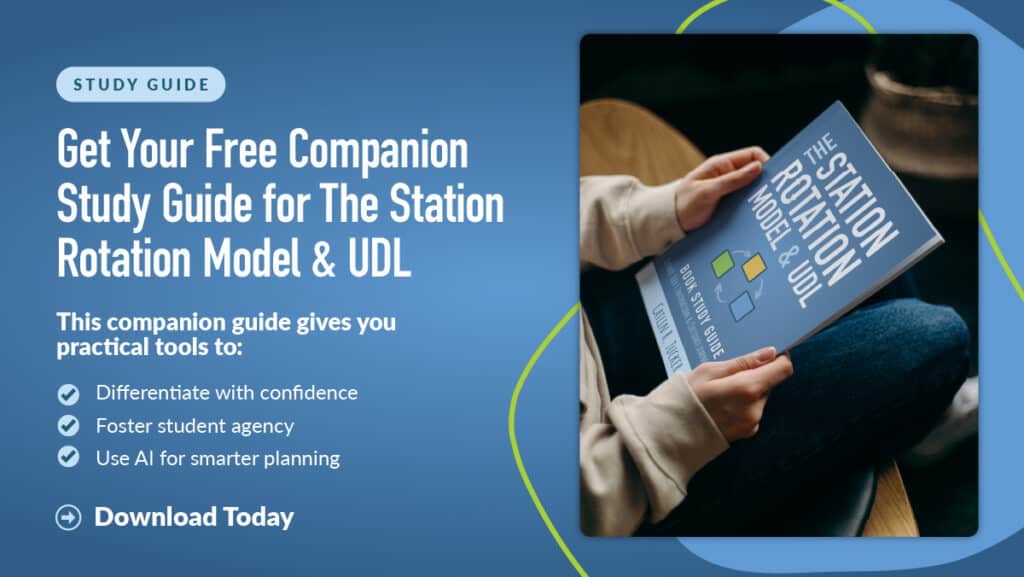
You can download the free study guide here:
If the book and study guide spark questions or ideas, I’d love to hear from you! You can post a question or comment here or connect with me on social media (X, Instagram, LinkedIn). I’d love for you to share your reflections using the hashtag #StationRotationModel.
If you are looking to support your staff with hands-on, practice-based professional learning to support the shift from whole group lessons to differentiated small group instruction using the Station Rotation Model, feel free to reach out directly to explore professional learning opportunities!
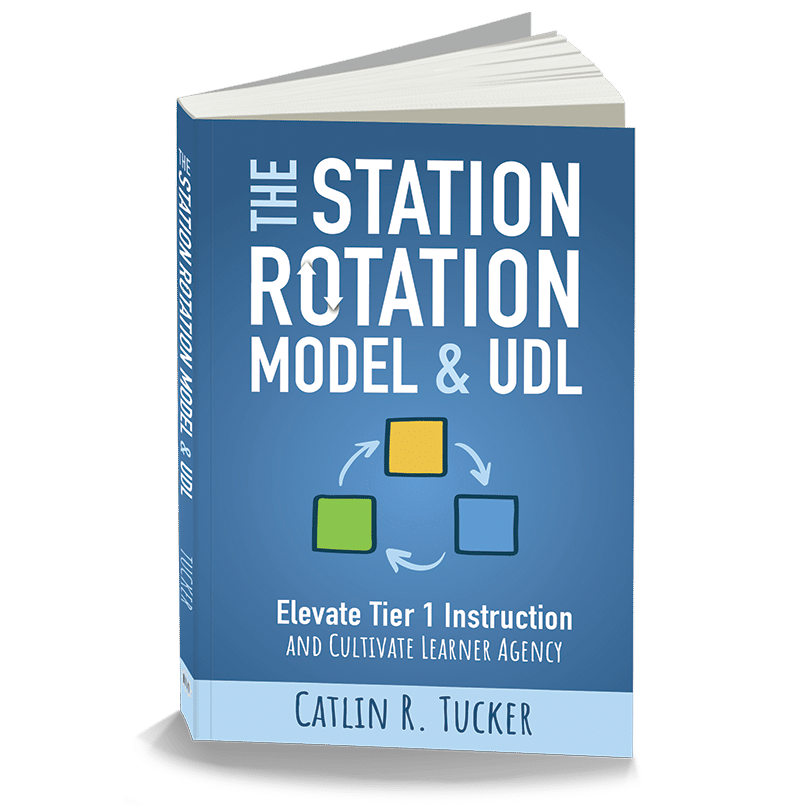
School leaders interested in using the book for a staff-wide study can place a discounted bulk order for 10 or more copies. If you and your teachers need additional support, I offer customized professional learning that is hands-on, practice-based, and tailored to your team’s needs. Together, we can support your teachers in developing their UDL practice, differentiating instruction more effectively, and elevating Tier 1 instruction. We can even utilize the Station Rotation Model to create space for Tier 2 support and Tier 3 intervention within general education classrooms. And, we can explore how this model can help us position students as active agents leading their own learning!
No responses yet