

Related Podcast Episode
A busy classroom with students working, devices open, and pens scratching answers on paper looks productive. But when you ask students about their work, they can often explain what they are doing but not why. Many students move through learning activities without pausing to question, self-assess, reflect, or adjust. This highlights a fundamental difference between compliance and learning.
In many classrooms, learning is teacher-directed. Teachers set the goals, write learning objectives on the board, ask the questions, and define success. Students complete tasks and provide answers. This approach keeps students busy but does not always require them to think deeply about their learning.
When students learn to ask their own questions and set purposeful goals, the learning dynamic shifts. Instruction shifts from teacher-directed to student-centered. These two skills work together to help students take ownership of their learning by clarifying what they are trying to learn, why it matters, and how they will approach their work.
This post is part of the Skills Before Tools series based on my K-12 Implementation Guide. Each post unpacks one of the five core throughline skills that students need to use AI strategically and responsibly.
Why Questioning and Purpose Setting Are Foundational Skills for Student-Led AI Use
Questioning and purpose setting serve as the engine of learning. They shape how students interact with content, tasks, and feedback. Together, they help students clarify what they are learning, why it matters, and how they will know they are making progress.
When these skills are in place, students are not simply completing tasks. They are directing their attention to things that interest them, monitoring their understanding, and making decisions about next steps. Together, questioning and purpose setting can spark curiosity, clarify the value of learning, and support the development of metacognitive skills (Chin & Osborne, 2008; Bursali & Öz, 2018; Education Endowment Foundation, 2025).
These skills are not new. Teachers have always worked to help students clarify their goals and ask better questions. What has changed is how visible the cost becomes when these skills are underdeveloped or absent. AI will magnify whatever approach students bring to learning: passive students will become more so, while intentional learners will become more strategic and self-directed.
The good news? These are teachable skills that develop over time with explicit instruction, intentional practice, and consistent reflection. By prioritizing questioning and purpose setting at every grade level, educators can ensure that students are prepared to use AI responsibly and to learn, think, and take ownership in an AI-rich world.
Purpose Setting
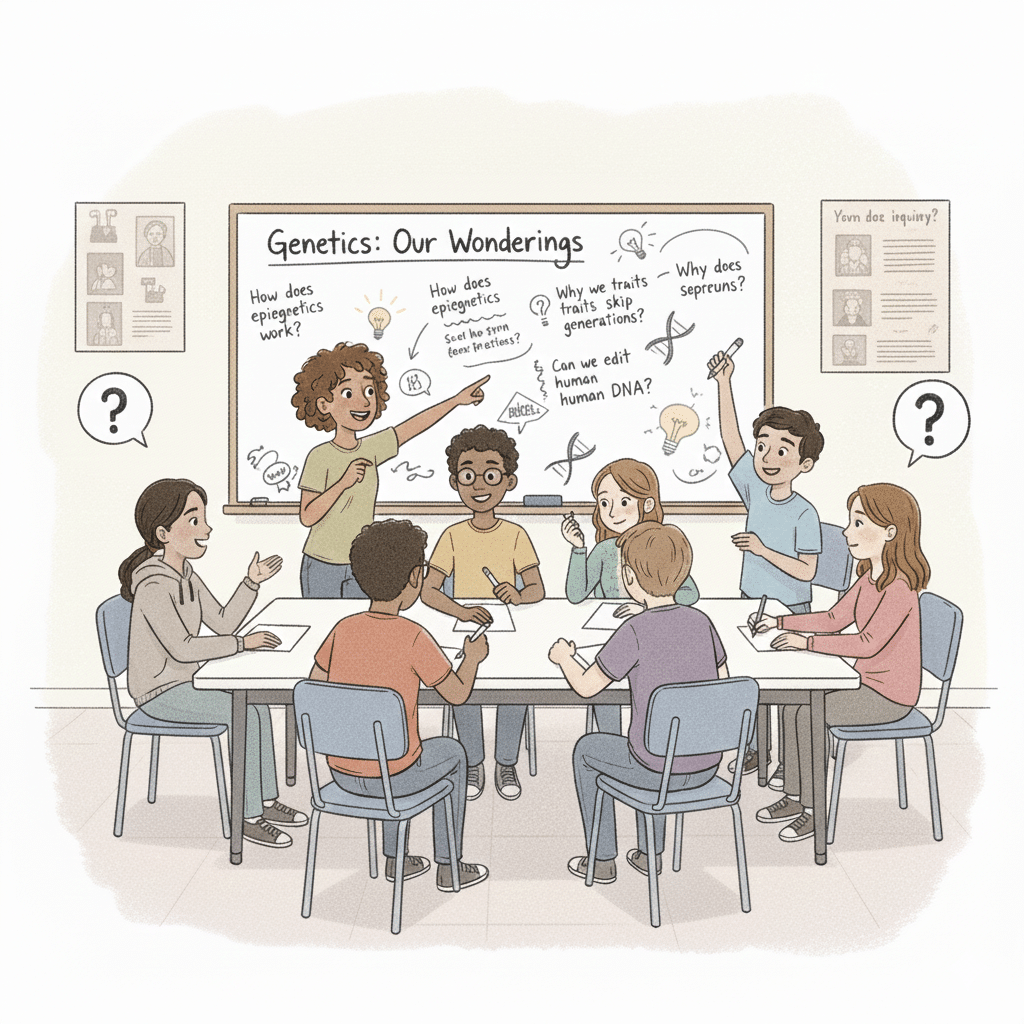
Purpose setting provides direction and meaning for learning. When students understand the value of their work, they know what they are trying to learn and why it matters. This clarity helps students see how the tasks they complete contribute to their conceptual understanding and skill development. Over time, these connections support their overall growth as learners.
Research consistently shows that when students set clear goals and understand the purpose behind their learning, they demonstrate higher levels of engagement, persistence, and achievement (Morisano, Hirsh, Peterson, Pihl & Shore, 2010; Zimmerman & Schunk, 2011; Xu, Wang, Xie, Duan, & Wang, 2021). Purpose setting activates metacognition before learning even begins, prompting students to monitor their progress and make adjustments as they learn. When the purpose of learning is clear, students are better equipped to stay focused, persist through challenges, and reflect on whether their efforts are moving them toward their goal (Hattie, 2009; McTighe & Willis, 2019).
In an AI-rich learning environment, purpose setting becomes critical. Students must learn to clarify their intentions before seeking AI support. Without a clear purpose, students risk using AI reactively. They may seek quick answers or shortcuts to complete assignments without thinking through what they actually need to learn or accomplish. Purpose setting ensures that AI serves the students’ learning goals rather than replacing the cognitive work required to achieve them.
Purpose Setting Across Grade Levels in K–12 Classrooms
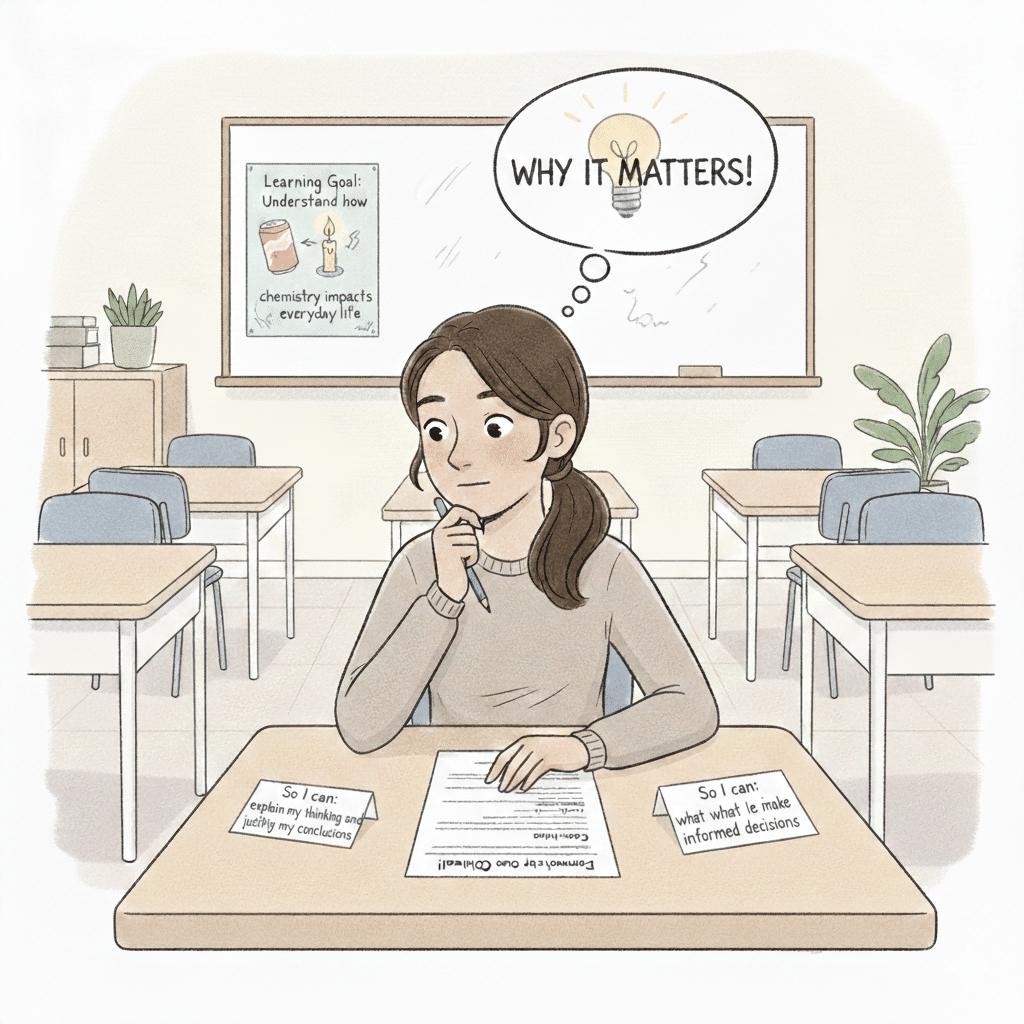
At every grade level, students return to the same anchor question: What am I trying to do, and why? Purpose setting develops as students move from naming what they are trying to do to planning, justifying, and reflecting on how their choices support learning. While the complexity of tasks, tools, and expectations increases across grade levels, the core goal remains the same: to help students act intentionally rather than default to task completion or tool use.
Grades K-3: Building Foundations Through Curiosity
In the earliest grades, purpose setting begins with helping students name what they are trying to learn or figure out. Teachers model curiosity and make learning goals explicit through simple, concrete language. A kindergartener working on a building project might say, “I am trying to make my tower taller without it falling down.” This simple articulation of purpose helps young learners connect their actions with their intentions.
At this stage, purpose setting is often brief, spoken, and embedded in play-based learning rather than formal goal-setting. Reflection focuses on helping students notice and articulate their own curiosity. Teachers ask questions like:
- What were you trying to do?
- What did you want to make/build/learn?
- What do you want to know more about?
- What are you working on?
These prompts encourage students to recognize that learning has direction and their efforts are purposeful.
Grade 4-6: Connecting Purpose to Tool Use
As students begin interacting with AI in contained, teacher-guided environments, purpose setting becomes a critical guardrail. Before seeking AI support for brainstorming or feedback, students articulate what they hope to accomplish. This intentional pause helps students reflect on what they need or want to do rather than immediately asking an AI system for the answer.
Teachers explicitly teach students to connect their questions to outcomes. If a student is using AI to generate ideas for an argumentative essay, the purpose statement might be: “I want to explore different points of view on this issue so I can strengthen my argument.” Teachers invite students to reflect before and after using the tool, asking:
- What was your goal before using the tool?
- What do you need help with—brainstorming, organizing, or understanding?
- What do you already know, and what are you trying to figure out?
- How did your interaction with AI help you do, understand, or learn something?
These prompts help students connect their learning goals to their actions. They ask students to evaluate whether the tools they use, including AI, are supporting their learning.
Grades 7-9: Translating Goals Into Strategic Action
In middle and early high school, purpose setting becomes more sophisticated. Students learn to translate academic goals into effective prompts and adjust their approach based on the task at hand. They begin to recognize that a lack of clear purpose leads to vague outcomes. Clear, specific goals for using AI translate into stronger, more useful results.
Teachers can focus on providing explicit instruction in assessing whether an AI tool is the right tool for a particular goal. They also help students identify common breakdowns at this stage, such as overreliance on AI, confusing speed with quality, or assuming the first output is the best. Teachers can model how to engineer strong prompts and revise them when the initial attempts don’t align with their stated purpose. Students practice comparing outputs and making intentional decisions about when AI supports their learning and when it may be getting in the way. Teachers can prompt more analytical reflection with questions like:
- What outcome were you hoping for? Did the AI help you reach it?
- Why did you write the prompt in that way? How will it help you accomplish this task?
- What might you add to the prompt to improve the output?
- How did your interactions with AI help you make progress toward your goal?
These prompts encourage students to think strategically about their goals, recognize the connection between purpose and outcomes, and refine their approach based on what they learned.
Grades 10–12: Designing Complex, Purposeful Inquiries
By 10th grade, students are expected to use AI strategically, justify their decisions, and communicate their process to authentic audiences. Purpose setting at this level involves planning complex tasks, anticipating challenges, and documenting how different resources and tools, including AI, contribute to the process. Students take responsibility for explaining their decision-making and demonstrating how their choices align with their learning goals and the standards they are working to meet.
Teachers model the transparent use of AI and teach students how to cite its role in their work. Teachers might ask students to reflect on and answer the following questions:
- Why was AI the right tool to use here? What alternatives did you consider?
- How did your decision to use AI align with your learning goals and/or the standards you are trying to meet?
- What would have been lost or gained if you had not used AI?
- How effective was AI at helping you accomplish your goal or make progress toward it?
These prompts require that students justify their decisions, demonstrate alignment between their goals and methods, and take full accountability for AI’s role in their work.
Questioning
Questioning is a central skill in student-driven learning. When students generate their own questions, they move from passively receiving information to actively constructing understanding (Zhou, 2021). When students are encouraged to ask questions, they direct their learning by identifying what they are curious about, confused by, or eager to explore.
Too often, students spend their time receiving answers to questions they did not ask or may not care about. While teacher questions can guide learning, they cannot replace the cognitive work that happens when students formulate questions of their own. Student-generated questions push learners to process information more deeply, make connections, and surface gaps in their understanding (Chin, 2002). They also increase engagement by honoring curiosity and interest as legitimate entry points into learning.
Positioning students as drivers of inquiry requires intentional design. Teachers must create the time and space for questioning by slowing down the pace, modeling the process, and valuing questions as much as answers. Over time, students learn that asking thoughtful questions is a powerful strategy for learning. When questioning becomes a shared responsibility, classrooms shift from places where information is delivered to spaces where ideas are explored and information is discovered.
Questioning Across Grade Levels in K–12 Learning
Questioning develops as students move from wondering aloud to intentionally crafting questions that drive inquiry and learning. As students progress through school, they move from asking spontaneous, curiosity-based questions to asking strategic ones. These questions deepen understanding, test ideas, and guide decision-making. As with purpose-setting, the complexity of texts, tasks, and tools increases across grade levels, but the core goal remains the same: to position students as active drivers of inquiry rather than passive recipients of information or answers.
Grades K-3: Nurturing Curiosity and Wonder
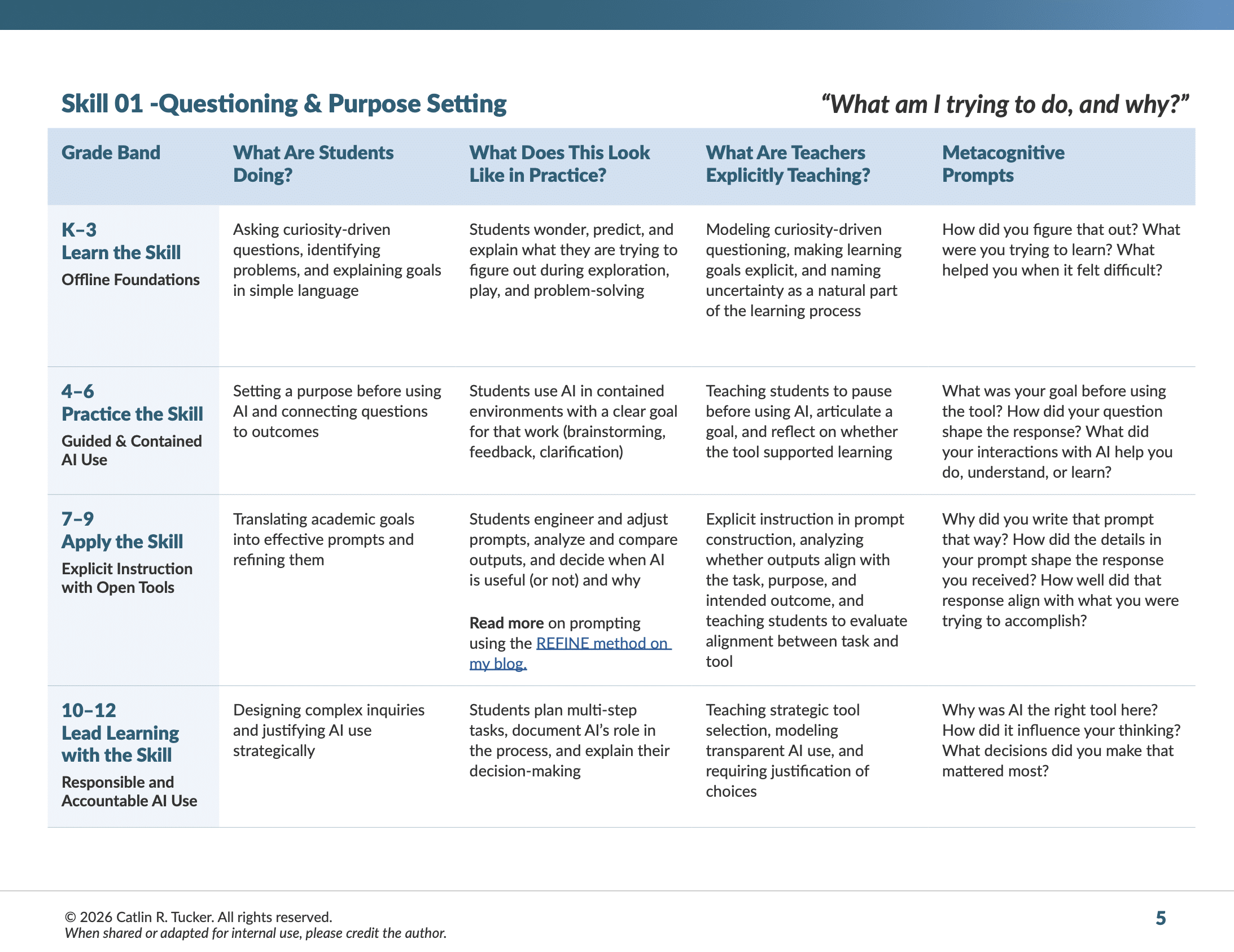
In the earliest grades, questioning begins with curiosity. Students are encouraged to see, think, and wonder. We encourage them to notice things and ask questions about the world around them. Teachers model curiosity by thinking aloud and asking open-ended questions that invite exploration. A first grader observing a puddle after rain might ask, “Why are there worms on the sidewalk?” or “Where does the water go when it dries up?”
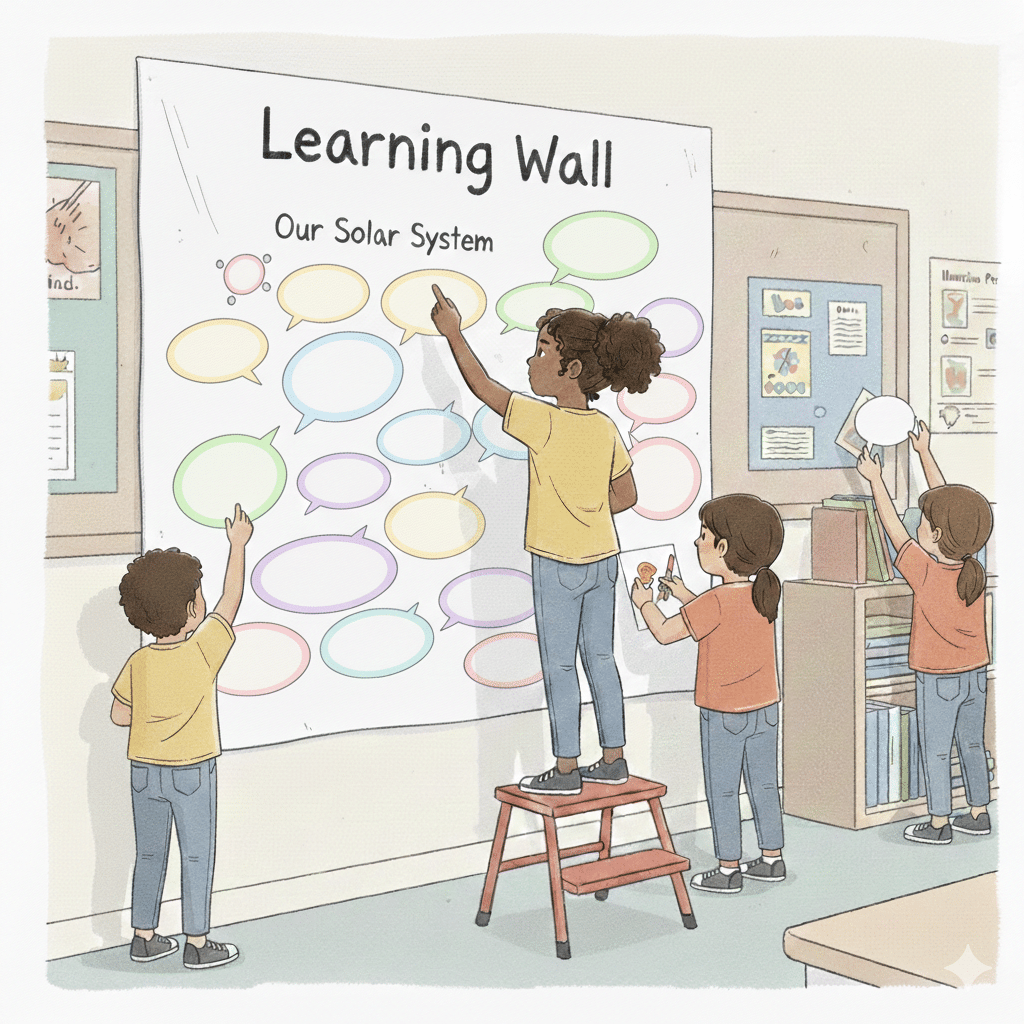
At this stage, questions are often spontaneous, verbal, and exploratory. Teachers focus on engaging students in the act of questioning and helping them document those questions. Learning walls, or interactive displays that showcase student thinking over time, can serve as powerful tools for making questions visible and revisitable (Vance, 2024). When students see their questions displayed alongside artifacts, observations, and discoveries, they begin to understand that questioning is valued and their curiosity drives the learning.
Reflection at this stage focuses on helping students notice and wonder. The goal is to help them see questioning as a natural part of learning. Teachers can ask questions such as:
- What questions do you have about this topic?
- What are you wondering about?
- What do you want to understand or know more about?
- What made you curious about that?
These questions signal to young learners that questions are not merely signs of confusion but rather starting points for learning.
Grades 4-6: Asking Questions with Intention
As students progress into upper elementary grades, questioning becomes more intentional. Students learn to ask questions that deepen understanding and support problem-solving. When teachers introduce AI with structure and guidance, students learn to pause and consider which type of question will best support their learning rather than simply produce an answer. These intentional pauses help students recognize that they have choices. They might talk to a peer, review their notes, or use AI. When teachers use AI education tools that are contained and safe, they can often set parameters for student interactions and explicitly instruct the AI to respond with questions rather than answers. This models the questioning process students are learning while helping them understand how questions lead to deeper thinking.
Teachers explicitly connect questioning to purpose. A fifth-grade student researching the American Revolution might think, “I want to understand why colonists decided to fight, so I am asking questions about what changed between 1765 and 1775.” The reflection questions a teacher asks might include:
- What questions do you have/did you ask?
- How did your interactions with AI help you understand the topic more clearly?
- What types of questions helped you learn what you needed to know?
- What did you learn from the answers you received?
This helps students recognize that different questions serve different learning goals.
Grades 7-9: Using Questioning to Guide Thinking
In middle and early high school, questioning becomes a strategic thinking tool. Students learn that the quality of their questions shapes the quality of their thinking and learning, whether they are interacting with a text, a classmate, or an AI system. They begin to recognize that vague or surface-level questions often lead to shallow insights. By contrast, intentional questions open the door to deep understanding.
Teachers focus on teaching students to distinguish between different types of questions, evaluate the quality of their questions, and revise ineffective ones. Students practice comparing AI responses generated by different questions and analyzing how small changes in wording impact the quality of the output. Reflection becomes more analytical:
- Why did you ask the question that way?
- What did the response help you to see or understand more clearly?
- How did the quality of your question impact the quality of the response?
- When did AI help your thinking, and when did it get in the way?
This teaches students that questioning is an iterative process.
Grades 10-12: Questioning as Intellectual Responsibility
By 10th grade, students are expected to use questioning as a tool for inquiry, analysis, revision, and justification. They learn to ask questions that challenge assumptions, evaluate evidence, identify bias, and explore multiple perspectives. As students move from teacher-moderated AI environments to more open tools, they learn to architect questions strategically, providing the context, constraints, and specificity needed to generate useful responses. They also hone the skills needed to critically evaluate the AI’s responses, assess their accuracy and usefulness, and decide how to apply that information to their work.
Teachers support students in documenting how their questions evolve over time and how those questions shape their learning process. Reflection questions push students to think critically about their inquiry:
- What assumptions am I testing with this question?
- How did my questions change as my understanding deepened?
- How did the quality of my questions impact the depth of my inquiry?
- How did questioning help me make intentional decisions about my work?
At this stage, questioning is no longer about getting answers quickly but is a purposeful inquiry that develops metacognitive awareness.
These Skills Matter Now More Than Ever
In an AI-rich learning environment, purpose setting and questioning are no longer optional; they are essential. And they cannot remain teacher moves alone. Students must learn to articulate purpose and ask their own questions if they are going to use AI as a tool for learning rather than a replacement for thinking.
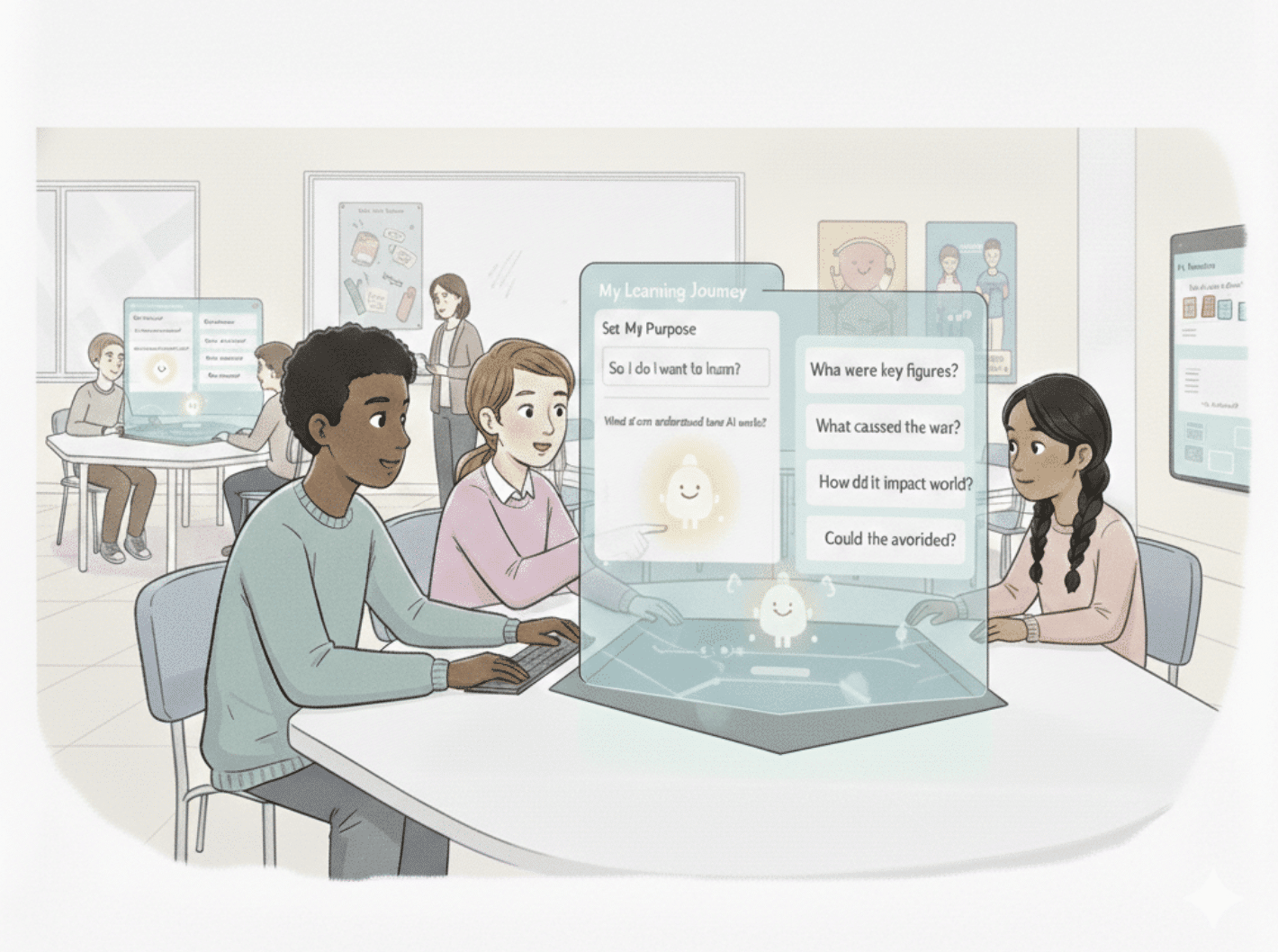
When these two skills work together, students become active architects of their own learning. They set clear goals, ask strategic questions, evaluate what AI produces, and make intentional decisions about their work. Purpose setting ensures that students remain at the center of learning, using AI as a tool that serves their goals rather than a shortcut to bypass the cognitive work required for deep understanding. The ability to ask thoughtful, strategic questions enables students to direct AI effectively. They understand that poor inputs yield poor outputs, and vague questions produce vague results. When purpose is clear, and questions are strategic, students use AI as a resource that supports, rather than replaces, their own thinking.
Up Next: Clarity in Communication
In the next post in this Skills Before Tools series, I’ll focus on clarity in communication, another essential skill students need to use AI effectively.
If you are looking for support as you navigate these conversations about AI implementation in your school or district, you can download the Skills Before Tools: A K-12 AI Implementation Guide. The guide is designed to help teams ground AI decisions in shared language, developmental progressions, and transferable skills. I am also available to support this work through professional learning, coaching, or discussions on implementation.
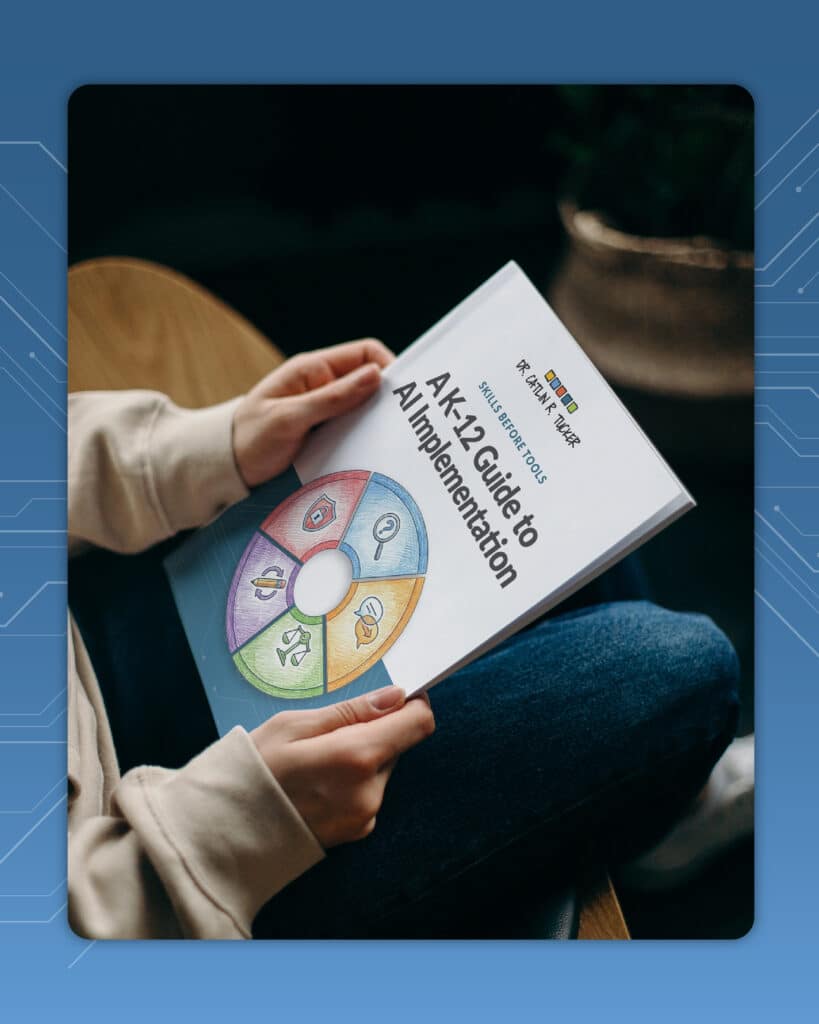
Download your copy of Skills Before Tools: A K-12 Guide to AI Implementation.
Works Cited
Bursalı, N., & Öz, H. (2018). The role of goal setting in metacognitive awareness as a self-regulatory behavior in foreign language learning. International Online Journal of Education and Teaching, 5(2), 254–271.
Chin, C., & Brown, D. E. (2002). Student-generated questions: A meaningful aspect of learning in science. International Journal of Science Education, 24(5), 521–549.
Chin, C., & Osborne, J. (2008). Students’ questions: A potential resource for teaching and learning science. Studies in Science Education, 44(1), 1–39. https://doi.org/10.1080/03057260701828101
Education Endowment Foundation. (2025). Metacognition and self-regulated learning: Guidance report (2nd ed.). Education Endowment Foundation.
Hattie, J. (2009). Visible learning: A synthesis of over 800 meta-analyses relating to achievement. Routledge.
McTighe, J., & Willis, J. (2019). Upgrade your teaching: Understanding by Design meets neuroscience. ASCD.
Morisano, D., Hirsh, J. B., Peterson, J. B., Pihl, R. O., & Shore, B. M. (2010). Setting, elaborating, and reflecting on personal goals improves academic performance. Journal of Applied Psychology, 95(2), 255–264. https://doi.org/10.1037/a0018478
Vance, J. (2024). Evidence of inquiry: Exploring, questioning, and documenting with learning walls. Elevate Books EDU.
Xu, M., Wang, H., Xie, X., Duan, Y., & Wang, W. (2021). Relationships between achievement goal orientations, learning engagement, and academic adjustment in freshmen: Variable-centered and person-centered approaches. Frontiers in Psychology, 12, 767886. https://doi.org/10.3389/fpsyg.2021.767886
2 Responses
This is fantastic, Catlin! I’ve added a link to it in the Curricula section of my “AI in Education” resource doc:
tiny.cc/ai-in-education
Awesome! Thanks for letting me know, Michael.