

Related Podcast Episode
Conversations about the role of artificial intelligence in education are accelerating. Districts are working hard to determine how AI fits into teaching and learning, while navigating funding opportunities, vendor claims about the impact of AI tools, and questions from families. Across education, there is a growing consensus that this is work we cannot afford to ignore as AI permeates nearly every sector.
I am supporting an increasing number of schools as they work to guide thoughtful AI integration in classrooms, and I keep coming back to the same question: How do we help students learn to use AI effectively while keeping the focus on thinking, learning, and student ownership?
The Risk of Repeating Old Patterns
In my book Elevating Educational Design with AI, I wrote about the uneasy parallels between today’s conversations about AI and the edtech rollouts of the 2010s. When devices became ubiquitous and tools flooded the market, many school systems invested heavily in access and infrastructure, assuming transformation would follow. It didn’t.
Too often, technology was layered onto existing practices instead of being thoughtfully woven into student-centered instructional models and strategies. As Alan November cautioned more than a decade ago, computers became little more than “thousand-dollar pencils,” substituting for traditional tasks rather than reshaping learning in meaningful ways.
My concern is that without thoughtful planning, we risk repeating those same mistakes with AI. If instructional practices do not shift and evolve alongside AI adoption, the technology is unlikely to improve learning. Instead, it may become a distraction, a superficial add-on, or a tool that unintentionally undercuts the quality of learning. When we focus on tools rather than teaching, or on speed rather than strategy, we risk using AI to complete shallow tasks rather than support more thoughtful and personalized learning experiences.
This is not a technology problem. It’s a design and implementation problem.
For nearly two decades, I’ve advocated for blended learning models that strategically leverage technology. The goal has been to differentiate instruction, personalize learning, and give students more control over their learning. Over the years, I’ve watched as many dismiss new approaches to lesson design. Too often, this happens without a serious examination of how existing practices may need to evolve. That resistance continues even as the consequences of our current approach—teacher burnout and attrition, student apathy and dissatisfaction with school, and declining national test scores—make it clear that change is needed.
If we are unwilling to rethink how learning is designed, facilitated, and assessed, AI will not yield transformative results. It will simply accelerate existing practices, for better or for worse. In classrooms where learning is shallow or compliance-driven, AI risks amplifying those same patterns. In classrooms where students are learning to think deeply, reflect on their progress, and take ownership of their learning, AI can strengthen and extend that learning. This is why the evolution of instructional practices matters more than ever.
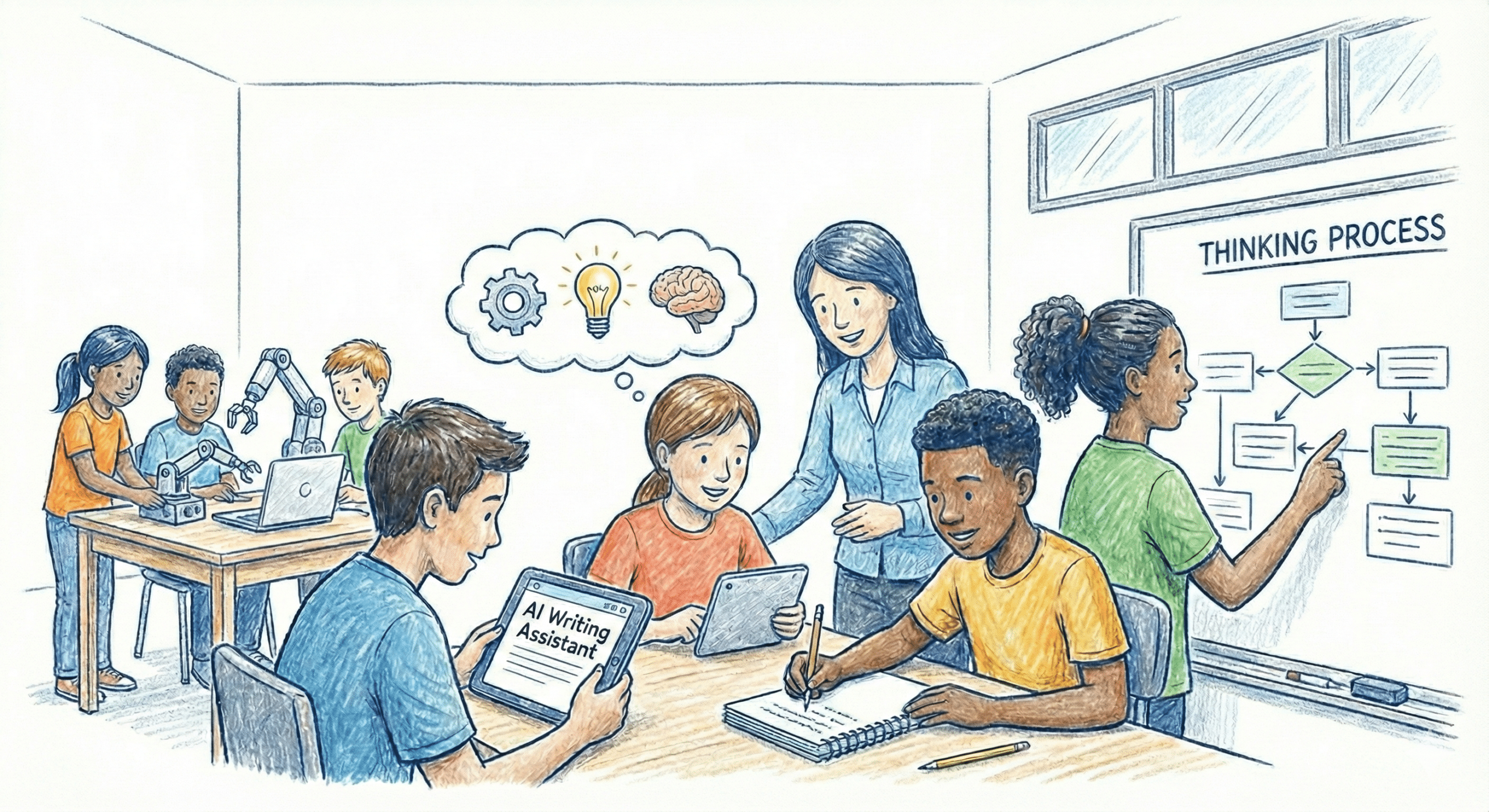
AI is highly effective at generating information and providing feedback. What it cannot do is replace the human work of helping kids learn how to think, reflect, revise, and take responsibility for their learning. If we don’t intentionally teach these skills, AI shifts from supporting student thinking to quietly replacing it.
Why K-12 AI Implementation Must Start with Skills
A growing number of AI implementation guides and frameworks are emerging to help districts and schools navigate this dynamic, complex landscape. Many established AI initiatives focus on AI literacy and center on the question: What should students understand about AI?
My approach differs in its starting point.
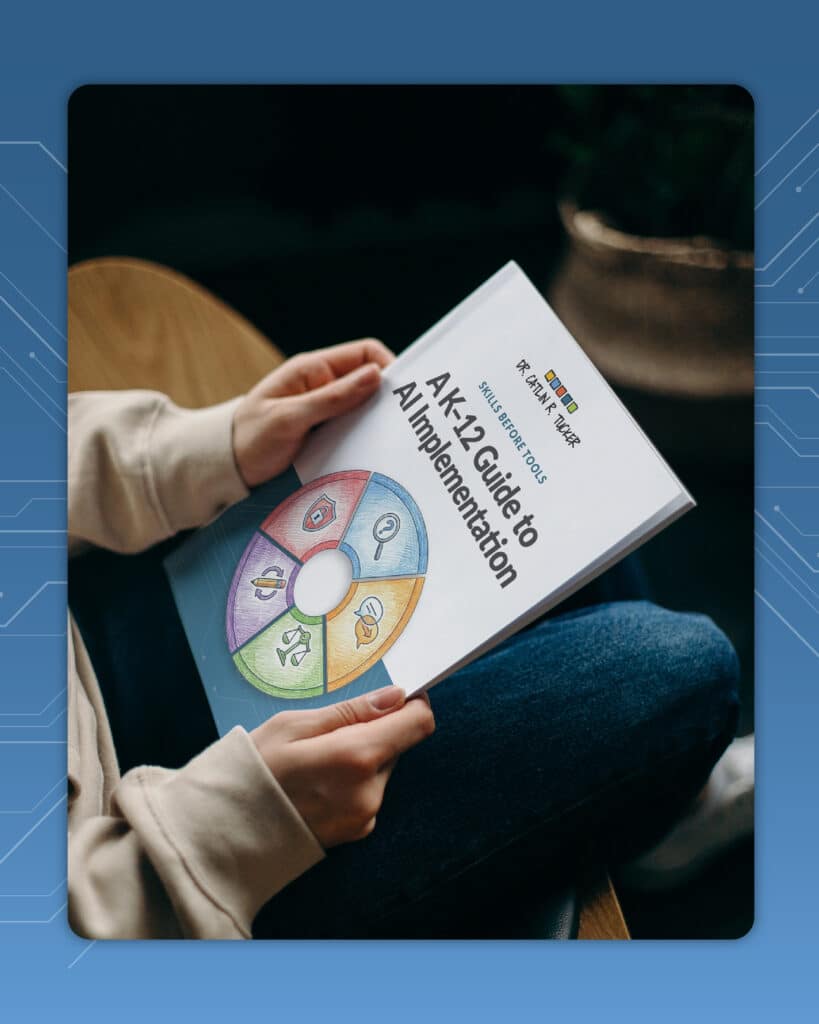
Rather than beginning with AI literacy, tools, policies, or access, Skills Before Tools: A K–12 Guide to AI Implementation starts with a set of transferable skills students need to develop over time to use AI effectively and responsibly. These skills matter at every grade level and in every class. They are not new, but the presence of AI makes them critical.
Developing these skills requires a gradual release of responsibility. First, students learn the skill. Then, they practice it in contained, safe spaces with teacher guidance and support. As they gain confidence and their skills develop, they apply these skills more independently in open AI environments, such as interacting with chatbots. Ultimately, the goal is for students to lead aspects of the learning process using a range of AI tools.
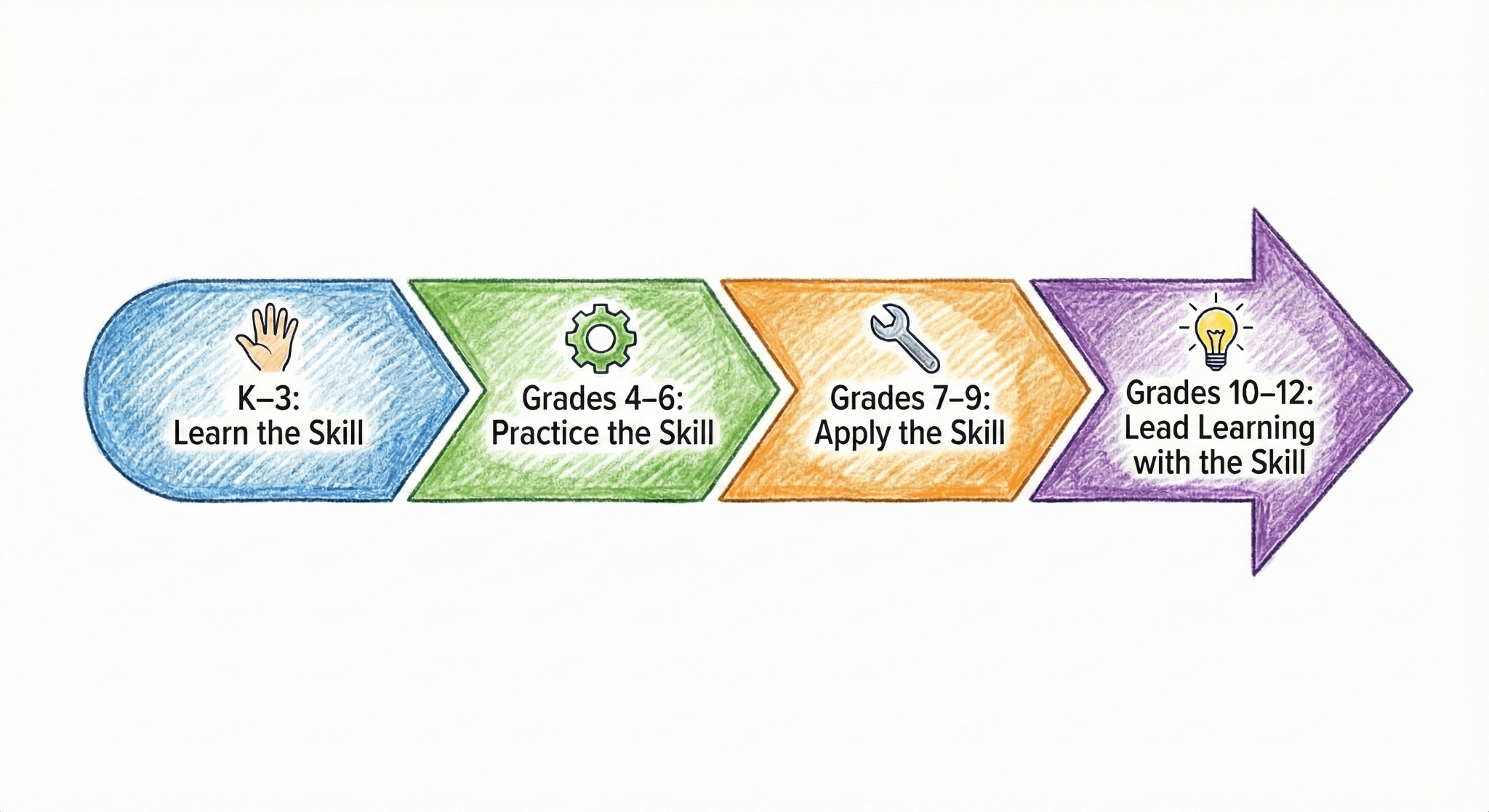
While some AI implementation frameworks combine K-2, this guide intentionally provides a longer runway for foundational skills. Kindergarten through third grade focuses on foundational skill-building without direct use of AI. Young students are learning to communicate, reflect, and solve problems. These skills are directly transferable to later work with AI. Research on cognitive development, screen time, and early learning suggests that introducing online tools too early can undermine this foundational work. I recommend delaying the introduction of online AI tools until these foundational skills are firmly in place. By prioritizing skill development first, we create the conditions for students to engage with AI more confidently and thoughtfully.
Another key distinction in this guide is how learning is sequenced in the middle grades. Grades 7-9 are a critical window for strengthening and transferring existing skills into more open AI environments. This is where students learn to think with AI rather than defer to it. They develop the ability to question outputs, evaluate quality and bias, and revise intentionally. They also reflect on how tools influence their learning.
While ninth grade marks the start of high school, it also serves as an essential bridge year. Including ninth grade in this skill-building window supports students who enter the school system later. This includes students who move districts, homeschool, or come from other learning contexts. They still have time to develop essential skills before grades 10-12, when grades carry higher stakes for postsecondary pathways. At this point in high school, expectations shift. Students must be able to use AI knowledgeably, transparently, and responsibly, and their work must accurately reflect what they know and can do.
How K-12 Implementation Evolves Across Grade Levels
This guide outlines a gradual and intentional progression that increases both access to AI and expectations for students’ responsibility over time.
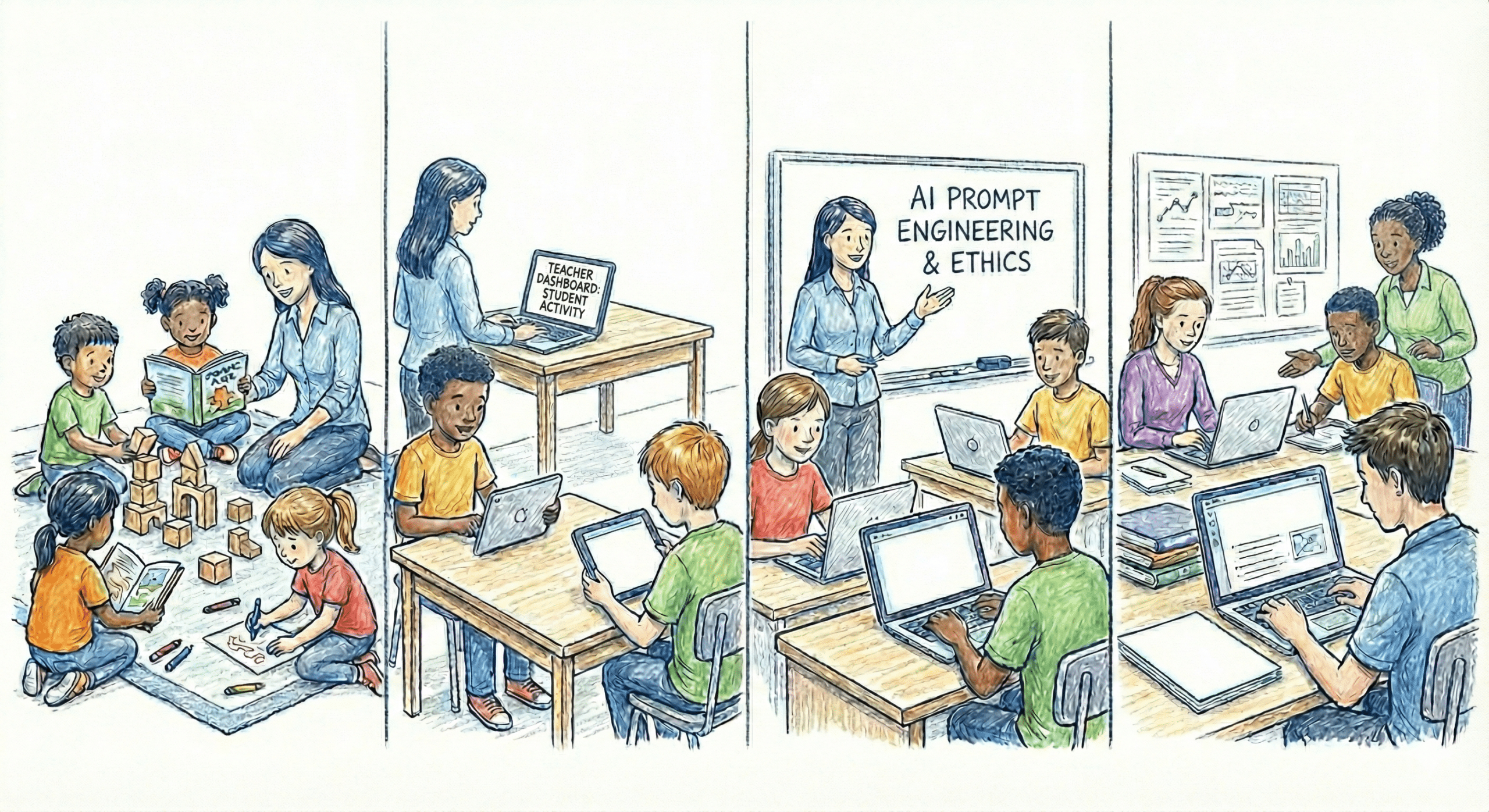
Grades K-3
Instruction centers on foundational, transferable skills students will later apply when working with AI. Teachers ground learning in curiosity, communication, reflection, and problem-solving, without direct AI use.
Grades 4-6
Students begin interacting with AI in safe, school-approved environments where teachers set clear parameters and maintain visibility into student activity and performance. Teachers use AI to support personalized practice and feedback while modeling goal-setting, intentional interaction with AI, interpreting responses, and reflecting on how AI tools impact and support learning.
Grades 7-9
Teachers explicitly teach students how to apply and strengthen these skills as they transition from teacher-monitored environments to student-directed AI tools. Students practice constructing prompts and questioning outputs. They evaluate quality and bias, revise their work, and make informed decisions about when and how AI supports their thinking.
Grades 10-12
The focus shifts to the strategic, transparent, and accountable use of AI. Students acknowledge AI’s role, verify accuracy, and protect privacy. They take full responsibility for their work in ways that align with college and career expectations.
Across all grade levels, the focus remains consistent: skills first, tools second.
The Throughline Skills That Anchor K-12 AI Implementation
I organized my AI implementation resource around five core throughline skills that span disciplines and grade levels. The focus is on developing and refining these critical skills as students progress through school. Rather than treating AI literacy as a standalone outcome, this approach supports students in developing it through the intentional use of AI to think, learn, reflect, and improve.
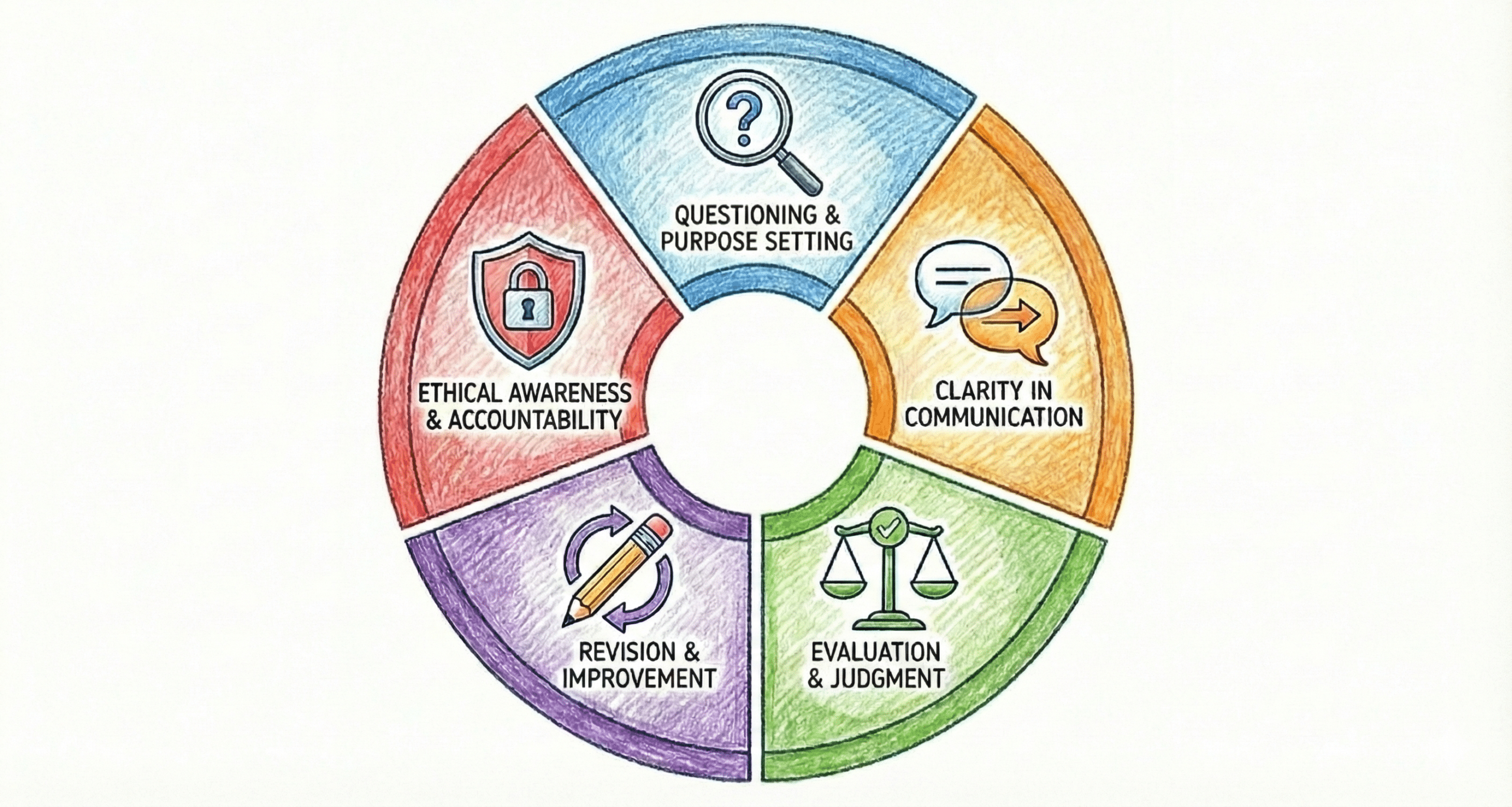
1. Questioning and purpose setting
What am I trying to do and why?
Students learn to clarify what they are trying to do and why before taking action. Purpose setting helps them identify learning goals and define success criteria. Questioning fuels curiosity and reflection as students consider the content, strategies, and next steps. Together, these moves help students decide when and how tools such as AI can support their learning.
2. Clarity in communication
How clearly can I express my thinking?
Students develop the ability to express their thinking clearly so others understand their ideas, questions, and intentions. Clear communication improves understanding, feedback, and collaboration. As students interact with others and AI, they learn that precise language leads to more useful responses and better outcomes.
3. Evaluation and judgment
Should I trust this? How do I know?
Students learn to assess accuracy, usefulness, and reliability. They practice questioning information rather than accepting it at face value. As they work with AI, students learn that credible-sounding information in any format still requires human judgment and verification.
4. Revision and improvement
How do I use feedback to make my work better?
Students use feedback intentionally to improve their work over time. They reflect on their progress, decide what to revise, and explain how their edits impact the quality of their work. This process helps students maintain ownership of their thinking, even when using AI.
5. Ethical awareness and accountability
What responsibility do I have for my work and choices?
Students develop an understanding of their responsibility as learners and creators. They consider fairness, transparency, authorship, and accountability for outcomes. As they use AI, students learn how to make ethical decisions and take accountability for the work they produce.
Together, these throughline skills reflect the belief that meaningful innovation doesn’t start with tools. It starts with instructional design, clarity about learning goals, and a sustained commitment to helping students think, reflect, revise, and lead their learning. When these skills are intentionally developed over time, AI becomes a support for learning rather than a shortcut around it.
For school and district leaders, these throughline skills provide a clear lens for intentionally leading AI integration. When leaders prioritize these skills, they create coherence across grade levels, reduce reactive decision-making, and support teachers in evolving their practice rather than layering AI on top of existing structures. This approach provides a strong foundation for AI integration, ensuring trust among teachers, students, families, and community members by centering on learning, responsibility, and long-term growth.
Leading K-12 AI Implementation with Intention
AI is not a passing trend. It is a powerful tool that will shape how students learn, work, and participate in the world beyond school. The question for leaders is not whether AI will be present in classrooms, but how intentionally it will be integrated and what it will amplify in our current systems.
If instructional practices remain unchanged, AI is unlikely to be transformative. It may increase efficiency or speed, but it will not automatically improve or deepen learning. When leaders prioritize transferable skills, instructional design, and coherence across grade levels, AI becomes a lever for deeper, more dynamic learning experiences rather than a distraction or shortcut.
This guide is designed to support leaders in making those decisions thoughtfully. It is intended as a conversation starter, planning tool, and roadmap for leading this work with clarity.
Download your copy of Skills Before Tools: A K-12 Guide to AI Implementation.
No responses yet