
Related Podcast Episode
This post is part four of five in my Skills Before Tools series based on my K-12 AI Implementation Guide. Each post in this series unpacks one of the five core throughline skills that students need to use AI strategically and responsibly.
First, purpose setting and questioning, paired with clarity in communication, help students engage with AI intentionally. Then, evaluation and judgment position students to retain control of their thinking as AI responds to their questions and requests. In this post, we will explore how revision and improvement extend that work, ensuring that students use the information and feedback they receive from the AI tool to develop their work.
Like the other foundational skills in this series, revision and improvement develop over time through explicit instruction, practice, and reflection. When educators prioritize this skill, students learn that quality is a product of iteration and their work can continually improve.
The Challenge: Dedicating Time to Revision
The challenge in many classrooms is the lack of time dedicated to the lengthy, and often messy, process of revision. When pacing guides are tight and standards are the focus, lessons are designed around information transfer and covering the course content. The teacher explains concepts and models skills. Then, students complete a task. They submit their work, it is graded, and everyone moves on to the next assignment or task. The focus is on completing a finished product rather than improving a piece over time.
Even though teachers understand the importance of feedback and know that work takes time to improve, giving feedback is time consuming. When they feel stressed to cover content, it is easy to neglect feedback as students work. And, if teachers are still grading everything students produce to entice them to do the work, they do not have the bandwidth to support continued revision over time.
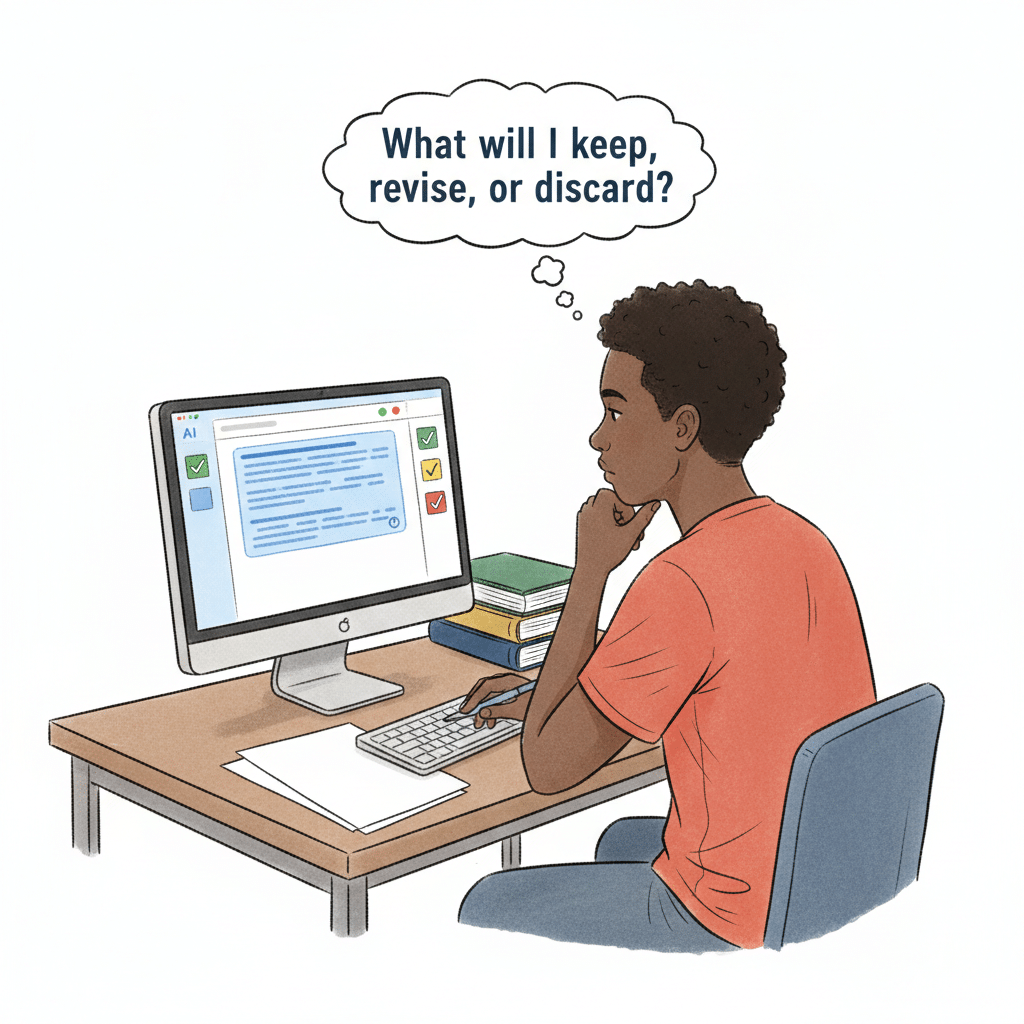
For schools and districts dedicated to meaningful AI integration, this will demand a reevaluation of current practices. Teachers who are dedicating time to revision won’t be able to race through as much information. Students will need opportunities to receive feedback and work with it in the classroom. When learning slows down in this way, AI can serve as a responsive support system, helping students get feedback in the moments they need it most.
However, AI should not replace teacher or peer feedback. AI should expand the opportunities for students to receive personalized feedback as they work. If students know how to leverage their AI resources strategically to get the support as they work, that should be incredibly motivating. However, they need opportunities to practice asking targeted questions, getting immediate responses, and engaging their critical thinking skills to decide what to do with that feedback.
Why Revision and Improvement Are Foundational Skills for AI Use
Revision requires decision-making. Students have to decide what they think is useful or valuable, what changes or improvements they want to make, and what they wish to disregard because it doesn’t add value to or improve their work. It also requires critical thinking and intentional action. Students must develop the skills to strengthen their ideas, deepen their reasoning, clarify their explanations, and align their work with the provided criteria. At the same time, they need to maintain ownership of their work and ideas. They should be able to explain their decisions as they work with feedback from peers or AI systems to improve their work.
This is the messy middle of learning. It is the space between the first attempt and the final version. It is where students wrestle with ideas, notice gaps in their thinking, change how something is communicated, and decide what to edit or refine. This space can feel uncomfortable, but it is where growth happens.
When we create space for the messy middle of learning, we preserve the cognitive work that develops students’ feelings of competence and confidence in their ability to succeed. When students revise and see their work improve, they can see and appreciate the impact of their effort. Comparing earlier versions with later versions also makes their growth more visible. That visibility into their growth fuels motivation when the work is difficult.
Teaching Revision and Improvement
Teachers must position revision as a critical part of the learning process. This requires that they dedicate class time to:
- Making the goal or destination for an assignment clear to learners
- Normalizing iteration
- Teaching students how to use AI as a revision partner
- Embedding reflection after revision
Make the Goal of the Assignment Clear
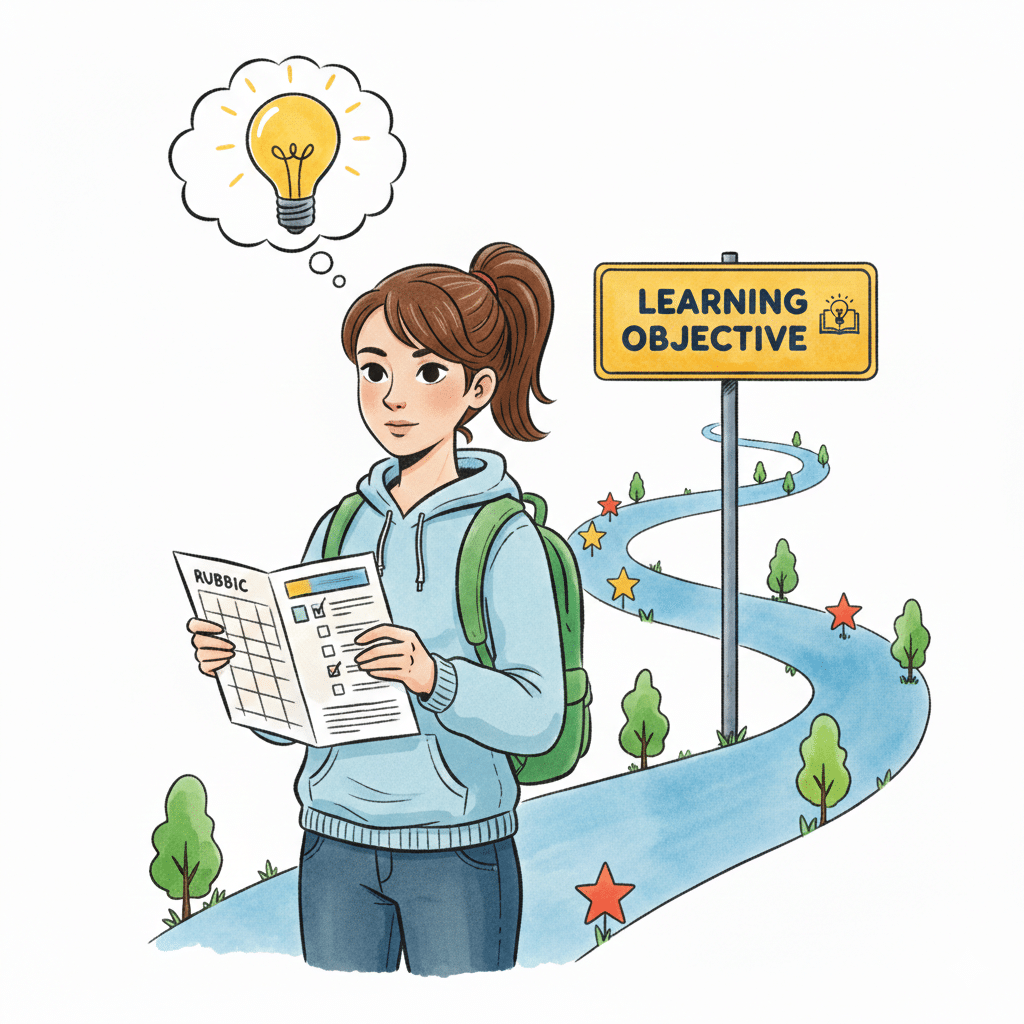
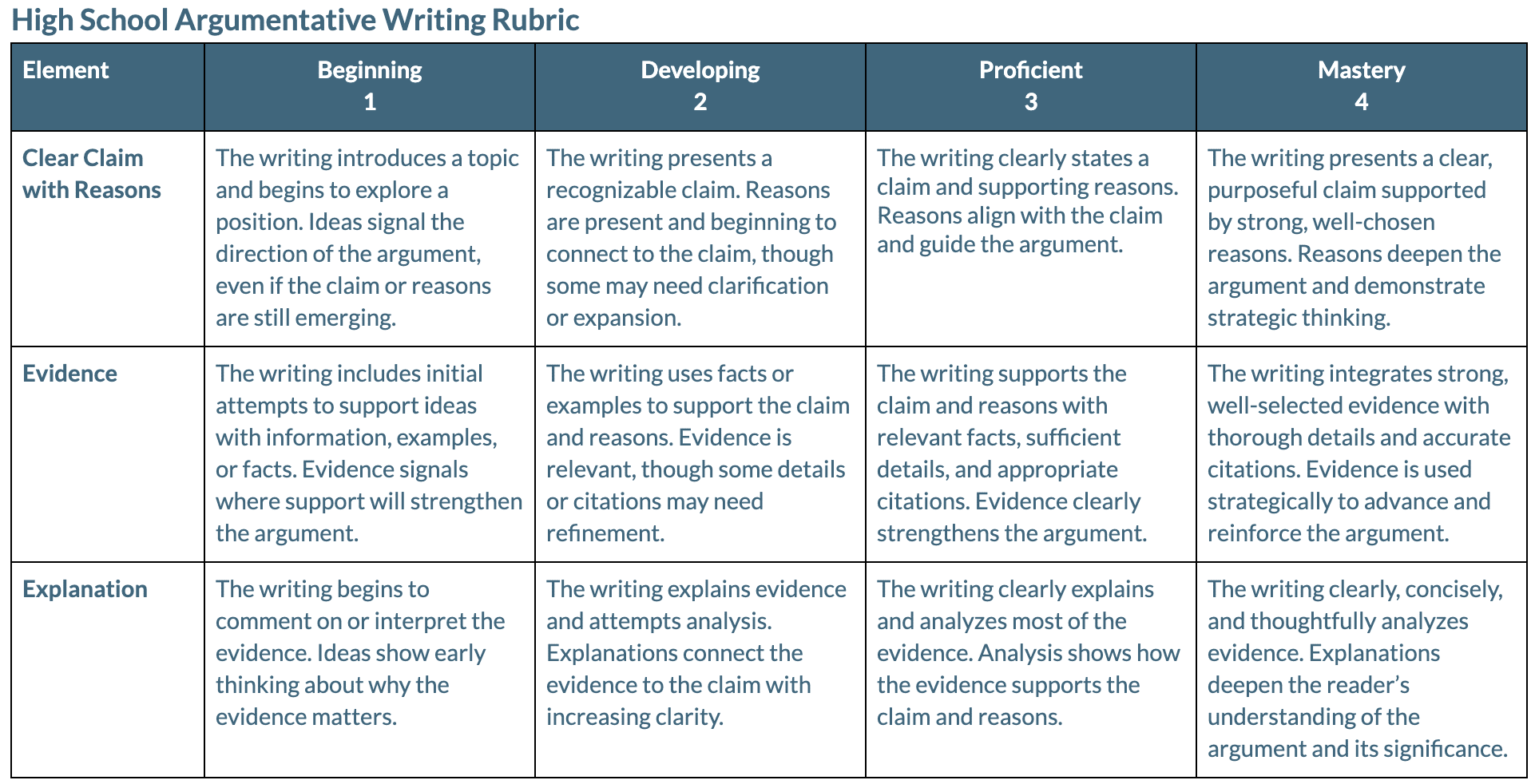
Students need to understand the goal of an assignment. What is the purpose or value of this work? What does this product look like? What elements should it include? If they know what they are working toward, they can revise and improve their work to meet that objective. That’s why it is critical for teachers to provide students with exemplars to analyze and a rubric with clear success criteria at the start of the process. Exemplars make the work they are doing clear and concrete. They help students understand what strong examples of this work look like and identify the essential elements they include.
Once students have a clear understanding of the destination for their work, rubrics serve as a valuable roadmap. They are a helpful guide as students revise and improve their work. That’s why it is essential that rubrics clearly describe what learning looks like at each level of proficiency.
Normalize Iteration
Too often, students are only given one opportunity to complete a task and the feedback they receive is on a final draft. That does not support revision or iteration. Students need opportunities to continue working to improve their work. Teachers can support this work by:
- Requiring multiple drafts
- Modeling the process of iteration for students
- Dedicating teacher time to real-time feedback in the classroom as students work
- Embedding structured peer feedback routines into the process
- Building in time for revision and reflection after students use AI
When revision is required, not optional, students begin to see it as part of the learning process rather than a sign that their work isn’t good enough. Dedicating time to the feedback and revision cycle helps students understand that their work can always improve.
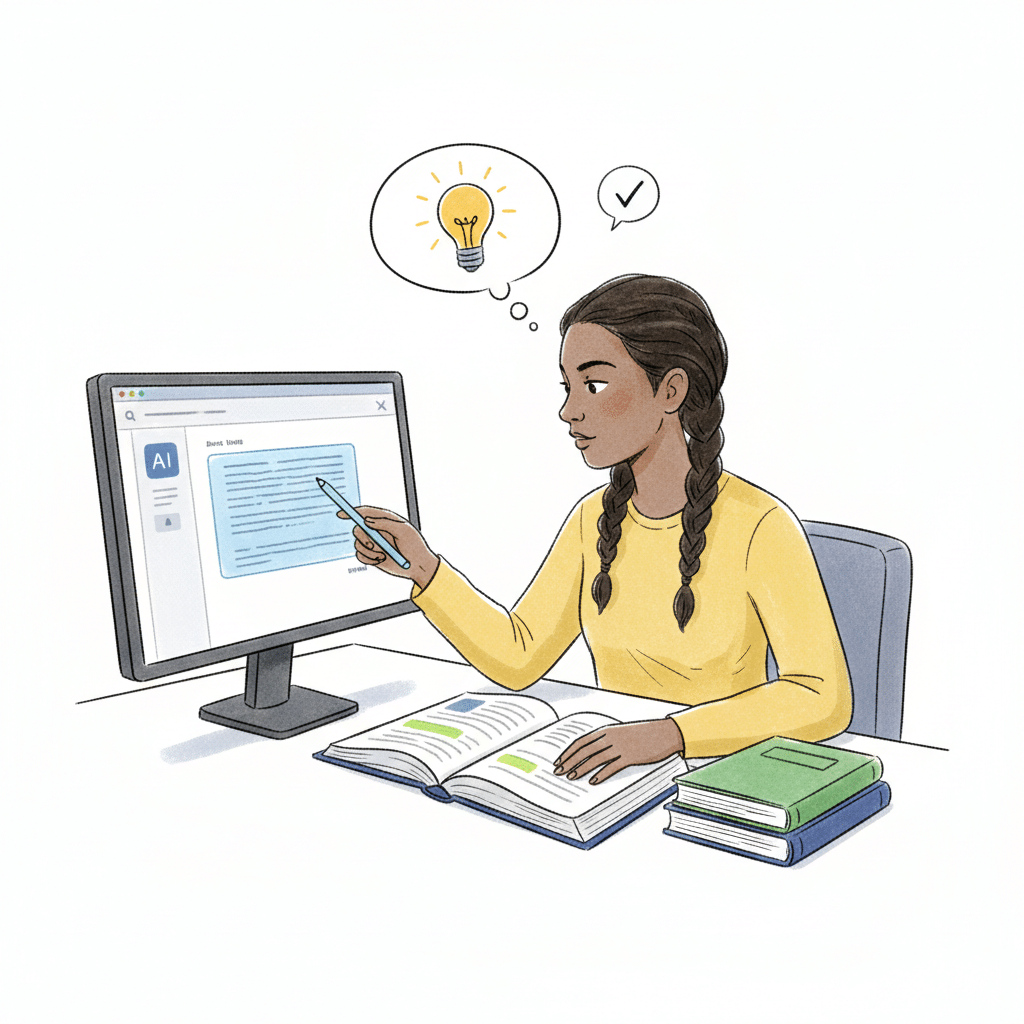
Teach Students to Use AI as a Revision Partner
Instead of asking AI to “make this better” and accepting all suggestions, we need to teach students to:
- Be specific about what aspects of their work they want to improve
- Ask for feedback aligned to the criteria for that assignment
- Compare versions and choose what to keep or discard
- Explain their revision decisions
The cognitive lift needs to remain with students. AI can suggest endless improvements, but students need to evaluate those suggestions and decide how to use them.
Embed Reflection after Revision
Reflection helps students stretch their metacognitive muscles and think about their work and learning. It also helps them to identify what they are learning as they interact with feedback. They can document what strategies or suggestions are helpful and can be leveraged in future work.
Teachers can ask students to reflect on:
- What changed between drafts?
- What feedback was most helpful? Why?
- Which suggestions did they choose not to act on or use? Why?
- What did you learn about your areas of strength and those in need of development from this feedback?
- What revision strategies would you use again the future?
These metacognitive moments can help students become more strategic, resourceful, and confident over time.
Revision and Improvement Across Grade Levels in K–12 Classrooms
Across grade levels, revision and improvement center on a consistent set of questions: How can I make this stronger? What feedback will actually move my work forward? As students progress through K–12, they shift from simply trying again and noticing what works to strategically managing complex revision cycles and justifying their decisions.
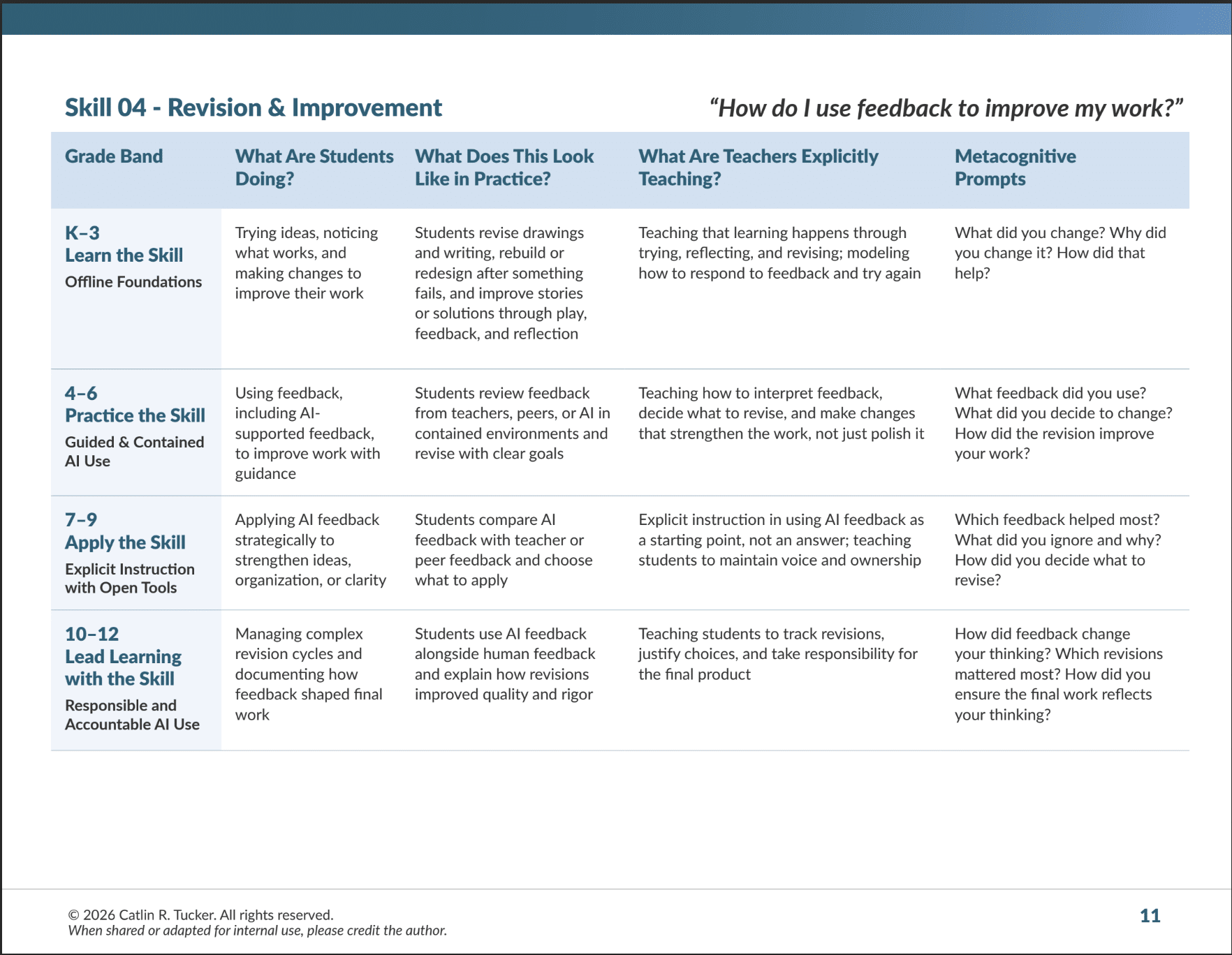
Grades K-3: Building the Habit of Trying Again
When students are young, revision should be focused on helping them understand that improvement is part of the learning process. At this early stage of development, students are building comfort with trying new ideas, noticing what works (and what doesn’t), and making small changes to improve their work. As with the previous throughline skills for this age group, revision happens offline. It is embedded in play, storytelling, drawing, writing, building, and problem-solving.
Teachers focus on normalizing the process of improvement and iteration. They model what it looks and sounds like to respond to feedback, rebuild after something fails, and adjust an approach when it doesn’t work. Students add more detail to a drawing, rewrite a sentence, or redesign a structure that collapsed. This strategy frames revision as a natural, expected, and valuable part of the learning process. The goal is persistence, not perfection.
Reflection at this stage is conversational and concrete. Teachers can prompt students with questions like:
- What did you change?
- Why did you make that change?
- How did that help?
- What could you try differently next time?
- What is another possible way you could do this?
This early work builds the foundation for a growth mindset. Students begin to connect effort with improvement. As a result, they learn that work can get stronger with thoughtful changes.
Grades 4-6: Practicing Revision with Guided Feedback
As students move into upper elementary, revision becomes more intentional. Students begin using feedback from teachers and peers in the classroom. They may also begin working in teacher-moderated, contained AI environments, like SchoolAI Spaces or Class Companion, to receive feedback and strengthen their work.
Students learn to clarify what they want to improve before seeking feedback. They may focus on organizing their ideas, using more specific vocabulary, improving the clarity of their explanations, or strengthening their evidence.
At this stage, revision is still a guided process. Teachers explicitly model how to interpret feedback and decide what will improve the work rather than simply polishing or rewording it. They support students in setting clear goals for improvement, helping them craft strong questions to elicit feedback, and modeling how to take feedback and act on it.
Reflection becomes more focused on impact:
- What feedback did you use? Why?
- What did you decide to change?
- How did your revision improve your work?
- What is stronger now than before?
These questions encourage students to connect their revision efforts to growth and improvement. This helps them begin to see feedback as information they can use to get better.
Grades 7–9: Applying Revision Strategically with Increasing Independence
In middle and early high school, students begin managing revision more independently. They may be using open AI tools to receive feedback on writing, projects, or problem-solving processes. At this stage, the work becomes more complex and so does the revision process.
Students compare AI feedback with that from their teacher and peers. They learn to recognize when suggestions strengthen their thinking and when they simply rephrase it. They practice maintaining voice and ownership while making strategic revisions.
Teachers provide explicit instruction on using AI feedback as a starting point rather than an answer. They model how to evaluate suggestions against assignment criteria and learning goals. They also encourage students to reject revisions that weaken reasoning, oversimplify ideas, do not align with the assignment’s criteria, or shift their meaning.
At this level, reflection becomes more analytical:
- Which feedback helped most?
- What did you ignore and why?
- How did you decide what to revise?
- How did your revisions strengthen your argument or explanation?
- How did you ensure the ideas remained yours?
Revision at this stage reinforces agency. Students are developing the skills to confidently evaluate AI suggestions and responses. As a result, they stay in control of the process. They think critically about the information they are receiving and decide what to do with it. Instead of AI dictating the direction of their work, students are the drivers and ultimate decision-makers.
Grades 10–12: Leading Revision with Ownership and Accountability
By 10th grade, students are expected to manage complex revision cycles independently. They value and use both AI and human feedback as well as disciplinary criteria to refine their work. Revision becomes iterative and strategic.
Students track their revisions. They justify their decisions. And, finally, they articulate how feedback changed their thinking and improved the quality and rigor of their final product. AI becomes one feedback source among many. Teachers emphasize accountability while requiring students to defend their revisions and explain how their work evolved.
Reflection prompts at this level should move beyond describing what they revised to analyzing how and why those revisions strengthened their work.
- How did this feedback change your thinking about the topic?
- Which revisions had the greatest impact on the quality or rigor of your work? Why?
- What criteria guided your revision decisions?
- How does this final version better reflect your reasoning or meet disciplinary standards?
- What did you learn about your strengths and growth areas through this revision cycle?
At this stage, reflection is less about compliance and more about intellectual ownership. Students are expected to defend their revisions and take responsibility for the final product.
These Skills Matter Now More Than Ever
In an AI-rich learning environment, revision and improvement are essential. As AI systems generate polished drafts, reorganize ideas, and offer instant suggestions, students need the skills to slow down, engage in the messy middle, and make intentional decisions about how their work evolves.
When teachers explicitly teach revision and improvement, students learn that quality develops over time. Instead of simply producing and submitting, they draft, reflect, revise, and refine. They analyze feedback, weigh suggestions, and determine how changes will strengthen their thinking.
AI can propose alternatives. It can surface patterns students might miss. But it cannot decide what aligns with a student’s learning goal. It cannot determine whether a revision strengthens reasoning or simply makes something sound more sophisticated. That responsibility belongs to the learner.
Like I mentioned in the previous post in this series, the early concerns about calculators were never really about computation. They were about whether students would stop engaging in the reasoning behind the math. The same concern exists with AI. Tools only replace growth when critical thinking and revision disappear. When iteration is embedded into the learning process, AI does not eliminate thinking. Instead, it amplifies opportunities to refine the work students are doing.
Ultimately, revision and improvement are what transform students from producers of assignments into active agents in their learning. Through iteration, they build resilience and strengthen competence. They begin to see that effort leads to growth and that they have the capacity to get better. In a world where answers can be generated instantly, the ability to improve those answers thoughtfully may be one of the most important skills we can help our students cultivate.
Up Next: Ethical Awareness & Accountability
In the next post in this Skills Before Tools series, I’ll focus on ethical awareness and accountability, another set of essential skills students need to use AI effectively.
If you are looking for support as you navigate these conversations about AI implementation in your school or district, you can download the Skills Before Tools: A K-12 AI Implementation Guide. The guide is designed to help teams ground AI decisions in shared language, developmental progressions, and transferable skills. I am also available to support this work through professional learning, coaching, or discussions on implementation.
Download your copy of Skills Before Tools: A K-12 Guide to AI Implementation.
2 Responses
Insightful post highlighting how revision and feedback cycles build critical thinking, ensuring AI supports learning while maintaining student ownership and meaningful improvement.
Thank you!