
Sometimes PD is PR, and sometimes it’s professional learning.
Several years ago, a teacher leader came to me asking for professional development for her department. “I don’t know what we need, but we need something,” she said. We gathered her department for an hour and asked questions: What would make your life as a teacher better? Where are students getting stuck, or what are they struggling with? What do you wish you were better equipped to do?
At the same time, a local grant opportunity came across my desk. I had been following Dr. Catlin Tucker’s work. I thought her approach to Universal Design for Learning was refreshingly practical, so we took what teachers told us, connected those needs with Catlin’s work, and wrote a successful grant application that gave a small group of teachers the opportunity to work with Catlin and her colleague Noelle Gutierrez.
Over the course of a school year, sometimes they learned together, and sometimes they observed classrooms together. They had space to ask the specific questions that determine whether a strategy or instructional approach actually makes it into a classroom or stays in a notebook. What happens when…? Could I do it this way? How might I adapt this for…?
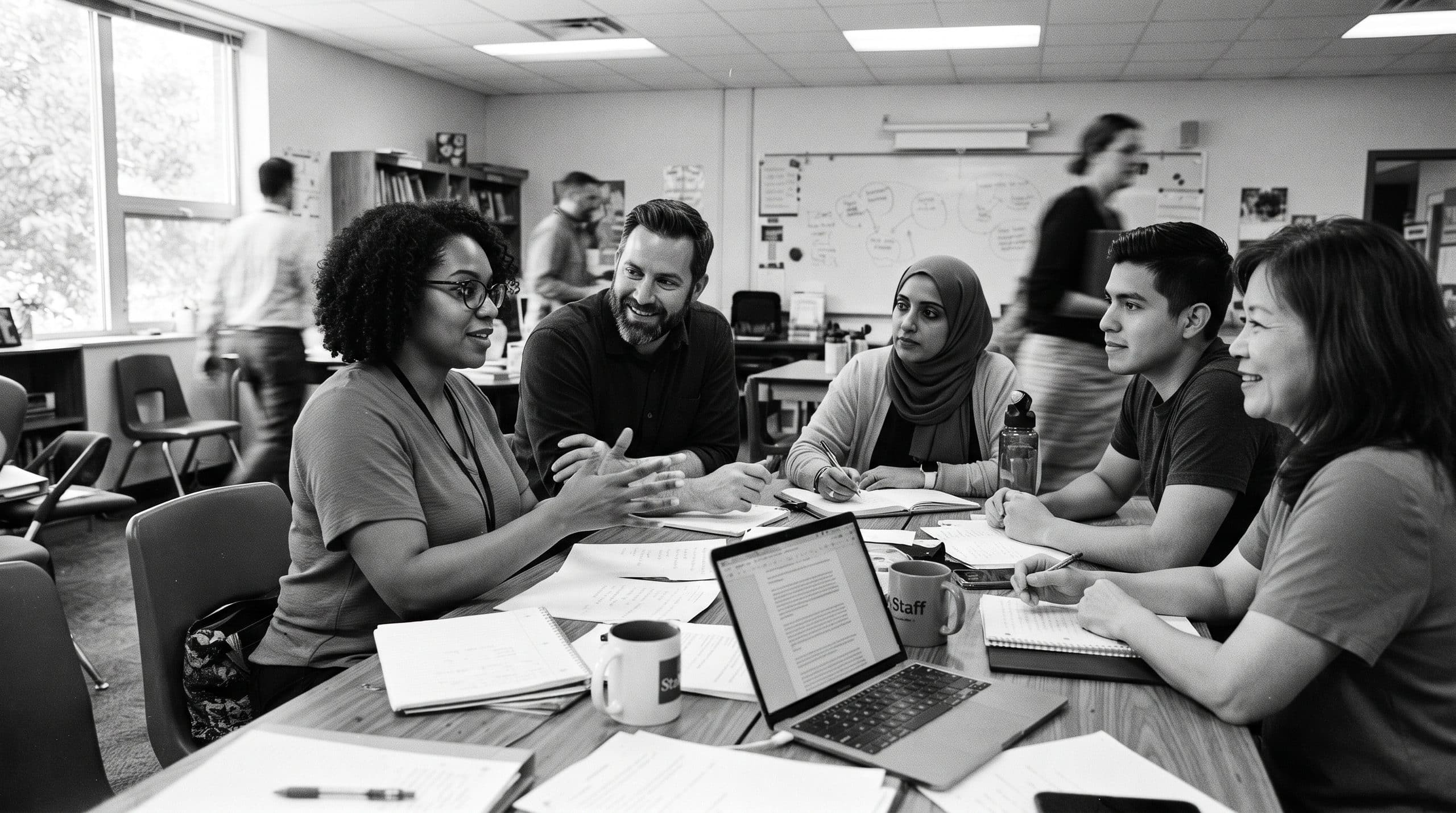
Something happened that anyone responsible for professional learning dreams about. Teachers started updating their practice immediately. Station rotations appeared, playlists were developed, and teachers came back excited and feeling like instructional leaders. Naturally, I thought: we should do this with everybody.
When Eight Works, Eighty Will Be Even Better
My pitch to the superintendent went something like this:
Imagine what could happen if 80 teachers had access to the same presenter, the same ideas, and the same caliber of resources? We did it. Now we had 80 adults together in the only room on campus capable of holding 80 adults. The room was crowded. The projector failed. Some teachers were grading before we had even begun. In a small group, curiosity can be contagious. In a large group, disengagement can be a tacit way to fit in.
That experience forced me to confront something I should have understood sooner. Putting more people in front of great professional learning does not necessarily scale its impact.
I had been impatient. I saw something working and wanted more. I still want so badly for teachers to experience freedom from whole-group instruction as the only instructional pathway, and for students to experience classrooms where productive struggle is the norm, not the exception. This impatience and desire to get the “biggest bang for our buck” led us to a group of 80 instead of a genuinely curious group of 20 or 30.
Ironically, only about 8 additional teachers from that group of 80 began implementing station rotation and cooperative learning strategies, like Numbered Heads Together, following the big-group presentation. Lesson learned.
So Should We Stop Putting 80 People in a Room?
No. There are times when I absolutely want every person in the room. I just no longer confuse those moments with professional learning.
Sometimes, PD is PR. Stay with me. I don’t mean PR as in making a district look good. I mean using some professional learning time to build shared understanding, set priorities, and show that leadership is serious enough about something to keep bringing it up. For example, the comprehensive high school where I work was exploring a bell-to-bell, cell phone-free school day policy when the principal stood up in front of the staff with an image of a cell phone on the screen. He asked, “What if these weren’t an issue at our school?”
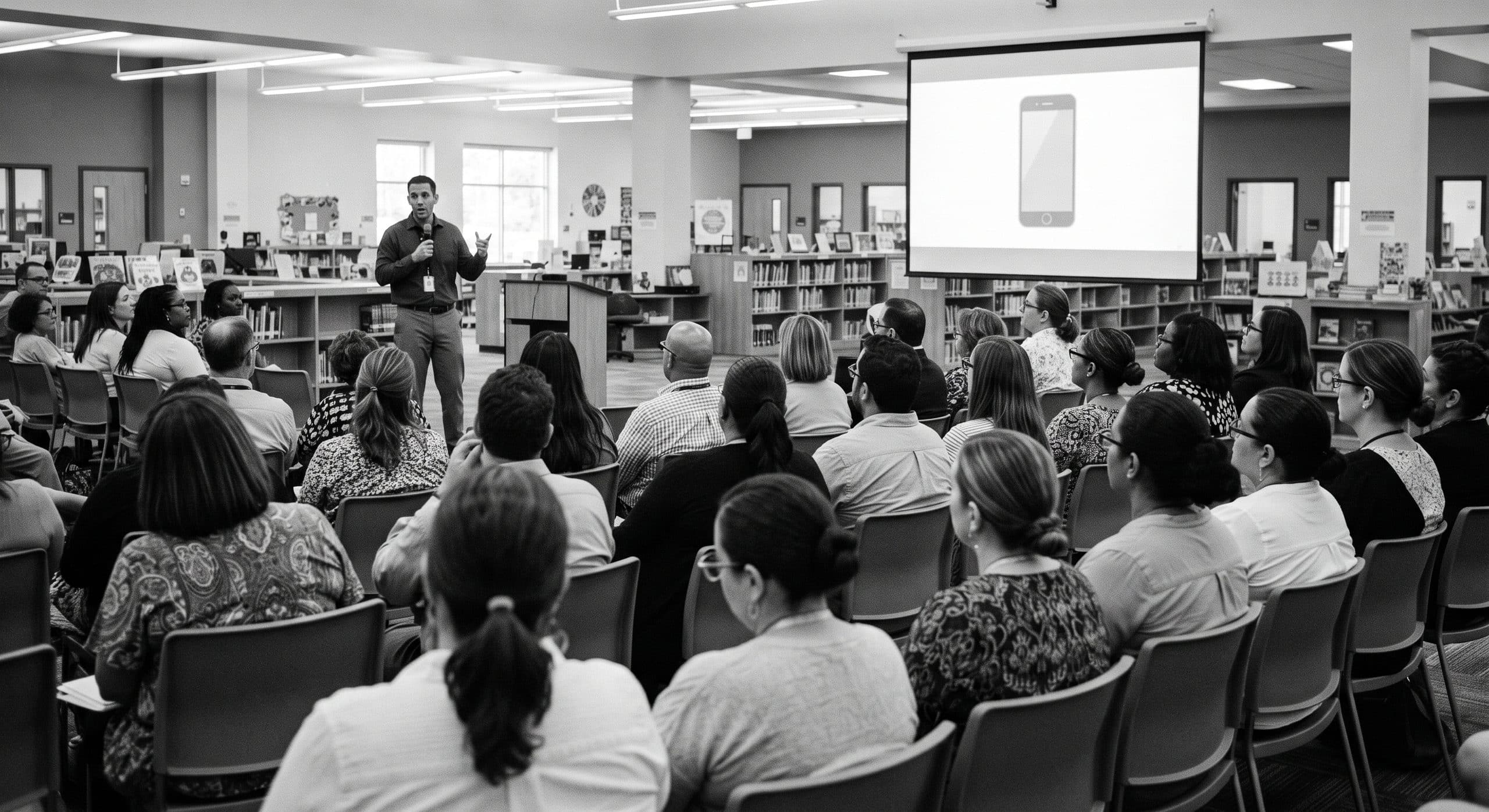
You could feel the room change. It was exciting. It also felt a little impossible, but everyone heard it at the same time. No one had heard that the principal “apparently said something about phones” from someone who attended a department-chair meeting. No one had to interpret somebody else’s interpretation of whether leadership seemed serious. They had the primary source. They heard the words and saw the body language. They experienced the response in the room, and they watched what happened when someone raised a concern.
Then we brought the topic back during PD days and again at staff development meetings. Staff were invited to give feedback. Ideas were considered and refined. Leadership continued bringing it up. Yes, we genuinely wanted people’s input, but something else was happening. Every time we dedicated shared staff time to the topic, we were signaling that this wasn’t going away.
Educators who have been around for a while have watched initiatives arrive with tremendous enthusiasm and disappear just as quickly. A certain amount of skepticism is understandable. Sometimes the job of whole-group time is simply to demonstrate that we’re thinking carefully about something, and we’re going to see it through as a school community. That is not the same objective as teaching someone a new instructional strategy or skill, and that’s okay.
Two Jobs We Keep Calling “PD”
Now I think we’ve been complicit in PD having a bad rap because we use one phrase to describe two very different jobs. One job is organizational alignment (but it’s more fun to call it PR).
The other job is professional learning. If the goal is organizational alignment, there are times when I want everyone together. I want people hearing the same message from the same leader at the same time. I want them to see the body language, hear the questions, and understand that this priority is going to keep coming back.
If the goal is professional learning, I want something different. I want smaller groups. I want people asking specific questions. I want it to feel like an elective, not a graduation requirement. I want someone leaving with an idea they’re excited to actually try on Monday.
Once I started separating these two jobs, designing for professional development got a lot better.
Design the Day With Teachers in Mind
Once you have decided the goal is professional learning, and you’ve thought intentionally about who needs to be in the room, there’s another question to consider: What kind of day are you designing for them?
I have a lot of thoughts about that too. I want people moving. I like generous transitions. I love a 15-minute walk across campus that looks inefficient on an agenda but gives two people who rarely interact time to have a real conversation. I think good coffee matters. So does lunch. So does choosing a room that actually accommodates adult bodies, laptops, bags, coffee cups, and water bottles, rather than deciding that, because 35 students technically fit, 30 adults will be comfortable.
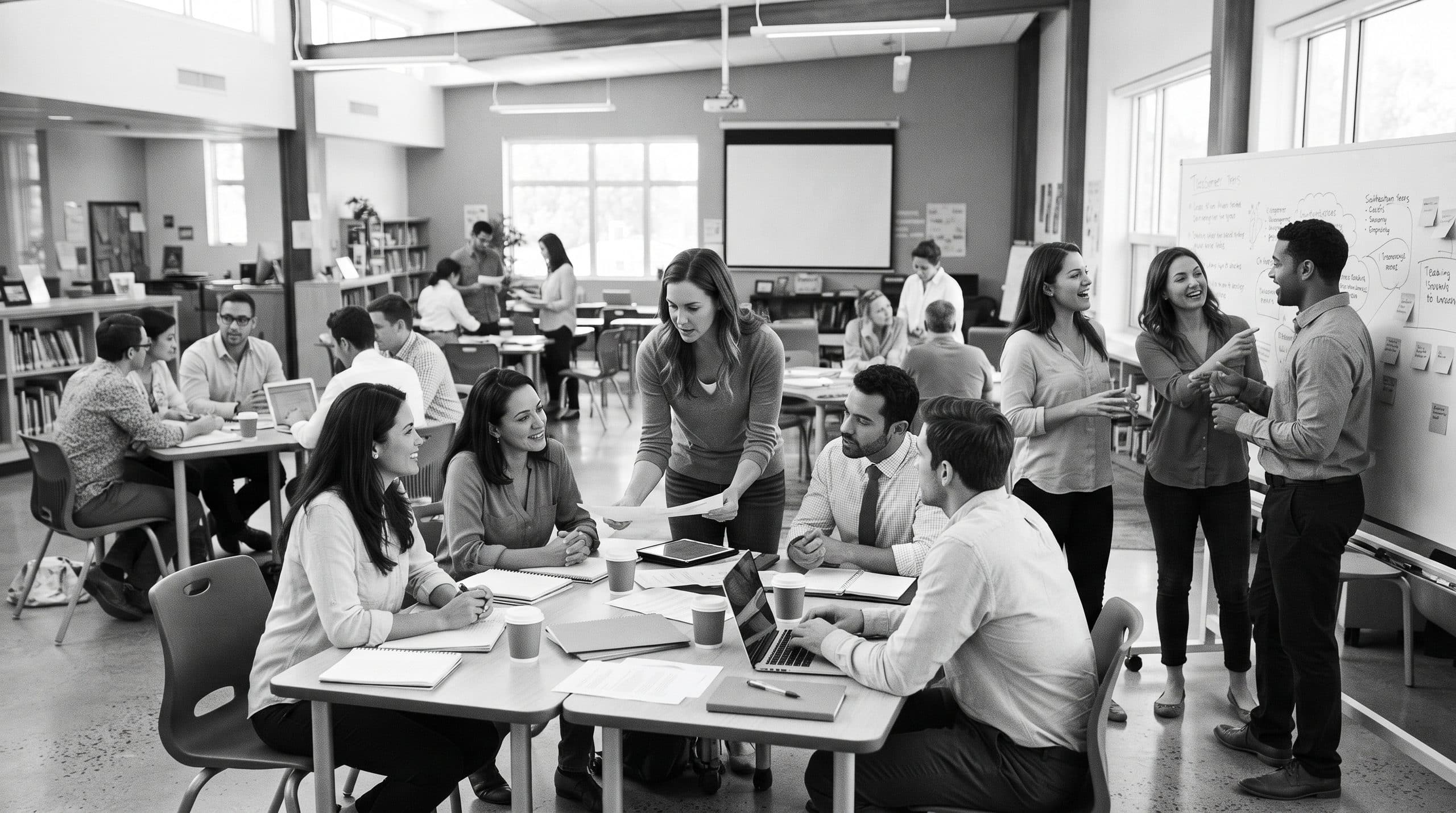
The word I keep coming back to is “special.” The best professional learning experiences make people feel, in some small way, that someone designed the day with them in mind. I’d love to know what moves you to make PD feel special, even with little or no budget. Leave me a comment. I want to make another post with more on this topic soon.
For now, the distinction I keep returning to is much simpler: before you design the PD, decide what job you need the time to do. If you need people to learn, design for learning, and trust that your investment in high-quality presenters will go farther with a smaller group of people who want to be there. If you need people to understand where the organization is going, hear the same message, wrestle with change, or simply believe that leadership actually wants what it says, get everybody into a room. Sometimes PD is professional learning, and sometimes PD is PR.
No responses yet