

I often compare a teacher’s work designing learning experiences to an architect creating a blueprint for a structure. Both must consider who they are designing for, how people will access and navigate the experience, what barriers they may encounter, and where flexibility in the design can help address different needs. Teachers make instructional decisions every day. They decide when and how to explain a concept, when to let students wrestle with an idea and engage in productive struggle, when to pause and check for understanding, and when a group needs more instruction or support.
Those decisions matter, even when a school has invested in high-quality instructional materials (HQIM). A strong curriculum provides thoughtful sequencing, grade-level content, and valuable resources, but the people who designed it did not know the unique group of students in a classroom. Teachers do. As they listen to conversations, watch their learners engage with tasks, review student work, and gather formative assessment data, they learn where students are making progress and when they need something different. That is why strengthening Tier 1 instruction requires more than following a lesson sequence. It requires teachers to make informed decisions about how to facilitate learning for the students in front of them.
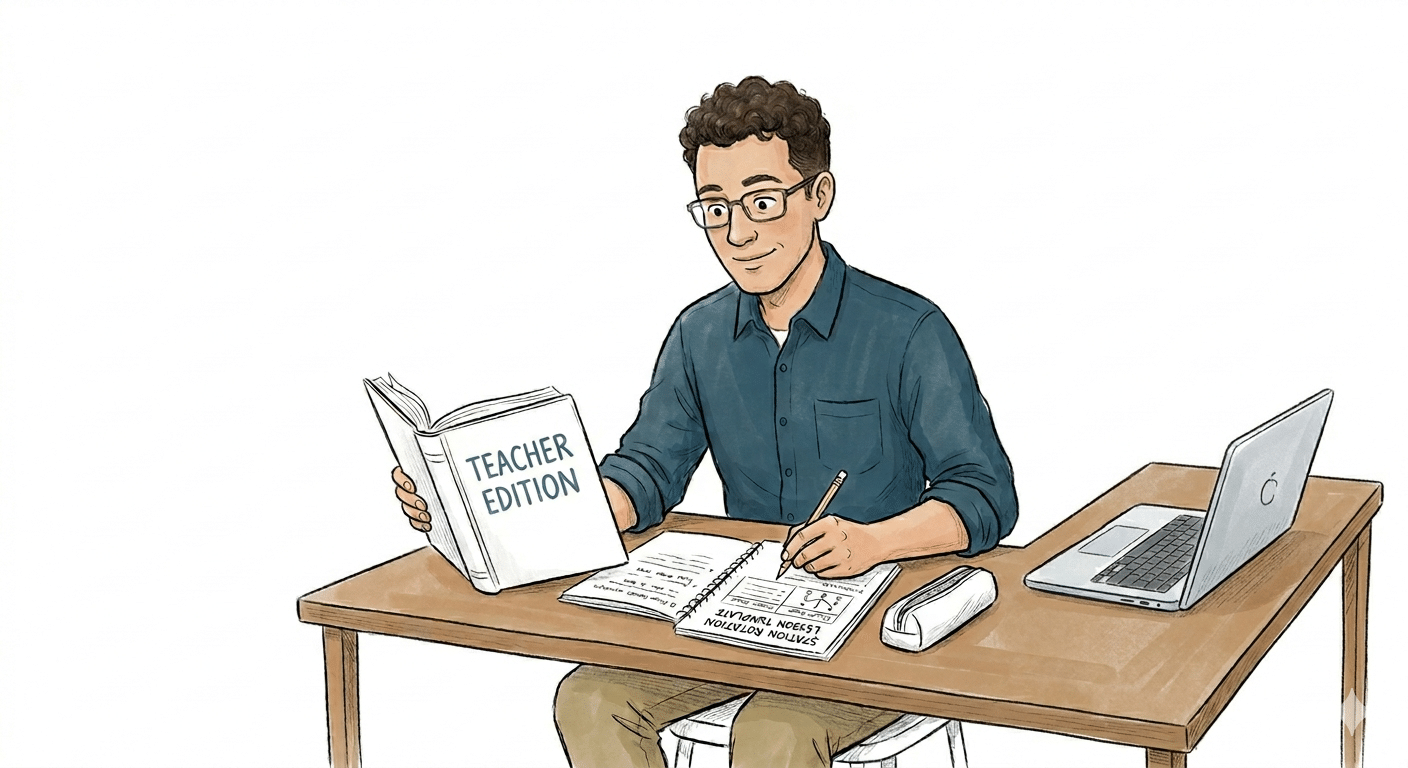
Choosing the Right Tier 1 Instructional Pathway
Many teachers default to whole-group, teacher-led instruction because that is how their curriculum is presented. It’s also familiar. It is how most of us were taught as students and how we were taught to teach in our credential or teacher training programs. Yet the same instructional pathway will not achieve every learning objective or serve every group of students equally. Teachers can choose from three viable Tier 1 instructional pathways based on the learning objectives and students’ needs.
- Whole-group instruction can create a shared foundation.
- An instructional video can give students flexible access to an explanation they might need to revisit.
- Differentiated small-group instruction gives teachers time to respond to needs that differ and are difficult to address in a whole-group setting.
Small groups become especially valuable when students’ work reveals differences in readiness, language needs, understanding, or skill development. Instead of repeating the same explanation for everyone, the teacher can meet with a group for a specific instructional purpose.
Teachers can draw on the adopted curriculum’s texts, problems, examples, and tasks to design these small-group lessons. The learning goals remain anchored in the curriculum, while the teacher uses evidence of student learning to decide which resources to use, what to emphasize, and how much guidance each group needs.
What Kind of Differentiation Do Students Need?
Carol Ann Tomlinson’s work gives teachers a helpful framework for identifying what they can differentiate:
- Content: What students learn and how they access it. Teachers might use different formats, carefully selected excerpts, problems, prompts, or examples that make information more accessible.
- Process: How students make sense of, organize, and practice the learning. Teachers might adjust modeling, thinking routines, graphic organizers, or opportunities to discuss and apply ideas.
- Product: How students demonstrate their learning. Teachers might offer different ways to show understanding or vary the complexity of the task while maintaining criteria aligned with the same learning goal.
- Learning Environment: The conditions in which students learn. Teachers might adjust seating, access to resources, or spaces for quiet work and collaboration.
I explore these elements in more detail in Differentiation and Action: Why It Matters, What It Is, How It Works. When coaching teachers on differentiated small-group instruction, I also want them to consider: What kind of instructional response do these students need right now?
Students may need different levels of support to reach the same learning goal. They may be working toward proficiency with the same standard, but they are at different points in the learning or skill progression. Formative assessment data may reveal that groups of students need to focus on entirely different concepts or skills. The instructional approach must align with where students are and what they need.
The three approaches below help teachers respond to these needs and determine the focus of their small-group instruction. Within each approach, teachers can adjust content, process, product, or the learning environment to support students’ progress.

Three Approaches to Differentiating Small-Group Instruction
Here is a simple way to think through the decision:
If the evidence suggests…
Students are working toward the same learning goal but need different levels of support and guidance to reach it.
Students are working toward the same standard but are at different points in the individual skills needed for proficiency.
Students have different instructional needs across the unit or learning cycle.
Consider…
Differentiation Approach 1: Same goal, different levels of support
Differentiation Approach 2: Same standard, different entry points
Differentiation Approach 3: Different needs, different instructional focus
These are flexible instructional responses, not fixed groupings. The goal is to use the data we collect, combined with our professional judgment, to help all students make progress towards standard-aligned learning objectives.
Differentiation Approach 1: Same Goal, Different Support
What students share: The same immediate learning objective
What changes: Support, scaffolds, examples, resources, and the level of guidance
Imagine a group of students is learning to make an inference about a text and support it with evidence. One group may be ready to read independently, discuss possible inferences, and select evidence. Another group may need help unpacking the language in a key passage before discussing what it suggests. A third group may benefit from the teacher modeling how to connect a specific detail to an inference before trying it with a partner. All three groups are working toward the same goal, but the teacher is adjusting the pathway students take to reach it.
In this approach, I want teachers to look closely at the barriers students are experiencing. Is the unfamiliar vocabulary getting in the way? Do students need background knowledge or information to make sense of the text? Would a carefully chosen excerpt help them focus on the thinking required by the objective? Do they understand the concept but need a stronger example of how to explain their reasoning or sentence stems to support their explanation?
The goal is to maintain the rigor of the learning objective while adjusting the scaffolds and supports so all students can access the learning and make progress toward that goal.
Differentiation Approach 2: Same Standard, Different Entry Points
What students share: The longer-term goal of becoming proficient with the same standard
What changes: The specific aspect of the standard, or the level of skill complexity, each group learns and practices
A grade-level standard may describe what students should ultimately be able to do, but proficiency often depends on applying several smaller skills that build on one another. Consider a standard asking students to cite strong textual evidence to support an analysis of the text. A teacher might break that work into a progression like:
- Understand what the questioner’s claim is asking.
- Locate details in the text that relate to it.
- Distinguish relevant evidence from details that are interesting but do not support the thinking.
- Select the strongest pieces of evidence.
- Explain how the evidence supports the analysis.
This progression is a useful planning tool, not a rigid ladder every student must climb in exactly the same way. Breaking a standard down into its component skills helps teachers plan instruction, design effective formative assessments, and identify the next instructional step for a group of students.
Midway through a unit, student work might show that:
- One group can find details but struggles to decide which of those details are relevant.
- Another group of students can select relevant evidence but needs help choosing the strongest example.
- A third group selects strong textual evidence but needs support explaining its connection to their analysis more clearly.
A whole-group lesson on citing evidence may be too broad to address those differences. In small groups, the teacher can provide focused instruction and give students an immediate opportunity to apply the skill they are developing. Students remain connected to the same grade-level standard, even though small-group instruction targets different entry points on the path to proficiency.
Differentiation Approach 3: Different Needs, Different Instructional Focus
What students share: The broader desired result for a learning experience or unit
What changes: The concept or skill that requires explicit instruction, reteaching, modeling, support, or guided practice
This approach is often useful after students have engaged with several ideas or skills in a unit. Through discussions, practice, assignments, and checks for understanding, the teacher notices patterns in students’ work. For example, during a science unit:
- One group may have a misconception about the process being studied.
- Another group may struggle to interpret data displayed on a graph.
- The third group may need support crafting a claim and supporting it with relevant evidence.
These groups do not need three versions of the same mini-lesson. They need totally different instruction. The teacher might:
- Identify and address the first group’s misconception through a focused explanation and an opportunity to apply their new understanding.
- Provide explicit instruction and modeling focused on interpreting a data set, guide students through this process, and let them practice with feedback.
- Model how to craft a claim and select relevant evidence to support it, facilitate a sorting activity matching claims with supporting evidence, and pair students to develop a claim, select evidence, and explain how the evidence supports the claim.
This approach asks teachers to consider what student work reveals about their specific needs as they move through a unit. It also allows teachers to revisit concepts, skills, and processes students may not have fully grasped during initial instruction and address those needs before students reach the end of that learning cycle.
The Data Should Inform Our Approach
The data we collect before and during learning should help us decide when differentiated small-group instruction is the most effective Tier 1 pathway and which approach will best meet students’ needs. Before meeting with a group, I encourage teachers to ask:
- What evidence led me to bring these students together?
- What is the data telling me about their needs?
- Which approach to differentiation best fits those needs?
- What do I want them to understand or be able to do by the end of our time together?
- What explanation, model, question, or task will help them move forward?
- How can I adjust access to the content, support processing, and offer different ways for students to demonstrate their learning?
- How will I check their understanding and determine what they need next?
As students learn, their needs change. A student who needs a language scaffold today may not need it for the next objective. A student ready for an extension in one part of a unit may need more guidance in another. Checking for understanding during and after small-group instruction helps teachers address their support, refine the instructional focus, and regroup students flexibly as needed. A strong curriculum provides a foundation. Teachers use the evidence of student learning and their professional judgment to make that curriculum accessible and appropriately challenging for the students in their classrooms. Supporting teachers in making these instructional decisions is essential to strengthening Tier 1 instruction.
No responses yet