
This is a guest post by Nicole Wilkinson, a professional development coordinator, curriculum designer, and instructional coach. She knows PD days from both sides: she plans them for her district and supports teachers in putting the learning into practice.
It’s a month before a professional development day, and someone needs to make an agenda.
A handful of things have to happen. A mandated training. Forty-five minutes of prep time negotiated into the labor contract. Maybe an update from HR. There’s a budget, a limited number of rooms, and a presenter someone heard was really good. So you start putting things on the schedule.
I’ve done this plenty of times. You work backward from lunch, figure out how many breakout sessions you can squeeze into the morning, and start emailing people to see who’s available to lead sessions. Before you know it, you’ve designed an entire professional development day without ever really deciding what you want it to accomplish.
This is where I’d like to be your pause button. If we want teachers to teach differently, we need to design professional learning differently.
We expect teachers to design thoughtful learning experiences for students, but when it’s our turn to design learning for teachers, the urgency of filling an agenda can get the best of us.
The Challenge: We Start with the Agenda Instead of the Outcomes
Backward design is not a new idea in education. Grant Wiggins and Jay McTighe gave us Understanding by Design, which presents a clear framework for designing learning. The basic premise is straightforward: identify the desired learning outcomes, determine what evidence would demonstrate success, and then design the experiences that will get learners there.
Leaders want teachers to do this. But when we’re planning professional development, it’s remarkably easy to skip straight to the third step of designing the experience without actually articulating the learning outcomes and how we will measure progress toward them.
So, let’s slow down and take the stages in order.
Stage 1: Decide What Teachers Should Do Differently
If I were in the room planning with a leadership team, I’d ask: If you could wave a magic wand, what would you want teachers doing differently on Monday? Not just what you want them to hear about or what information you need to cover for reporting purposes. What do you actually want them to do differently?
Next, I would ask: What’s the big swing you’d like to take over the next six months or year?
Say your bigger goal is for teachers to use what they learn from student work to make more responsive instructional decisions. What could that look like on Monday? A teacher gives a quick check for understanding, sorts through the responses, and uses what they notice to make one change to the next lesson. Maybe most students are ready to move on, and five students could use a few minutes with the teacher to talk through a misconception. That’s the first step teachers can take this week, and it gives you something specific to design the PD day around.
And it’s worth asking what kind of day this needs to be. In my previous article, I argued that sometimes PD is PR and sometimes it’s professional learning. Is the goal to communicate a shared message to everyone? Or is the day focused on building skills? Sometimes, it’s both.
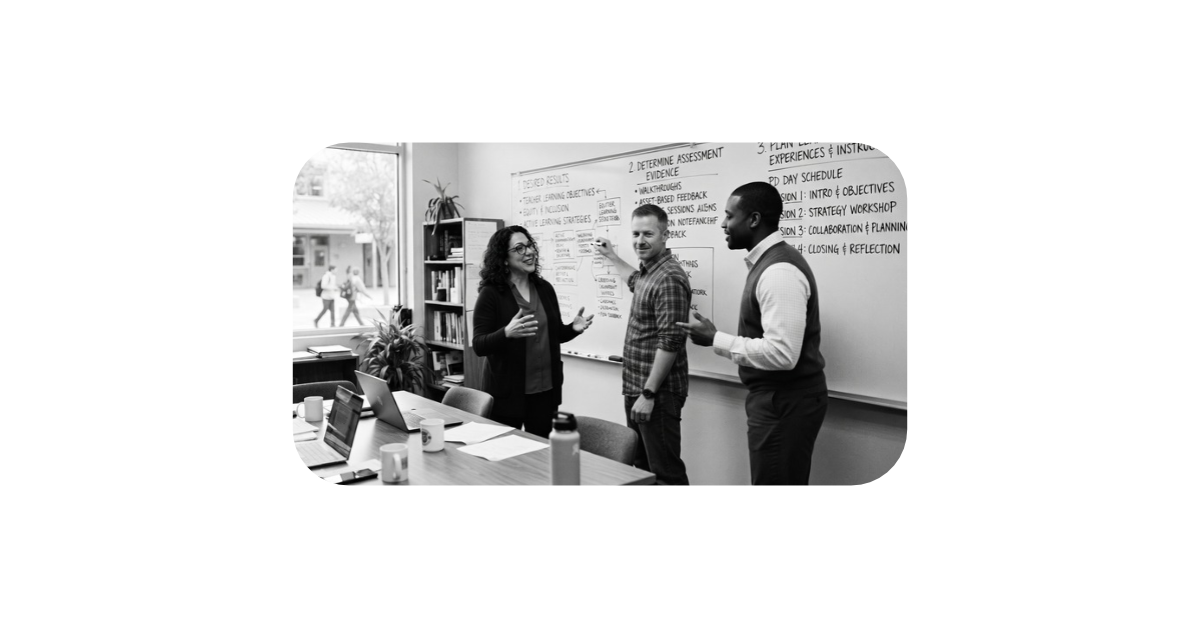
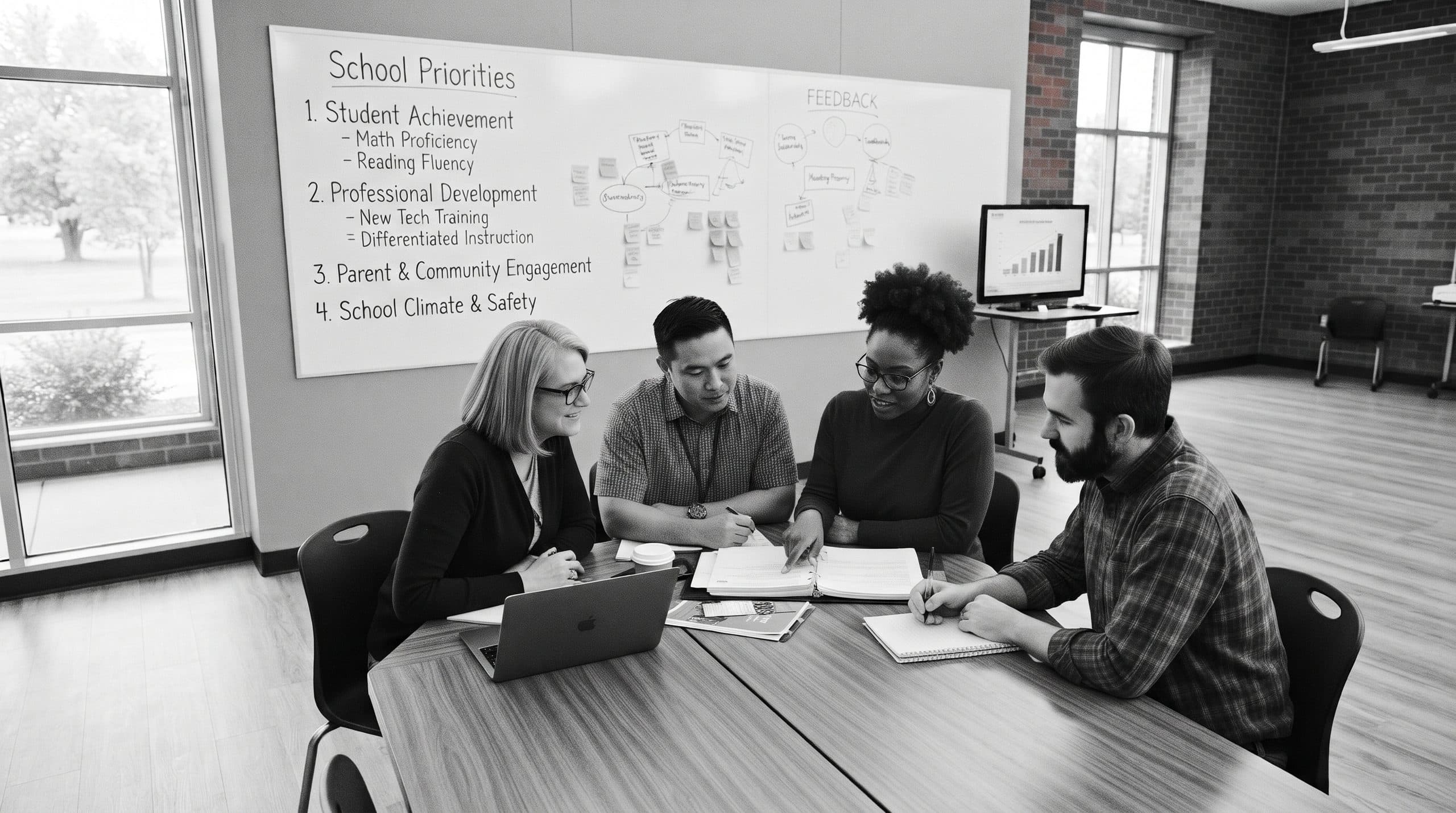
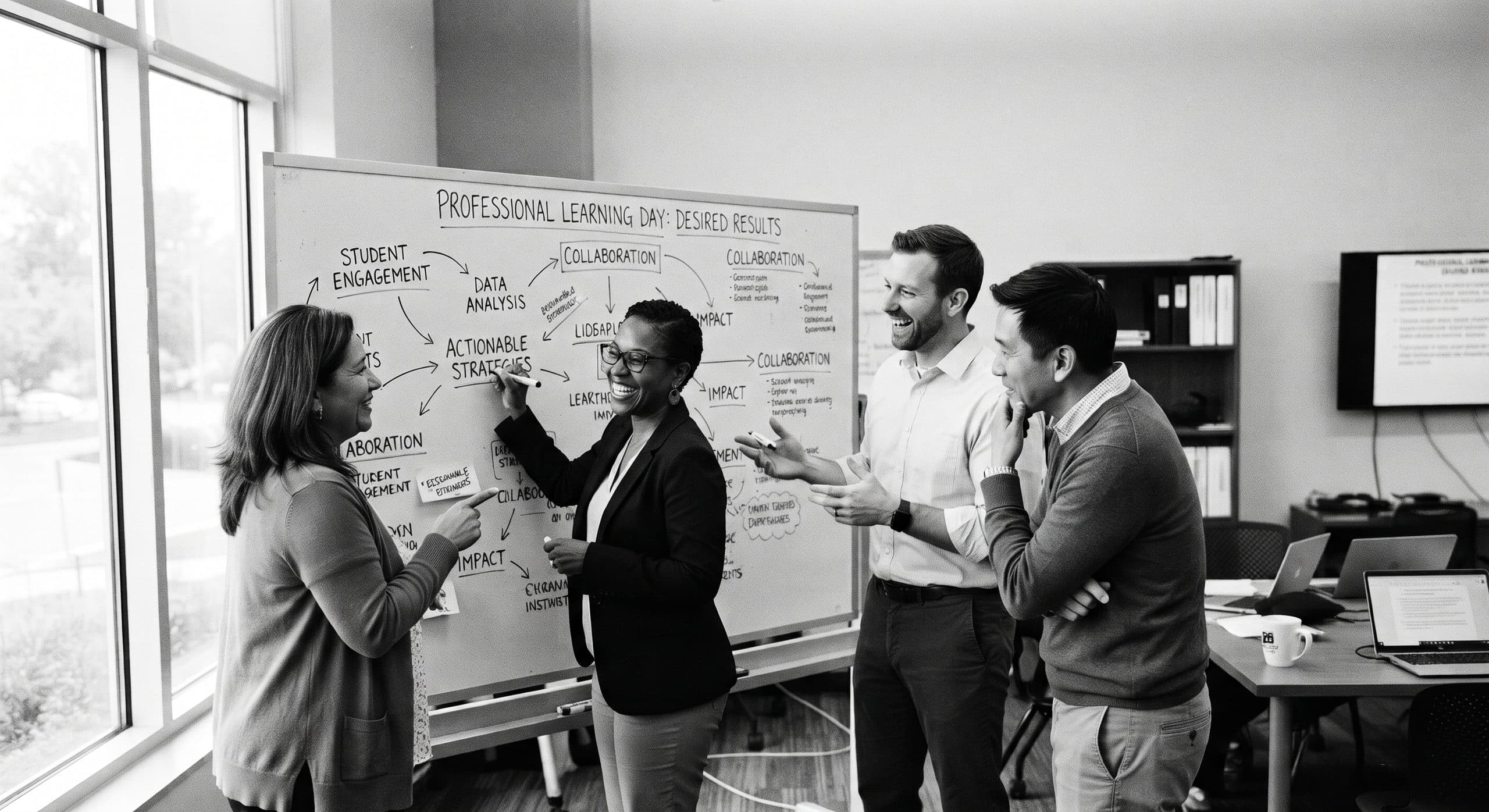
Whatever your answers are, write them down. Get a whiteboard and a marker, or a pen and paper. Write the intended outcomes so everyone on the planning team can see them. We have to intentionally define what success looks like before anyone starts suggesting activities.
Stage 2: Decide How You’ll Know It Worked
The second stage of backward design is the one we skip most often. How will we know the professional learning day was successful? And how will leaders and coaches follow up with teachers to see what they tried and provide feedback on how it went?
We can ask teachers whether they enjoyed a session, and I do think subjective feedback matters. But there’s genuine survey fatigue. A presenter gives a feedback survey at 11:00, and then the district emails another survey six hours later asking what worked. Ten people respond.
We need to be more strategic about the evidence we’re collecting. Go back to your whiteboard. If teachers really did the thing you wrote down, what would you see, hear, or collect two weeks later? Decide that now, before the day is designed, and then tell teachers up front.
I’d also ask what we could see before teachers leave that day. In our example, I’d want to hear a teacher look at a set of student responses and say, “Here’s what I notice, and here’s what I’d do next because of it.” You could hear that in the conversation with a partner or see it in a few lines on a lesson plan. If the connection between the student work and the next move is fuzzy, there’s still time to talk through it.
Two weeks later, I’d want to hear what happened when the teacher tried it with their own students. At a regular team meeting, each teacher could bring a few student responses and share what they noticed, what they changed in the next lesson, and what they learned from trying it. Put that conversation on the calendar when you plan the day.
Tell Teachers What They’re Working Toward
What if, at the beginning of the day, the principal said something like:
“Today we’re going to practice using a quick check for understanding to make a decision about what to teach next. Before you leave, you’ll have a check ready to try and a chance to practice figuring out what you’d do with the responses. At your team meeting in two weeks, we’ll ask you to bring a few responses from your own class so you can talk through what you noticed and what you did next.”
Now teachers know what they’re working toward.
Stage 3: Design the Day for the Job It Needs to Do
Now it’s time to design the day of learning. If leadership has a message everyone needs to hear, start together. But we shouldn’t force a whole-group opening just because that is how PD days have always started. If there’s a reason to gather, then gather. If not, don’t manufacture one.
Read the Room, Then Find the Sparks
Once we know what we want and how we’ll recognize it, I’d want to know what’s happening in the school.
- What are the sociopolitical vibes?
- Has something happened in the community?
- Are teachers frustrated about a recent decision?
- Is there a contentious issue with the board?
- Are people excited, exhausted, or distracted by something bigger than professional development?
You can have a beautifully designed workshop that lands terribly because the elephant in the room was never acknowledged.
I’d also want to know where the sparks are on a campus or in a district.
- Is there a math team that has cracked the code on differentiated small group instruction?
- Is a group of teachers excited about an interdisciplinary project?
- Is a department experimenting with a grading practice or instructional strategy that is finally working?
- Where is innovation already happening? What would we like to see grow or get bigger?
Sometimes the best professional development isn’t introducing something new. It’s creating the conditions for something promising that’s already happening to spread.
That math team might be exactly who you want to learn from. Ask them how they decide which students need more time with them and what they do with that time. You might also find that some teachers already collect exit tickets every week and could use help sorting through responses, while others need time to come up with a question that tells them something useful. That’s information you can design around. It might even change what you ask people to try first.
Separate Non-Negotiables from Traditions
And I’d want to be honest about the constraints. Remember that mandated training and the 45 minutes of contractual prep time? Some of those things really do have to happen. But some of what lands on the agenda every year is just habit. Separate your true non-negotiables from your traditions before you start designing around them.
Structure the Learning Pathway with Intention
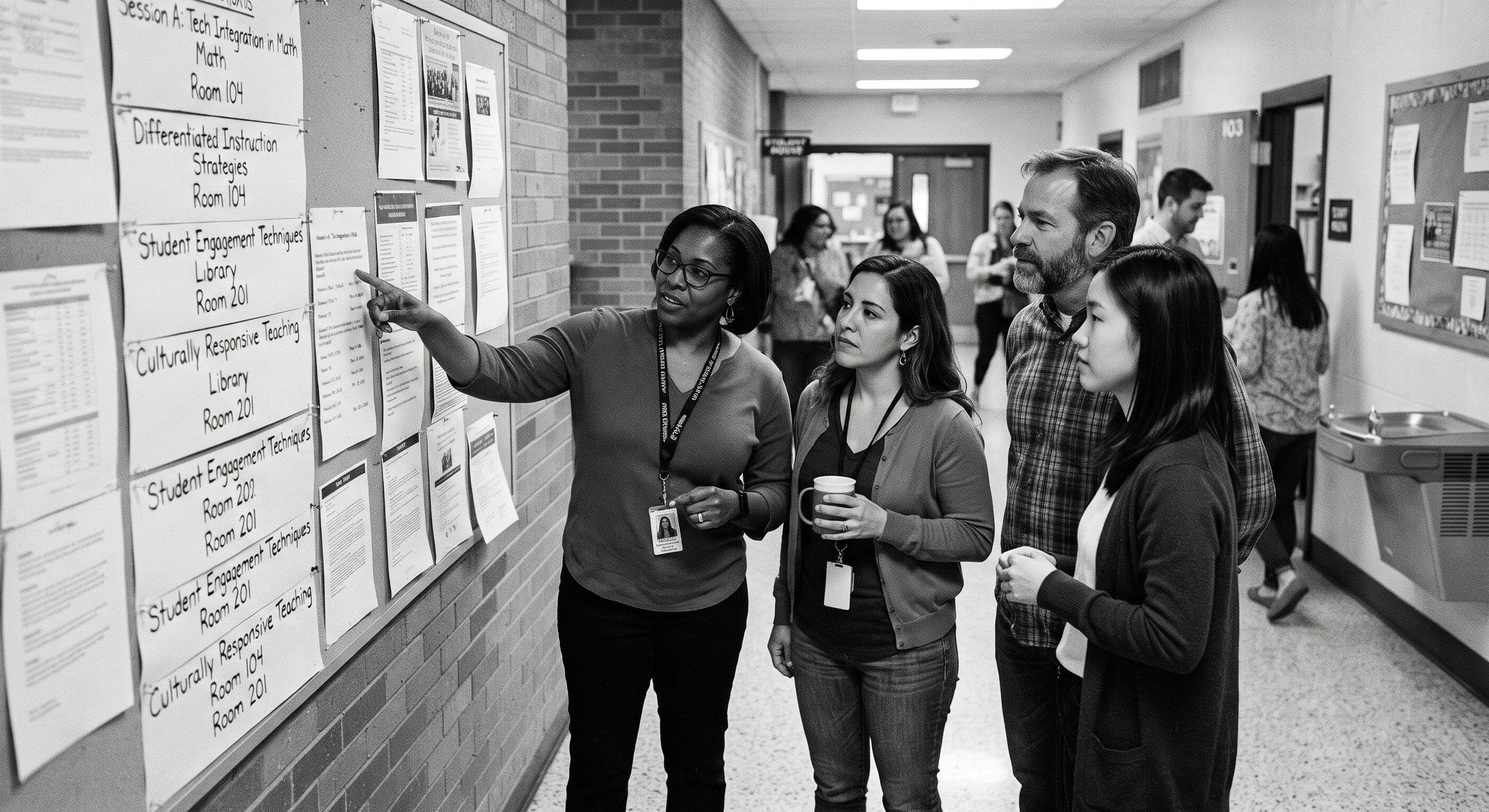
For instructional learning, I prefer smaller groups of 20 to 30 people, with different options connected to the day’s larger purpose and goal. Give teachers time to work with a presenter, ask questions, and try something they’ll actually use.
In our quick-check example, I’d ask someone from that math team to bring a handful of student responses and talk us through what they noticed and what they did the next day. Then I’d give teachers time to look at another set of responses with a colleague and decide what they’d do. They can compare their reasoning and get feedback before they turn to an upcoming lesson of their own. By the end of that work time, they’ve practiced making the decision we’re asking them to make, and they have a quick check ready to use with their students.
Other purposes require a completely different rhythm.
When my leadership team was preparing to launch a bell-to-bell cell-phone-free school day, we needed staff to understand the technology, provide input on enforcement, collect their locking pouches, and address a few other logistical requirements.
We divided the staff into smaller groups and rotated them through quick 25-minute sessions. The feedback was surprisingly enthusiastic. People liked the pace. They came in, got what they needed, and moved on. That format would have been terrible for a deep dive into a new teaching strategy. But it was exactly right for the job we needed that time to do.
This is the part of planning we tend to rush. We think carefully about what teachers will learn, but the structure of the day gets decided by habit, room availability, or whatever we did last year. The structure is an instructional design decision, too. It’s the same choice we ask teachers to make every day: What do learners need right now, and what format will actually get them there?
Prioritize Teacher Agency and Meaningful Choice
Whatever the format, I want to integrate as much genuine choice as possible.
We have to let go of the idea that because we invest heavily in a presenter, all teachers need to attend. That’s a significant investment for a school district, and I understand the temptation to get our money’s worth. But I’d rather have ten teachers leave on fire, ready to change something on Monday, than the whole staff sitting through a session they don’t want or need.
And what about the teacher who doesn’t want any of the options?
I don’t think we should automatically label that person resistant (easier said than done!). I’d start by asking what they’re working on with their students and where they’re getting stuck. Maybe the English teacher wants to know why students can find a quote but struggle to explain how it supports a claim. Maybe the science teacher wants to know why students can describe what happened in a lab but struggle to explain why. Both teachers have a question worth investigating, and both can practice using what students show them to decide what to teach next.
Choice doesn’t mean abandoning our priorities. It means recognizing that there may be several meaningful ways to move toward them.
Make Room for People to Be People
I’ve become increasingly convinced that the experience surrounding professional learning matters almost as much as the sessions themselves.
- Can we get coffee and pastries from that local place everyone loves?
- Can we include generous transitions so people have time to talk and connect instead of rushing from one room to another?
- Can we hold sessions in spaces where adults will be comfortable, with room to move?
- Can we build in breaks that allow participants to check email or call a babysitter, so people aren’t splitting their attention all day?
I’ve started pushing myself to schedule a full hour for lunch. I used to resist that. We’re paying all of these people to be here! But a 30-minute lunch feels like a regular Tuesday and barely gives a teacher time to use the bathroom and eat. There’s no time to decompress or enjoy a conversation. An hour feels different. It makes the day feel special.
I am also learning to let go of some control. Recently, a colleague gently pointed out that her team of three was trying to work on something meaningful, but I’d required them to sit in a room with 20 other people so we could manage attendance. They were distracted the entire time.
She was right.
I’m experimenting with more flexible structures where teachers check in, identify what they’re working on in relation to the larger goal, and then have the freedom to go somewhere that actually supports that work. Maybe it’s a quiet classroom. Maybe it’s a picnic table outside. Maybe it’s the park down the street. The expectation isn’t disappearing. I’m just trying to stop confusing physical attendance with meaningful engagement.
High Support. High Expectations.
If we’re going to tell teachers that in two weeks we’ll ask what they tried, we owe them support in getting there. Sometimes that support is simply permission. Imagine a leader opening a day of learning with something like this:
“If you’re 40 minutes into a workshop and haven’t found anything useful, don’t just sit there politely. During work time, pull the presenter aside and say, ‘Here is what I am struggling with. What have you got that could help me?'”
I’d also make it clear who teachers can turn to once they’re back in their classrooms. Maybe an instructional coach or a colleague from the math team makes time that first week to look at student responses with anyone who wants a second set of eyes. When teams get together two weeks later, they can use what teachers bring to decide what support would help next.
We spend so much time encouraging students to recognize their strengths, take risks, and rise to a challenge. I think teachers deserve that same kind of encouragement.
Give Yourself Two Hours Before You Give Everyone a Day
I know the realities of school leadership are intense. And now someone wants you to spend two hours backward-designing a professional development day? I’d argue it’s worth it. These days are expensive. Not just financially, but in the opportunity cost of bringing an entire staff together.
Put two uninterrupted hours on the calendar with your planning team. Get a whiteboard and write down what you want to accomplish, what evidence would convince you that it happened, and what your teachers actually need to get there.
Then design the day.
I’ve included a planning resource to help you have that conversation with your team because sometimes what leaders need most isn’t another great idea for a breakout session. It’s a structure that helps them resist the urge to start scheduling.
We expect teachers to design meaningful learning experiences with clear outcomes, opportunities for choice, and evidence of understanding. We should hold ourselves to the same standard.
So, before you open that agenda template, I dare you to spend two hours with a whiteboard instead.
And if you’d like a thought partner at that whiteboard, I’d love to help. Maybe you already know what you want to see change in classrooms, and you’re figuring out what a single PD day can do to get you there. I can sit down with your planning team to work through what teachers will have time to learn and try, what you’ll look for afterward, and how you’ll support them once they’re back in classrooms. If you have a PD day coming up, let’s talk about what you want to make possible.
No responses yet