

Guest Post by Robert Mayfield
At conferences this year, I’ve had dozens of conversations with teachers about AI. Not surface-level curiosity, real curiosity, thoughtful questions, and genuine interest. Educators are leaning in and asking things like:
- How do I actually use this in my classroom?
- What does this look like beyond generating worksheets?
- What’s worth my time to learn?
There’s a common narrative that teachers are broadly resistant to AI. The reality is more complicated. Some educators are understandably skeptical or fearful. Others are deeply curious and actively exploring what’s possible.
Many teachers want to learn, but we’re asking them to do it in a system that fragments their attention all day long. The real problem is that AI arrived faster than most schools and districts could respond to it. Many educators are trying to figure this out on their own. They’re experimenting after school, watching YouTube videos late at night, or having conversations with colleagues in the hallway between classes. And too often, what they encounter is exactly what they were afraid of: another tool, another platform, another thing to manage.
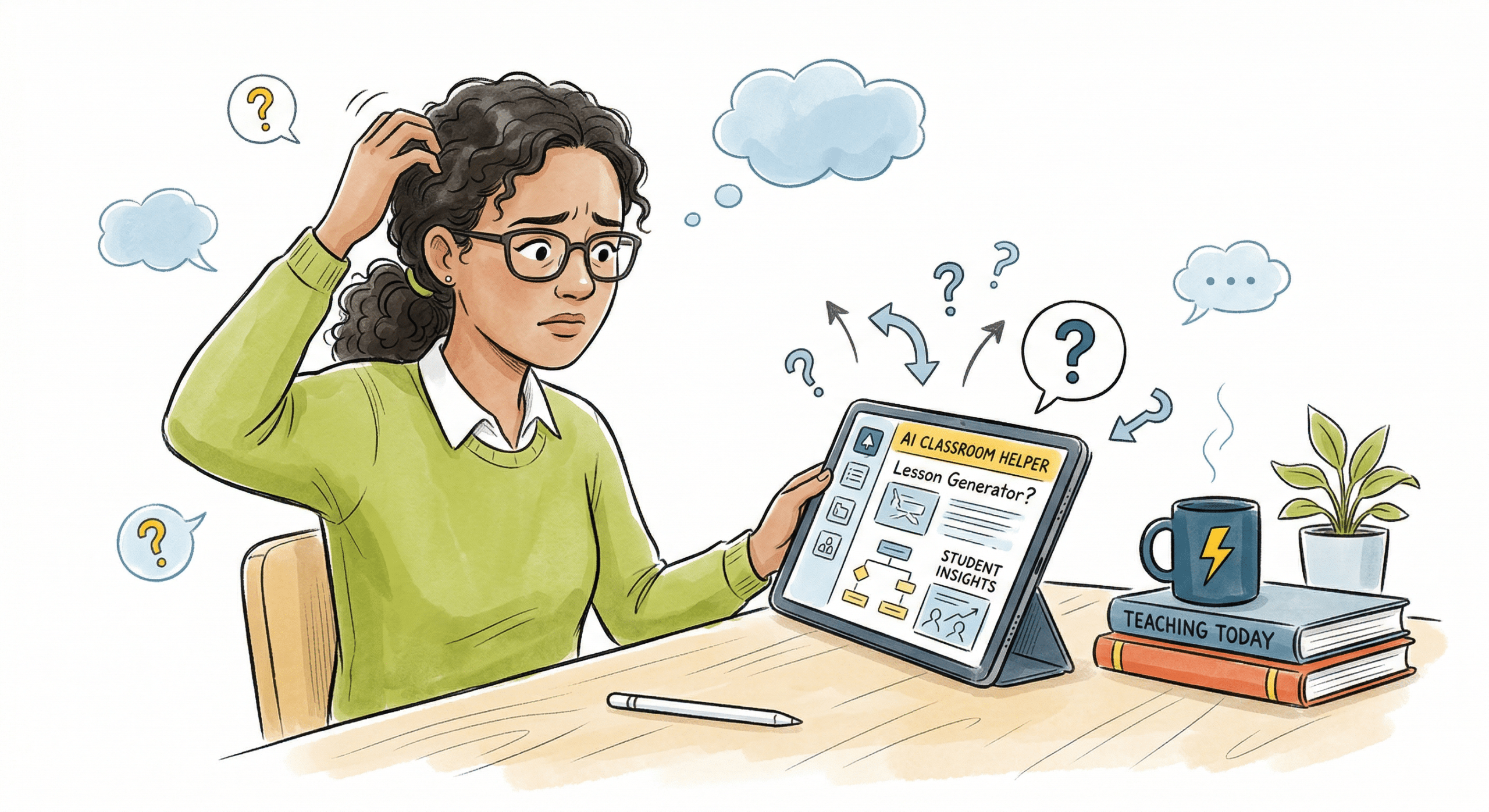
Teachers aren’t necessarily resistant to AI itself; they’re resistant to more fragmentation.
I saw this clearly while teaching one of my preservice teacher courses. One of my student teachers, a math major who had previously worked in the tech industry, was already deeply knowledgeable about AI. She understood how it worked and followed the latest developments, yet she told me she still hadn’t found a meaningful way to use it to improve instruction in her math classroom.
So I showed her a simple example using a multimodal AI tool with an interactive whiteboard: students solved a problem, explained their thinking out loud, and used drawings, shapes, and annotations to show their reasoning. The AI listened, analyzed their explanation, and provided immediate feedback, allowing students to revise and re-record their responses in real time. At the same time, the teacher was freed up to circulate, review live data, and provide targeted support where it mattered most. Her reaction was immediate. Her view of AI completely shifted. It wasn’t just another tool to manage, but something that could fundamentally change how she used her time as a teacher.
And that’s the conversation we should be having about AI. Not: What tool should teachers try next? But: How can AI protect teachers’ thinking?
Deep Work for Educators
A few years ago, I read Cal Newport’s book Deep Work. Newport argues that the ability to focus without distraction on cognitively demanding tasks is becoming increasingly rare and increasingly valuable.
As I read the book, I couldn’t stop thinking about teachers, because teaching is full of cognitively demanding work. Designing lessons that actually engage students, analyzing student thinking, anticipating misconceptions, reflecting on what worked and what didn’t, and improving instructional routines over time are not quick tasks. They require uninterrupted attention, mental space, and sustained thinking. In other words, they require deep work. But modern teaching environments are built for the opposite: constant interruptions, emails, meetings, platform notifications, coverage requests, and grading piles. Teachers move from task to task all day long, and the work that matters most, the thinking work, gets pushed to nights and weekends, if it happens at all.
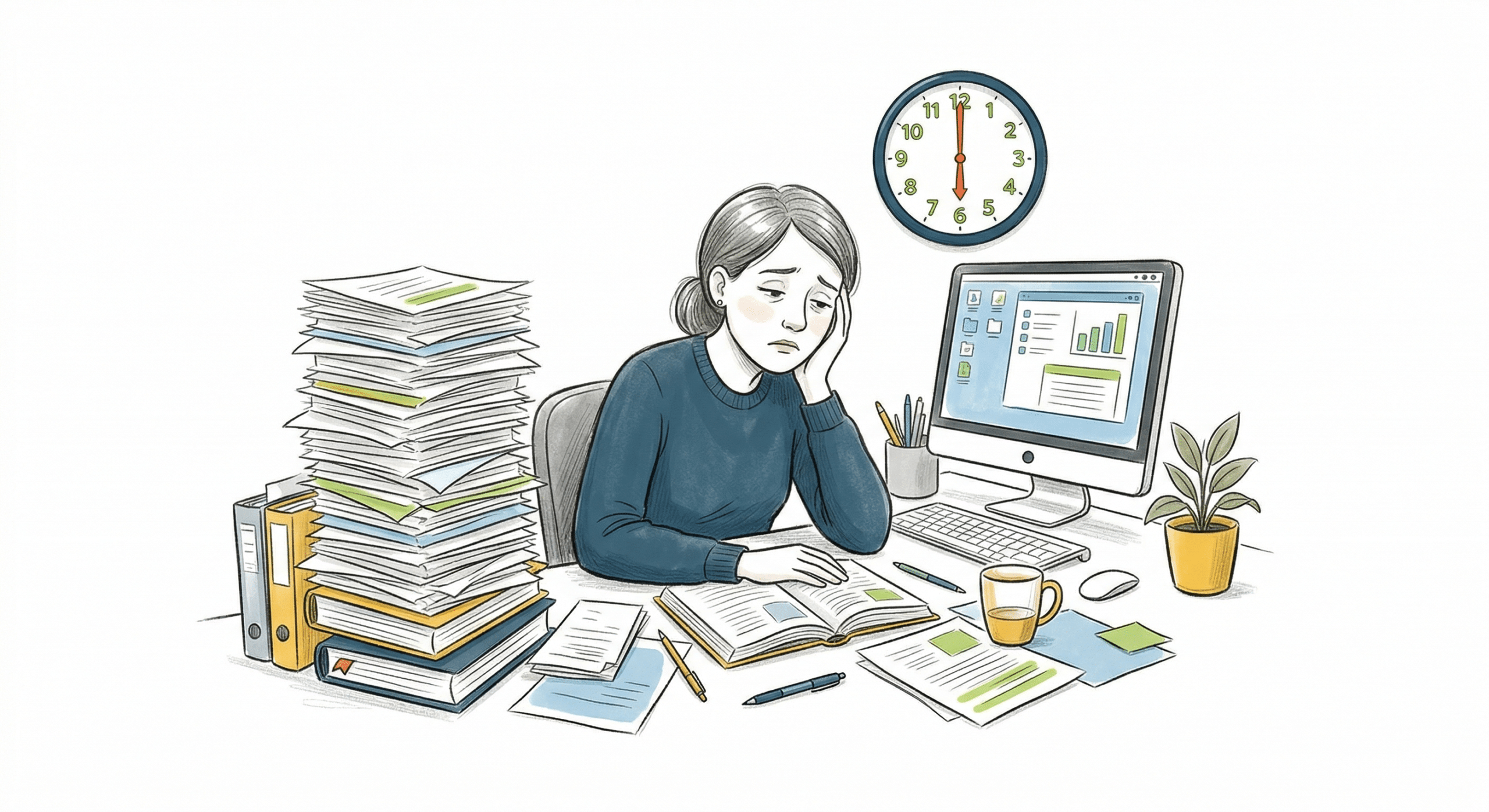
What Deep Work Actually Looks Like for Teachers
Most teachers are working hard all day, but very little of that time is actually spent on deep work. That’s not a criticism. It’s a reality of how the job is structured. Teachers spend large parts of their day responding: answering emails, adjusting plans on the fly, managing behavior, preparing materials, grading assignments, and keeping everything moving. All of that work is necessary. But very little of it requires sustained, uninterrupted thinking.
Deep work in teaching looks different. It’s the difference between putting together a lesson and intentionally designing one, deciding where students should struggle, what questions will push their thinking, and how to structure the experience so they’re doing the cognitive heavy lifting. It’s the difference between grading a stack of papers and stepping back to look for patterns, what students consistently misunderstand, where their reasoning breaks down, and how instruction needs to shift as a result.
It’s also the difference between talking about teaching and actually improving it. A quick conversation in the hallway or a venting session in the staff lounge can feel productive, but it rarely leads to better instruction. Deep work shows up when teachers sit with student work together, challenge each other’s assumptions, and make intentional decisions about what to change next.
The Role of Reflection in Deep Work
Even reflection itself, one of the most powerful forms of deep work, is often missing. Not because teachers don’t value it, but because there’s rarely space for it. The questions that actually move practice forward are :
- Why did this lesson work? What specific elements (structure, strategy, grouping, pacing, task design) supported student learning?
- If the lesson didn’t work as intended, where did it break down?
- What did I assume students already knew or could do? Were those assumptions accurate?
- What evidence do I have of student learning? What did I see, hear, or collect that shows progress toward the goal?
- How effectively did I differentiate (content, task, support, or level of challenge)? Where could I adjust to better meet diverse needs?
- How did students interact with the task and each other? Did the structure promote thinking, collaboration, and engagement?
- Where did I spend most of my time and energy? Did that align with where students needed me most?
- What is one intentional adjustment I will make moving forward?
These reflection questions get pushed aside in favor of whatever feels most urgent in the moment. The result is a profession full of highly skilled educators spending most of their time on work that doesn’t require their highest level of thinking. Deep work isn’t absent because teachers don’t care about it. It’s absent because their time is taken up by everything else.
Protecting Time for Deep Work
Here’s the uncomfortable truth: we’ve built schedules that make thinking optional. Teachers spend prep periods answering emails, attending meetings, and doing last-minute tasks. Lunch disappears. Collaboration time focuses on logistics. By the end of the day, most teachers have worked nonstop and still haven’t had time to think deeply about their instruction.
So when we talk about deep work, it can feel unrealistic. Most teachers aren’t sitting on extra time that they can just “block off.” But deep work doesn’t start with finding more time. It starts with deciding that your thinking is part of the job and worth protecting.
For some teachers, that begins by reclaiming small pockets of time that already exist. Not adding more to the schedule, but using it differently. The 20 minutes that would normally be spent formatting materials becomes time to rethink a question or redesign a task. The hour that might have gone to grading low-level work becomes time to analyze patterns in student thinking. The goal isn’t to do everything differently; it’s to start with one thing.
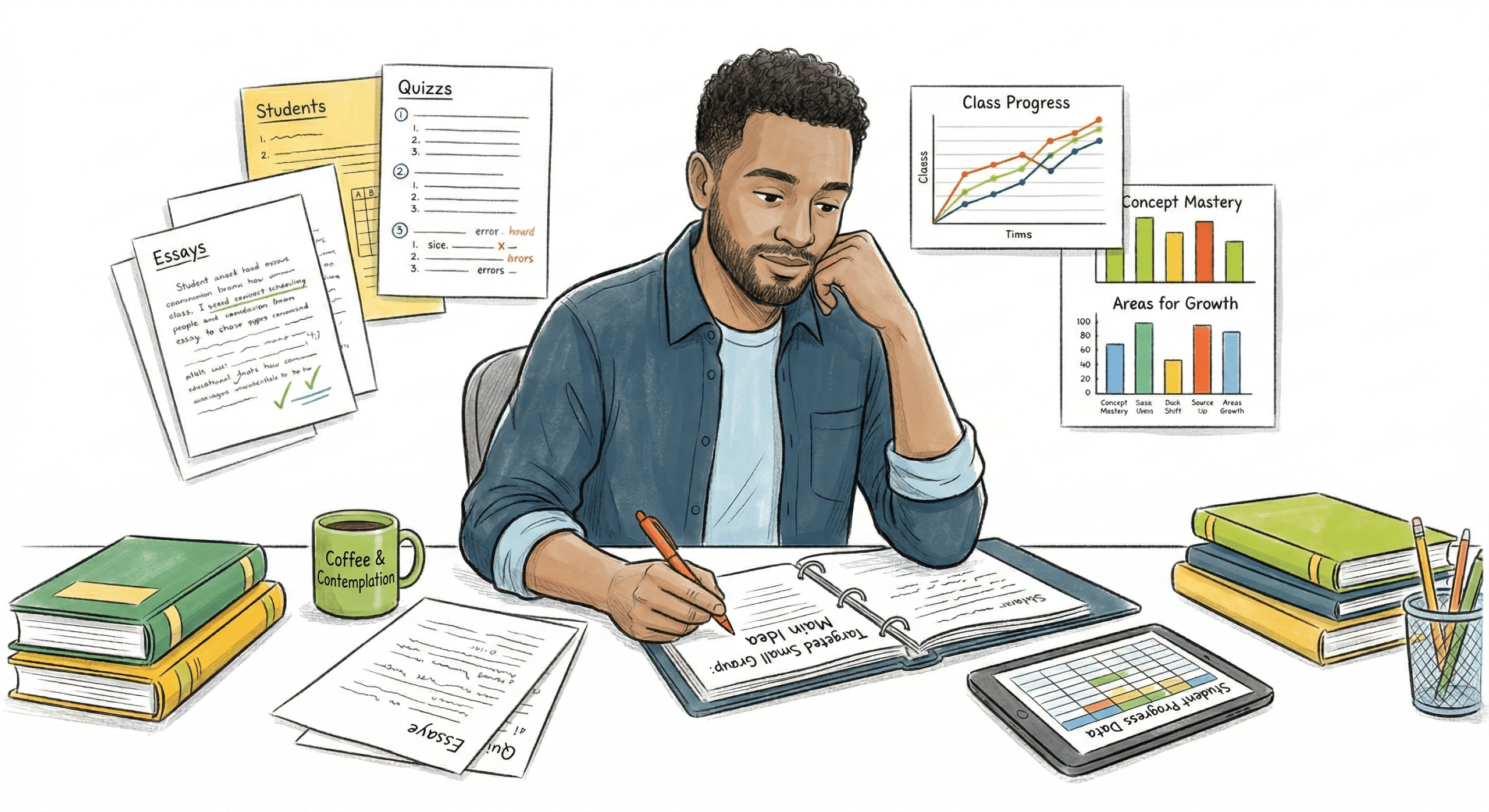
That might mean redesigning one lesson instead of quickly planning five. It might be focusing on one class’s work to look for misconceptions instead of trying to grade everything equally. It might be setting aside a short, protected block, once a day or a few times a week, to think, plan, or reflect without interruption.
This is what Cal Newport describes as building a “deep life,” not a perfectly optimized schedule, but a set of habits and decisions that prioritize meaningful work over constant activity.
It’s not easy. Most school systems aren’t designed to support this kind of thinking. But even small shifts, protecting one block, rethinking one task, focusing on one meaningful improvement, can begin to change how teachers experience their work. When that starts to happen, it doesn’t just change how teachers plan. It changes how they teach.
That’s where AI enters the conversation.
AI as a Deep Work Amplifier
The real promise of AI in education isn’t that it just makes teachers faster, helping them accomplish tasks in less time. It can actually reduce the need to spend time on shallow work. Too often, teachers spend hours on tasks that feel productive but don’t actually improve learning: formatting worksheets, copying questions into slides, rewriting directions, building review packets, or grading assignments. These tasks are necessary, but they don’t require the deep expertise of a teacher.
Shallow Work vs. Deep Work in Teaching
Necessary (Shallow) Tasks Teachers Do
Copying questions into slides or documents
Rewriting directions for clarity
Building review packets
Grading review and practice activities
Creating one-off activities for each lesson
Writing detailed feedback students rarely read
Planning every lesson from scratch
Entering and organizing grades and data
Responding to emails and messages throughout the day
Explaining content repeatedly to the whole class
Assigning and grading homework for completion
Keeping track of dozens of small tasks and decisions
What Deep Work Looks Like Instead
Designing learning experiences that require students to think and engage with ideas
Crafting DOK 2-4 questions that spark discussion and reveal student thinking
Anticipating where students will struggle and planning intentional scaffolds
Creating formative tasks that provide real-time insight into student understanding
Analyzing patterns in student responses to identify misconceptions and adjust instruction
Building repeatable instructional routines that deepen learning over time
Using class time to give feedback that students can immediately act on to improve their work in progress
Interpreting patterns in student thinking to adjust instruction
Protecting uninterrupted time to plan, reflect, or analyze student work
The work that does require that expertise looks very different. It’s designing learning experiences that push students to think, crafting questions that spark real discussion, analyzing patterns in student misconceptions, and reflecting on instructional decisions. That’s the intellectual core of teaching, the part of the job that actually improves outcomes for students.
This is where AI, when used intentionally, can make a meaningful difference. Not by adding more tools or more expectations, but by removing or reducing the repetitive, low-level tasks that consume so much of a teacher’s time. AI should handle the parts of teaching that are procedural and repeatable so teachers can focus on the parts that are creative, analytical, and deeply human.
If we use AI this way, the goal isn’t efficiency for its own sake; it’s creating space. Space to think more deeply about instruction and student learning. Space to respond to students in real time. Space to reflect and improve over time.
And when that space is created, it starts to change how classrooms actually function in practice. In part two of this series, we will explore how specific AI tools can help educators offload some of the shallow but necessary tasks, creating more time for deep work.
About the Author
Robert Mayfield is a Language and Literacy Coordinator at the San Joaquin County Office of Education and an EdTech instructor for the Teachers College of San Joaquin. His work focuses on student-centered instruction, small-group learning, and designing classrooms for thinking through approaches like station rotation, EduProtocols, and Building Thinking Classrooms. He is particularly interested in how AI can be used to support equity and reduce teacher workload, creating space for deeper learning for both students and educators.
No responses yet