
Related Podcast
When I facilitate workshops on the station rotation model as a vehicle to improve Tier 1 instruction, I always get questions about pacing. Teachers are concerned about the reality that some students take more or less time than others to finish an activity at a station. Although the question is framed as a concern or problem to be addressed, the variation in pacing is entirely natural. In fact, it is a benefit of this instructional approach. The station rotation model provides students with a higher degree of control over the pace at which they acquire and process information and navigate tasks at each station. That’s a good thing.
Station rotation naturally builds student agency. As students move through tasks at their own pace, they take more ownership over their learning and how they progress. But that same flexibility clearly creates tension for teachers as some students move quickly, while others need more time.

So, many teachers wrestle with the question: What do I do with students who finish more quickly than their peers? What should students do after they complete the core task at a station? The last thing we want is for fast finishers to feel like efficiency is “rewarded” with extra work.
To help teachers encourage self-pacing and maintain a productive learning environment, I recommend the six strategies below to keep fast finishers engaged without assigning them busywork.
#1 Must Do, May Do, Aspire to Do
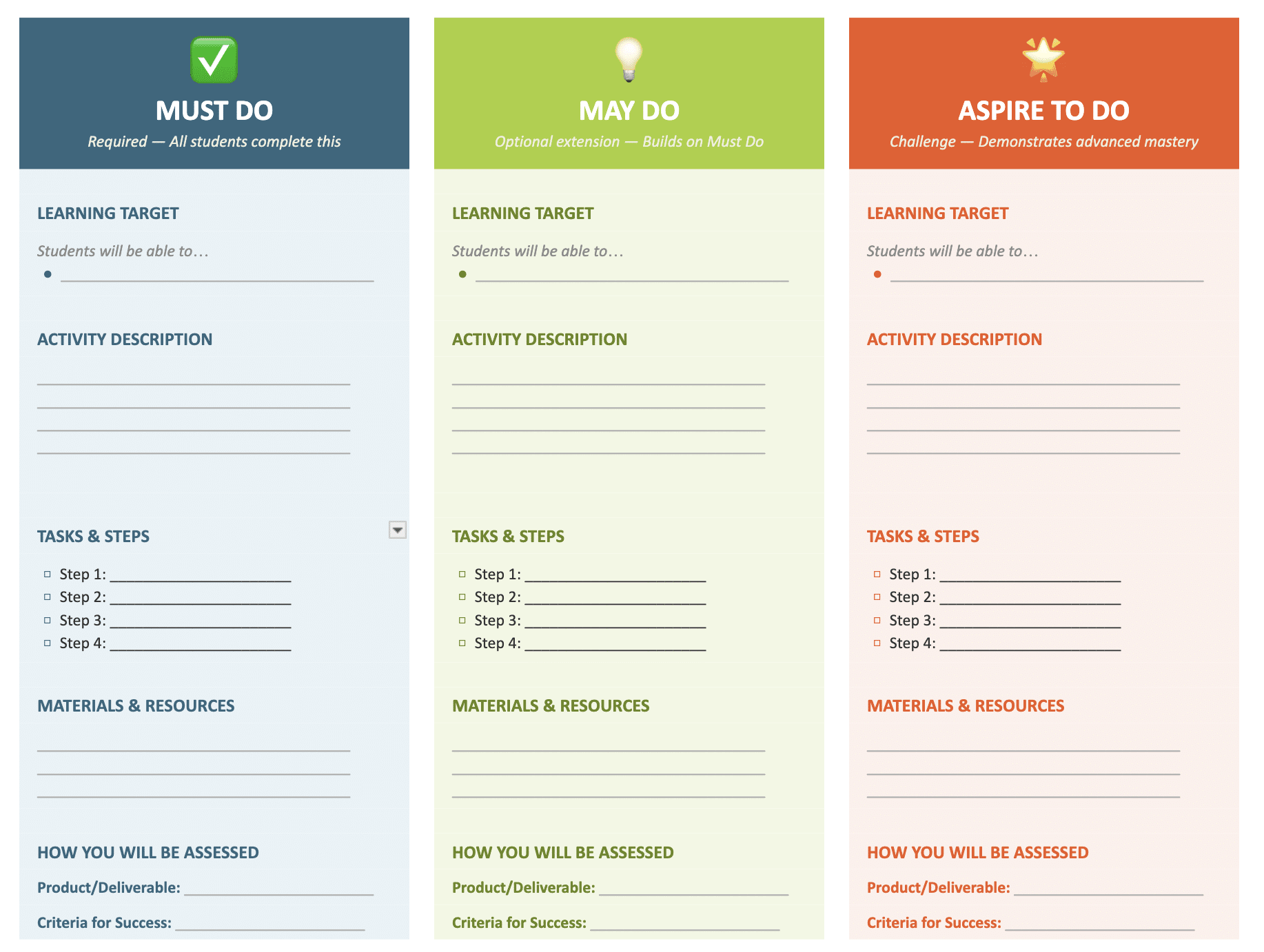
This idea is inspired by the Modern Classroom’s approach to supporting self-pacing and can be integrated into a station rotation lesson. When designing stations, offer an assignment or task with tiers of complexity. The “must do” is the core activity you want everyone to complete. You can then add “may do” and “aspire to do” activities that allow students to extend their thinking once they’ve completed the main task.
Must Do
- The essential thinking or task
- Aligned to the learning goal
- Produces evidence of understanding
May Do
- Builds on the must-do with opportunities to deepen or extend thinking
- Supports choice and encourages curiosity
- Keeps students meaningfully engaged with the concept or skill
Aspire to Do
- Stretch opportunities (DOK 3-4)
- Emphasizes application, evaluation, or creation
- Provides an opportunity to demonstrate proficiency or mastery
Elementary Example: Grade 3 Math – Multiplication Concepts
Must Do: Solve a set of multiplication problems using arrays or drawings.
May Do: Write a multiplication word problem that matches one of your equations. Exchange it with a partner and solve each other’s word problems.
Aspire to Do: Design a visual model (array, number line, or grouping) that shows two different ways to represent the same product.
Secondary Example: Grade 8 Science – Chemical Reactions
Must Do: Complete a lab data table and write a claim about whether a chemical reaction occurred.
May Do: Add evidence from the lab to support the claim using sentence frames.
Aspire to Do: Propose a modification to the experiment and predict how it might change the results.
#2 Establish a Next Steps Protocol
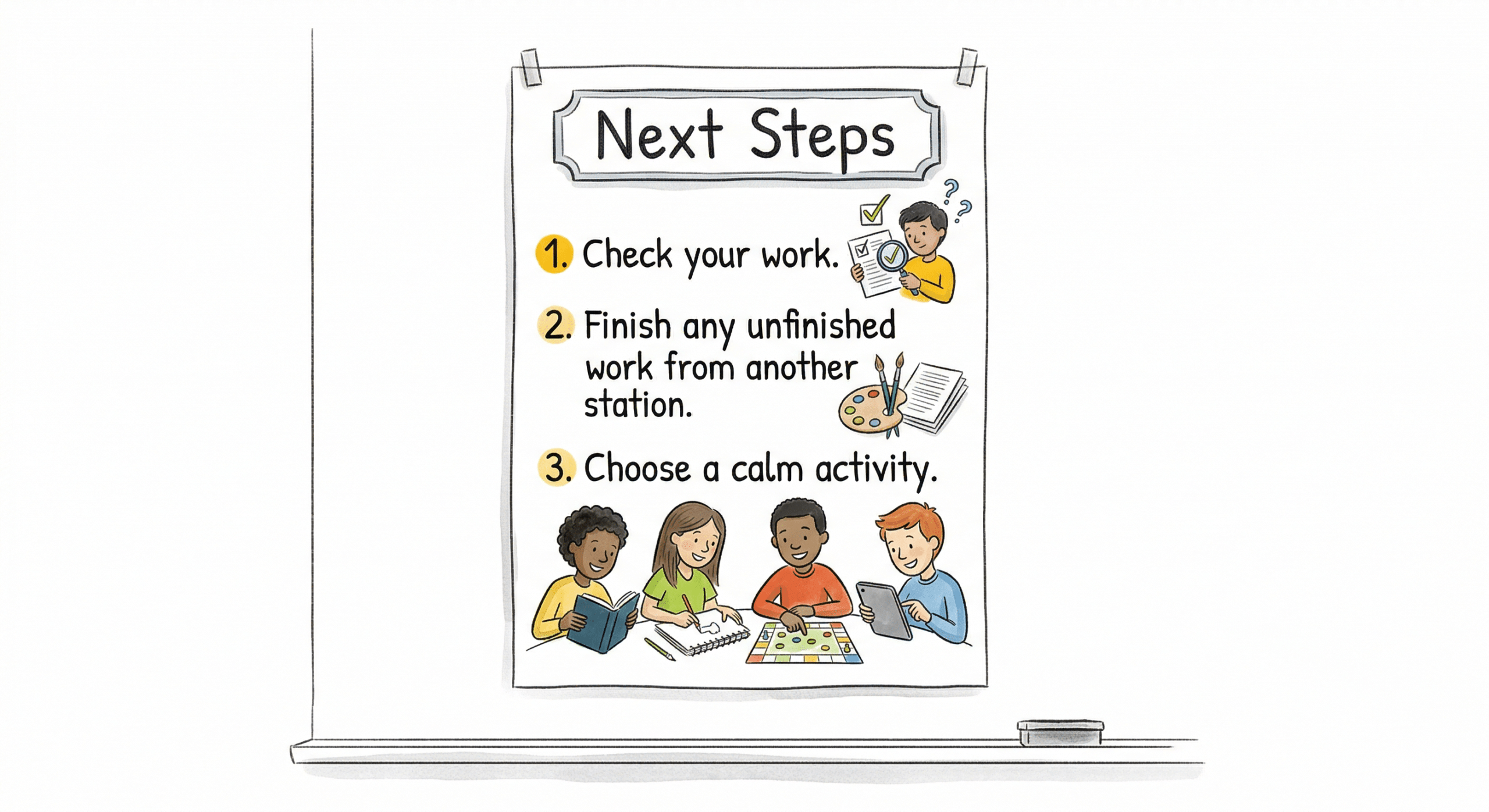
This is something you can design once and use for the rest of the year. Create a list of activities that students can do when they finish a station before it’s time to rotate. This can include finishing tasks like previous stations, independent reading, and studying for a quiz. Once you’ve made your list, laminate it and put it on the wall so students can reference it independently (and you don’t have to recreate it).
Elementary Example
Post a laminated “What to Do When You Finish” chart that students are explicitly taught to follow in order:
- Check your work: Reread directions and fix any mistakes.
- Finish unfinished work: Complete any tasks from earlier stations or lessons.
- Practice independently: Read quietly, practice skills using classroom tools, or work in a learning journal.
- Extend your thinking: Add a detail, example, drawing, or explanation to something you’ve already completed.
- Choose a calm activity: Engage in a quiet option like drawing, puzzles, or a creative task.
Secondary Example
Post a “Next Steps Protocol” that applies across stations and units:
- Review your work: Edit, revise, or improve what you’ve completed.
- Address feedback: Revisit teacher or peer feedback from earlier work.
- Complete another priority task: Finish work from a previous station or lesson.
- Extend your learning: Add evidence, examples, annotations, or reflections to your current task.
- Engage in quiet, independent work: Read, study, or work on an approved independent task.
#3 Be a Peer Tutor
Teaching someone else is a great way to solidify learning, so asking students to support one another can be beneficial for everyone involved. I’ve seen this done in math classrooms where students who finish early grab a “tutor” lanyard from the wall and make themselves available to support classmates who are working. The goal isn’t for tutors to give answers, but to help peers think through their next step. Learning how to support a peer without giving answers is challenging, but it’s also a powerful skill that builds communication, patience, and deeper understanding.
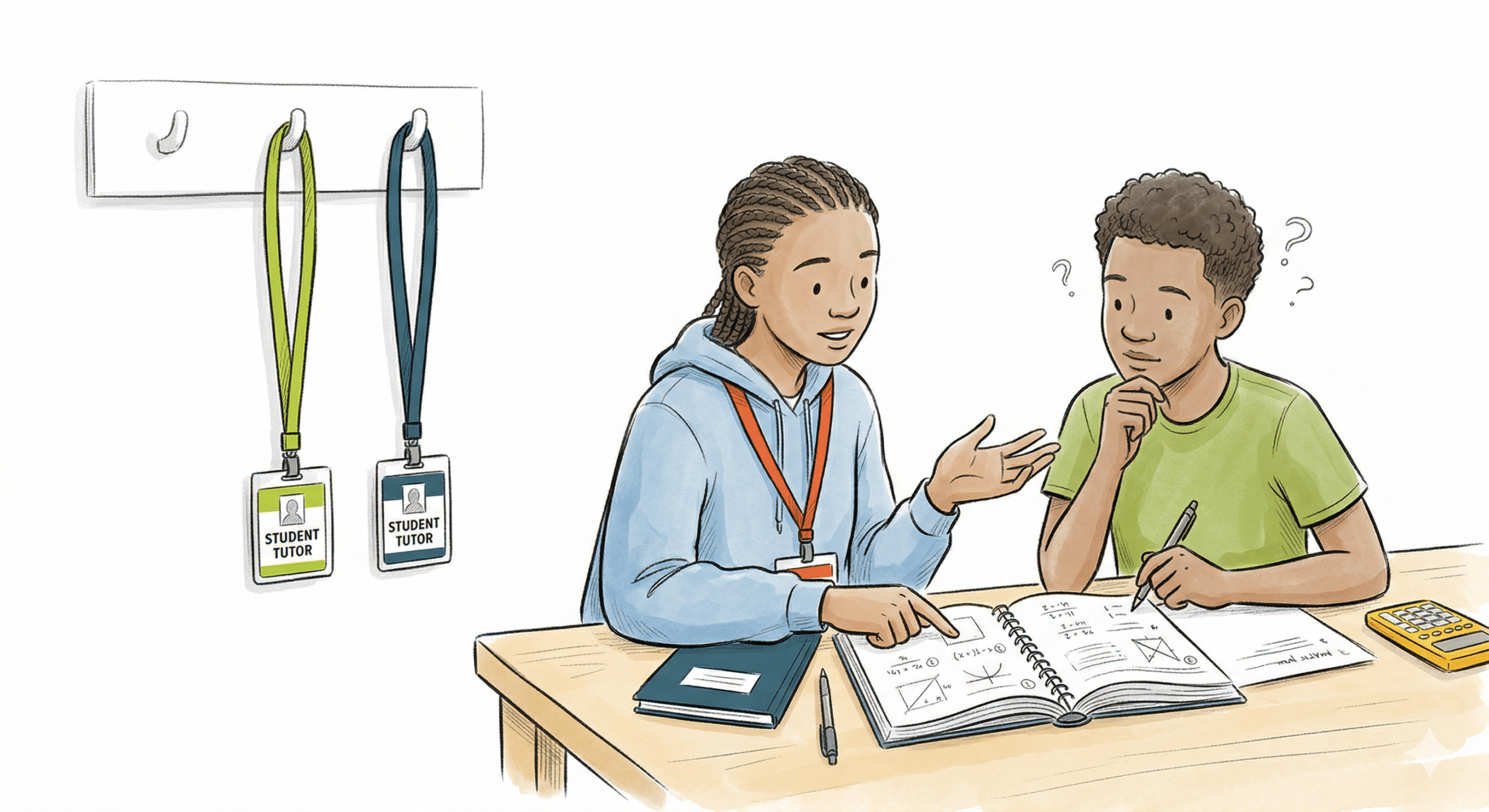
For elementary students, you can add sentence stems to your tutoring lanyard to help foster productive peer support. Some ideas to:
Clarify directions
- What does the question ask you to do first?
- Can you show me where the directions say that?
- What step are you on right now?
Support observations
- What did you notice when you looked closely?
- What did you see more than once?
- Where could you write or draw that?
Encourage explanations
- Why do you think that happened?
- What makes you think that?
- How could you explain that in your own words?
Redirect without giving answers
- What could you check to be sure?
- Where could you find help for that?
- What do you think your next step should be?
#4 Class Jobs
Teachers do so much of the work around the classroom: organizing, cleaning, and preparing materials for the next lesson. So, I encourage the teachers I work with to think about ways they can delegate some of that work (yes, to students) when they finish their work. Having a list of class jobs can be a great way for early finishers to do something productive for the class community that isn’t cognitively draining.
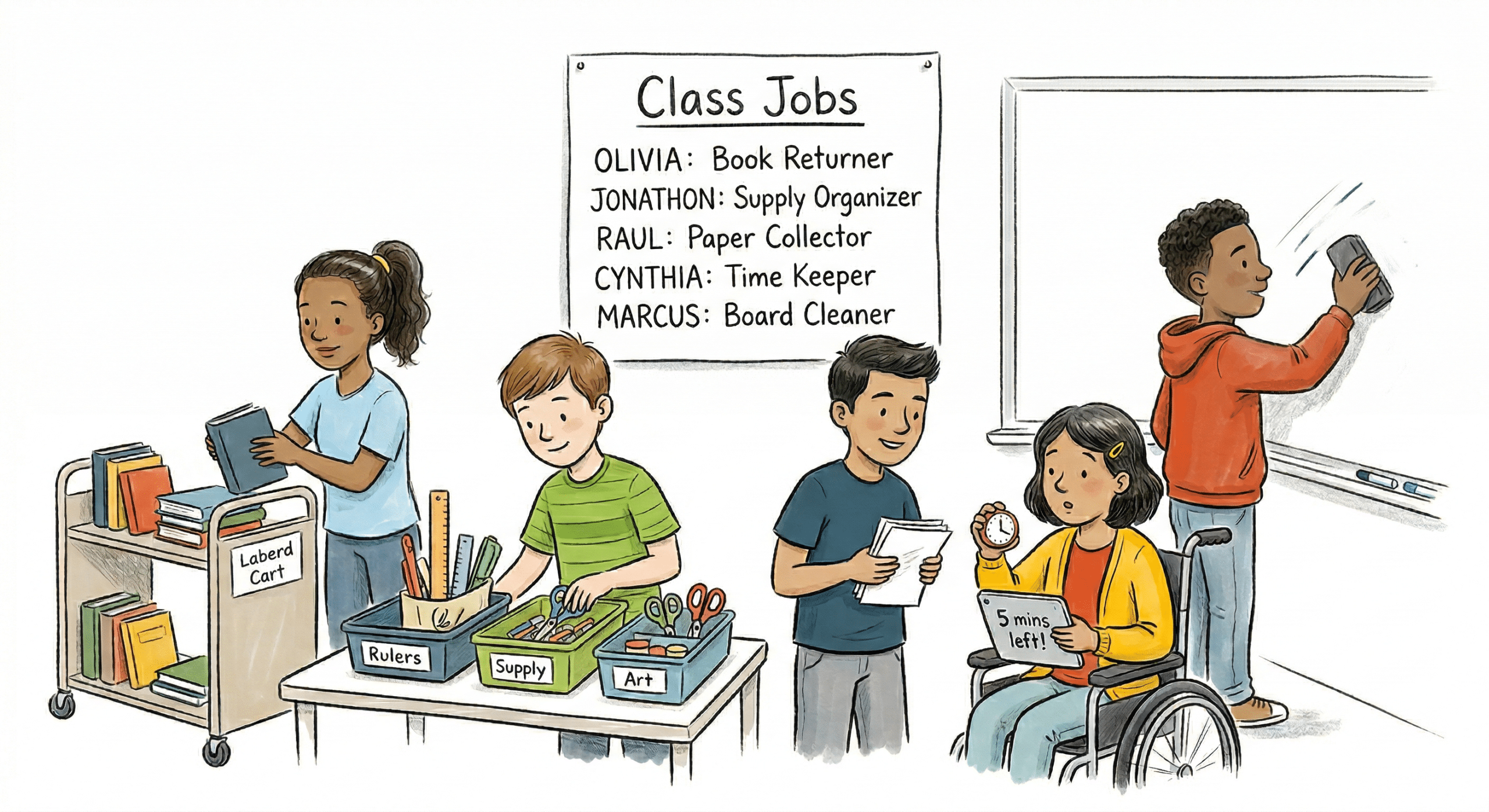
For elementary, it’s helpful to name the jobs and keep them consistent.
- Supply Organizer (straighten bins, pencils, manipulatives)
- Book Returner (reshelve station books)
- Board Cleaner (wipe whiteboards or table spaces)
For secondary, have a short list of classroom tasks that early finishers can complete without further direction.
- Reset lab materials for the next group
- Reorganize station folders or clipboards
- Update the class agenda or learning targets board
#5 Brain Break Choice Board
Offer students a choice board with a range of creative, high-interest tasks that they can do when finished. These activities should be optional, low-pressure, and easy to start and stop, giving students a mental reset without pulling them into something cognitively demanding. Think calm focus, not distraction.
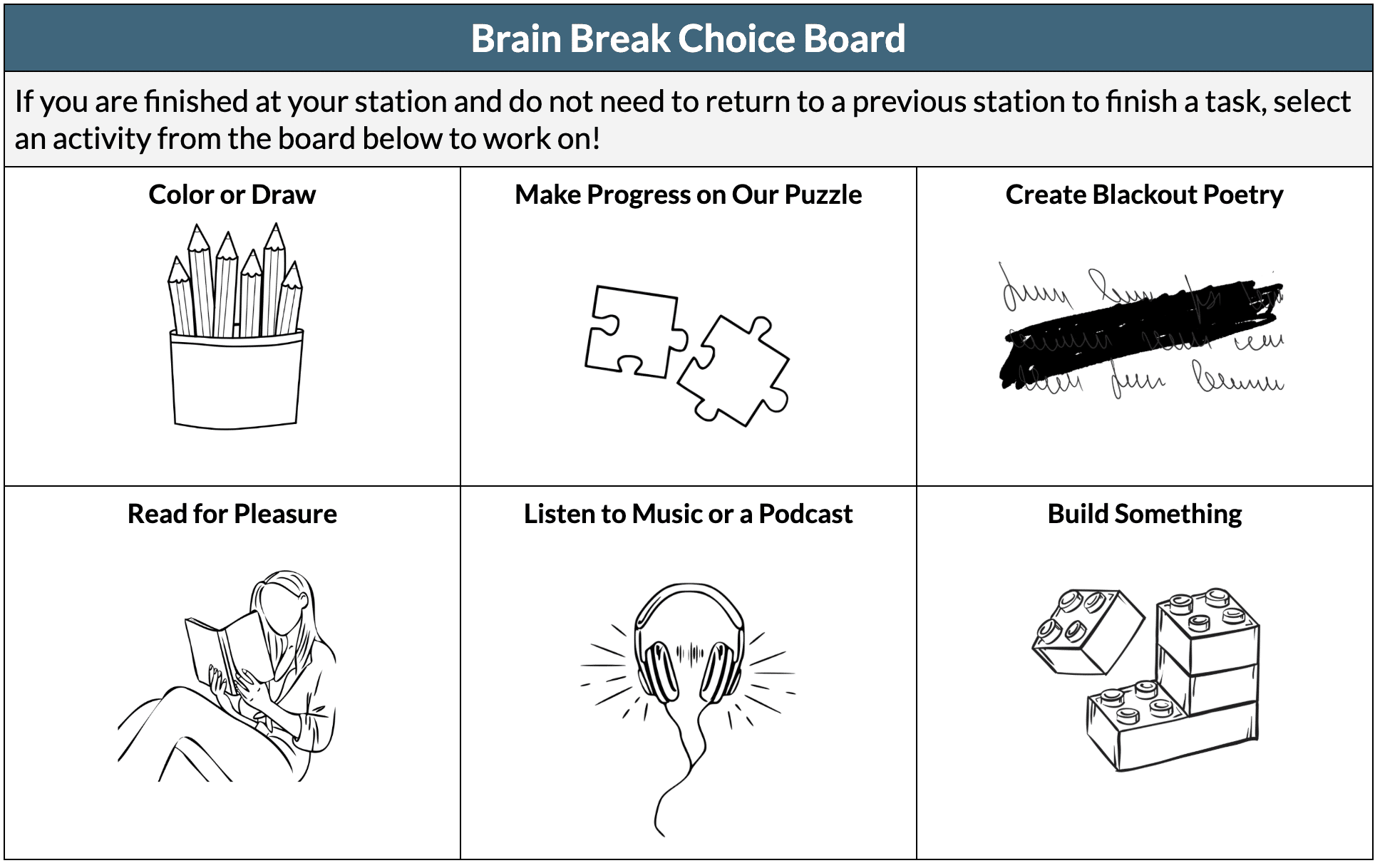
You can make a copy of my Brain Break Choice Board template and customize it to fit your students’ interests and the activities you have available.
#6 Creative Corner or Calm Zone
The name is totally up to you, but creating a space in your room for students to engage in low-demand, creative tasks gives them a chance to reset without disrupting the rest of the class. Keep it stocked with a variety of creative, calming activities that have nothing to do with your class subject, and maybe a comfy chair or pillow if you have room.
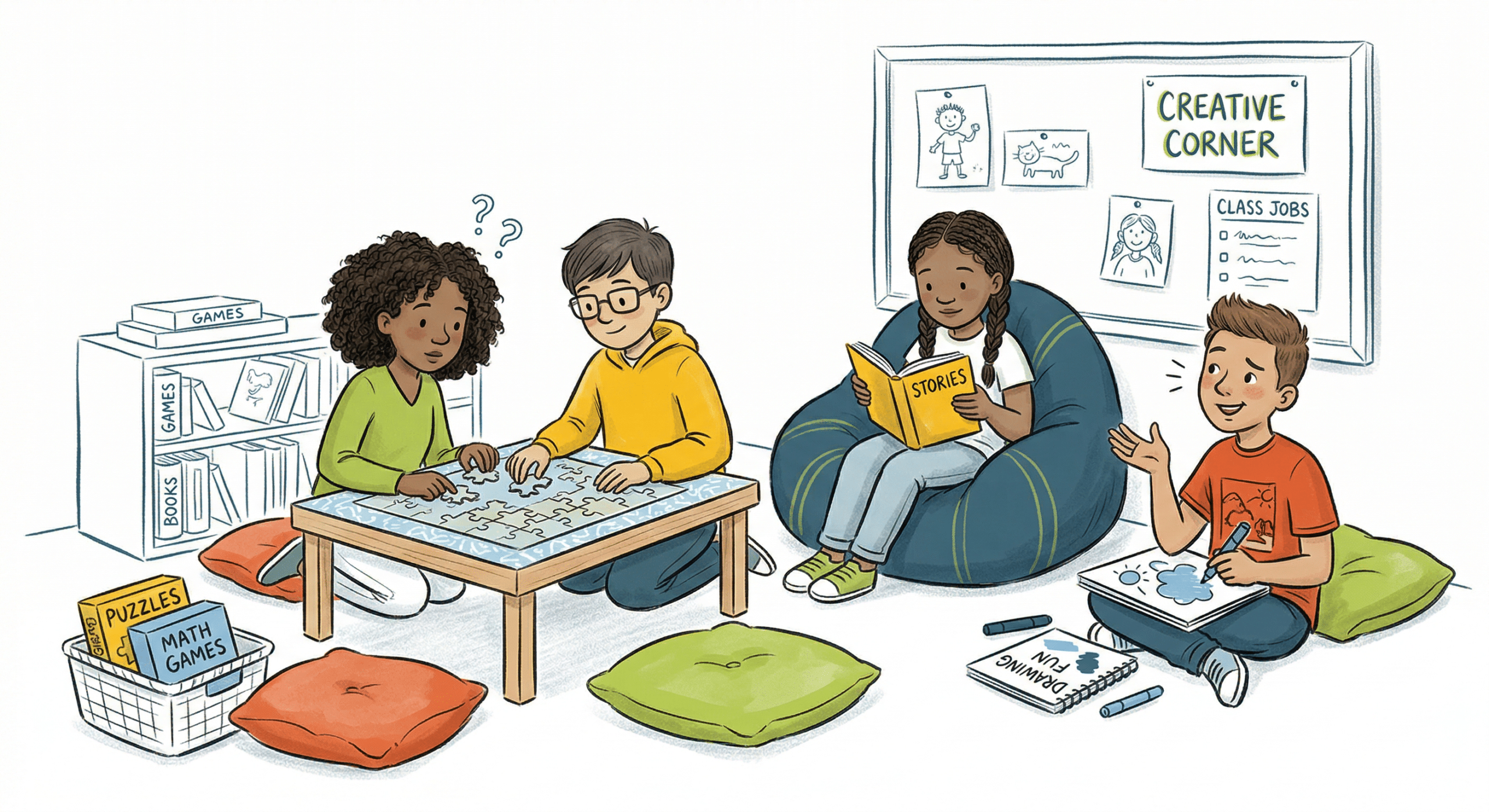
An elementary calm zone might include:
- Pattern blocks or tangrams
- Drawing paper and crayons
- Simple puzzles or building tiles
A secondary calm zone might include:
- Sudoku, logic puzzles, or brainteasers
- Blank sketch paper or journaling prompts
- Quiet fidget tools
Wrap Up
When students know what to do next, finishing early no longer feels like a problem, it becomes an opportunity. It’s easy to forget how draining a full day of school can be for students.
Last week, I was the keynote speaker and a session facilitator at a district-wide conference. Teachers attended the keynote and five separate sessions. Throughout the day, I heard people say things like, “I am fried,” “My brain is full,” and “This has been a crazy day.” There’s no doubt it was a long day with a lot of information thrown at them. But that is what our students experience every single day.
Providing moments when students can take a mental break or shift into a different role, such as supporting a peer, isn’t extra or unnecessary. It’s responsive to what they need as learners and as people.
With a clear structure in place, you can protect focus at your stations, support different pacing needs, and give students more ownership over how they use their time. That balance is what makes station rotation both flexible and sustainable.
For more on the station rotation model, check out my book, The Station Rotation Model and UDL: Elevate Tier I Instruction and Cultivate Learner Agency.
No responses yet