
Related Podcast
A couple of weeks ago, I presented a workshop for a leadership group focused on strategies designed to strengthen Tier 2 instruction. I started by asking the group, “If students do not perform well on assessments, what typically happens next in classrooms? What do teachers do in response?” Their conversations echoed much of what I see. When students struggle, the most common response is to slow down, review, reteach, or assign more practice. This may feel like the best approach because teachers want to give students another chance to understand the concepts or practice applying the skills.
Unfortunately, this does not address the real issue. Tier 1 instruction was not effective for some percentage of students. Repeating that same instruction is unlikely to make it effective. If teachers use a whole-group lesson structure, students for whom Tier 1 was effective are stuck in repeated instruction or additional practice they don’t actually need. That may result in students disengaging or feeling frustrated that they are being asked to do unnecessary work.
Tier 2 should not repeat Tier 1 instruction in small groups. That approach did not help students understand a concept or skill, so Tier 2 needs to be more personalized, scaffolded, and responsive to students’ specific needs.
What Is Tier 2 Instruction?
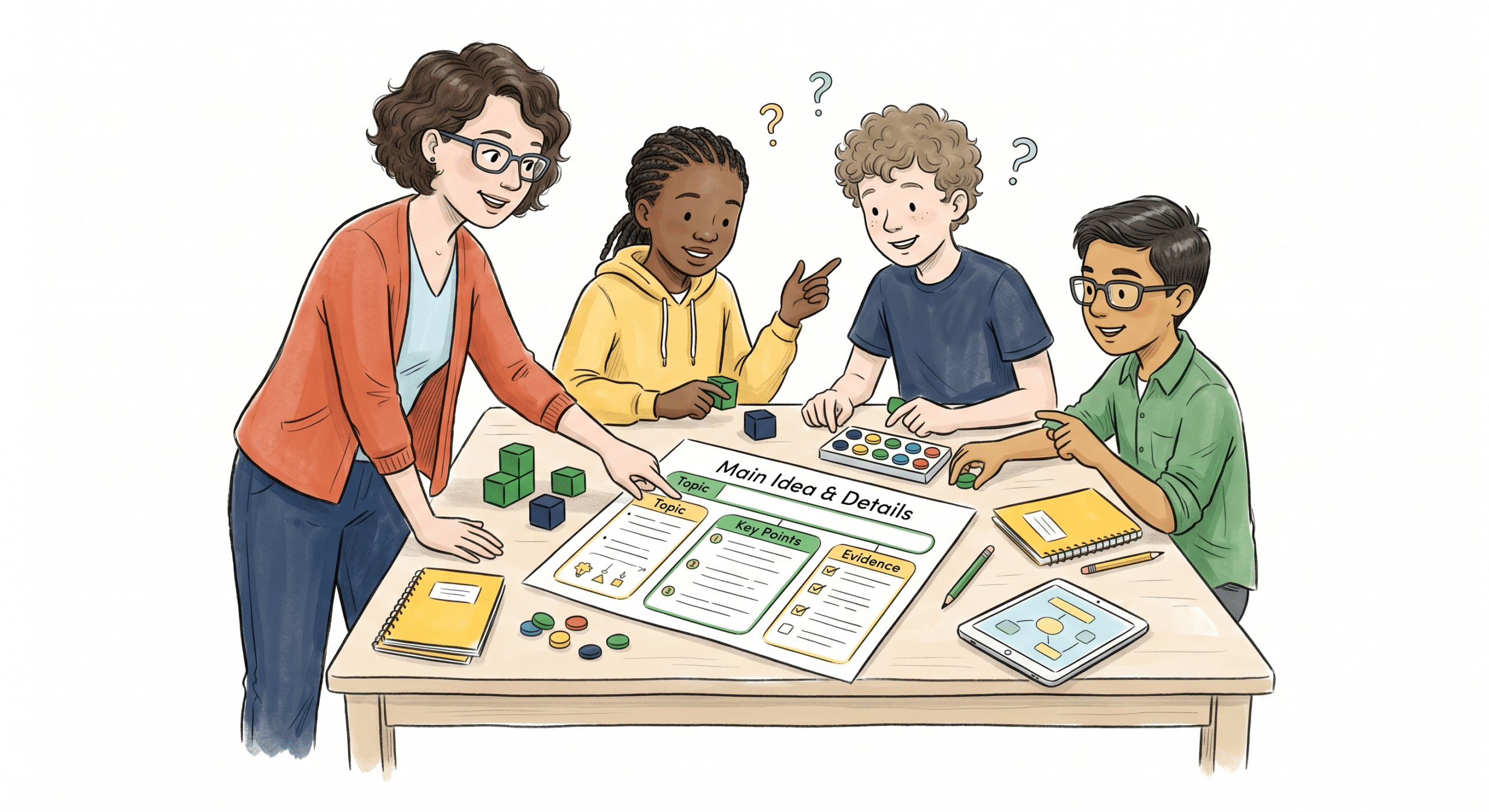
Tier 2 is supplemental instruction designed to meet specific student needs. It exists alongside Tier 1, not instead of it. It plays a critical role in helping students access grade-level content and extend their learning. Often, the focus is on Tier 2 support for students who do not understand Tier 1 instruction. However, it also encompasses enrichment. Some students need additional scaffolds or a different instructional strategy to understand key concepts. Others are ready to dive deeper, apply their learning in new contexts, or tackle more complex tasks. Both groups benefit from small group instruction and learning experiences that are intentionally designed around their needs.
The IRIS Center at Vanderbilt University summarizes research on effective Tier 2 instruction within multi-tiered systems of support (MTSS) and response to intervention (RTI) as being:
- Informed by data
- Focused on specific skill or concept gaps
- Delivered in small groups
- Centered on a narrow set of priority skills
- Built on explicit instruction that utilizes modeling, guided practice, and feedback
- Monitored regularly to track progress
Tier 2 can provide a powerful pathway to close gaps and extend learning. However, it is important to note that Tier 2 decisions do not need to wait until after instruction. They begin before the learning even starts and continue through the learning cycle, which is why data plays a critical role in this process.
The Role of Data in Identifying Tier 2 Needs
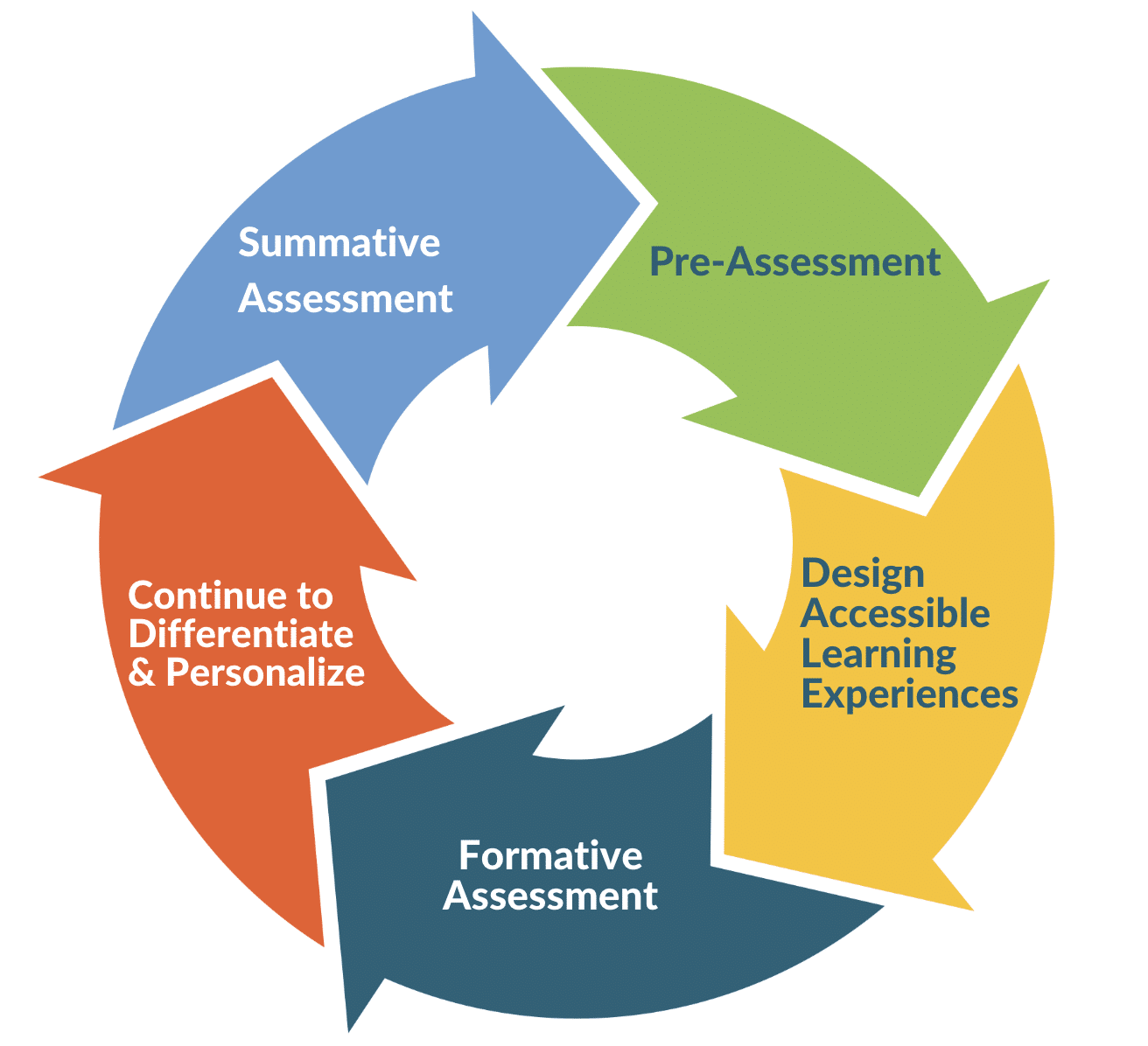
Pre-assessment data helps teachers identify where students are starting in relation to specific concepts and skills. Prior to a new unit of study, teachers can use a pre-assessment strategy to surface missing prerequisite skills, gaps in background knowledge and vocabulary, and differences in readiness. With that information, teachers can proactively group students to provide a differentiated on-ramp to the learning pathway for some while challenging others with extension activities.
Formative assessment data provides a real-time picture of how each student is progressing down the learning pathway. It highlights misconceptions, incomplete understanding, and patterns. This is where teachers can identify and respond to students for whom Tier 1 has not been effective and who need additional support.
The goal is to use data strategically to make clear instructional decisions and be responsive to students’ needs. Teachers must be asking themselves:
- Which students need support?
- What do they need support with specifically?
- How should they be grouped to make instruction more effective?
- Which instructional strategies are most effective for making the content accessible?
- What supports or scaffolds may be needed?
Common Problems with Tier 2 Implementation
Tier 2 is widely valued as important, but its implementation is often inconsistent. In many classrooms, teachers respond to students who need more support with:
- Reteaching for the whole class
- Repeating the same instruction
- Broad reteaching instead of focusing on a specific gap
- Small group review of the same whole group lesson
- Additional practice without additional scaffolding
Many teachers are working hard to support students, but the instructional moves they make do not align with what students need to access the content.
Shifts that Make Tier 2 Work
Effective Tier 2 requires strategic shifts in how instruction is designed and delivered in small groups. Without those shifts, small group instruction often focuses on the same explanations, examples, and tasks as the whole group, just with fewer students.
Targeted Small Group Instruction
Strong Tier 2 instruction requires tight alignment between the data and the instruction. Students are grouped based on a shared error pattern or a specific gap. The teacher focuses the instruction on that specific need, addressing one skill or misconception at a time. These groups are flexible and short-term, shifting as students progress.
Math Example: Targeted Small Group Instruction
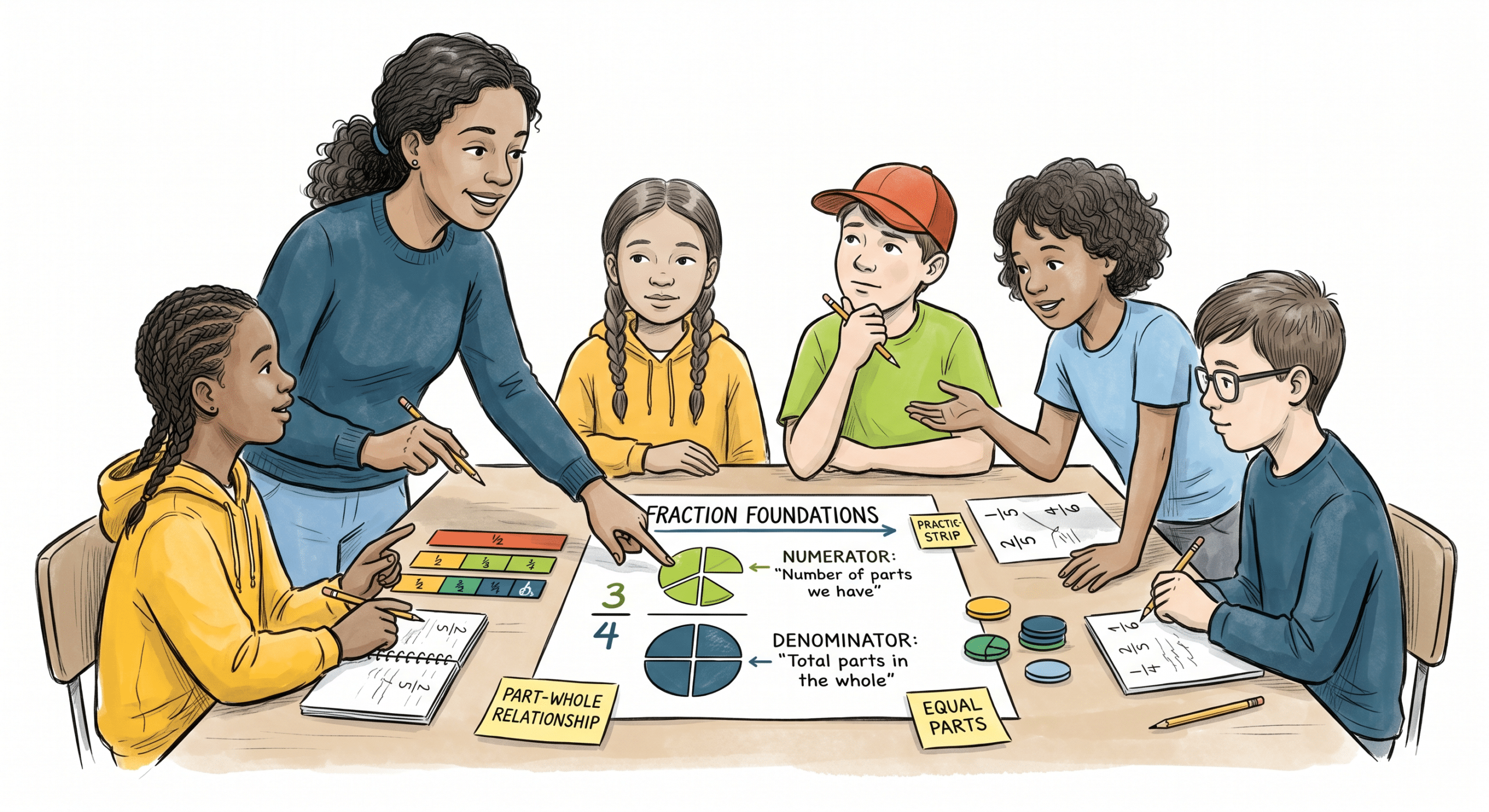
After a formative assessment, a teacher notices a group of students consistently confusing the numerator and denominator when interpreting fractions. Instead of reviewing the entire lesson, the teacher pulls a small group to focus on that misunderstanding. The instructional focus centers on identifying what each part of a fraction represents and applying that understanding in a few targeted tasks. Once the misconception is addressed, the group is dispersed back into the class.
Changing the Instructional Approach
A common pattern in Tier 2 is to re-explain a concept the same way it was presented in Tier 1. The language may slow down and the teacher may repeat key points, but the instructional pathway stays the same. However, students who didn’t understand the initial instruction likely need it to be presented in a different way for it to be accessible.
Changing the approach means presenting the concept through a new lens. This can involve using a think-aloud to model a cognitive process, using examples and non-examples to clarify concepts, or engaging students in a strategy like concept attainment to help them build understanding through comparison and pattern recognition.
English Example: Changing the Instructional Approach
In an English language arts class, a group of students struggles to identify a theme. Instead of restating the definition, the teacher gives students a short passage to read together. Then, instead of asking students to generate a theme statement, the teacher provides a set of theme statements on slips of paper. Some are accurate and well-written. Others are either too vague or incorrect.
Students work to sort the statements into categories like “strong theme,” “weak or surface level,” or “incorrect.” While sorting the statements, the group discusses their reasoning for their decisions with guidance and intentional questioning from the teacher. After sorting the statements, they work to revise and improve the weaker statements to make them stronger. This process can be repeated with another passage.
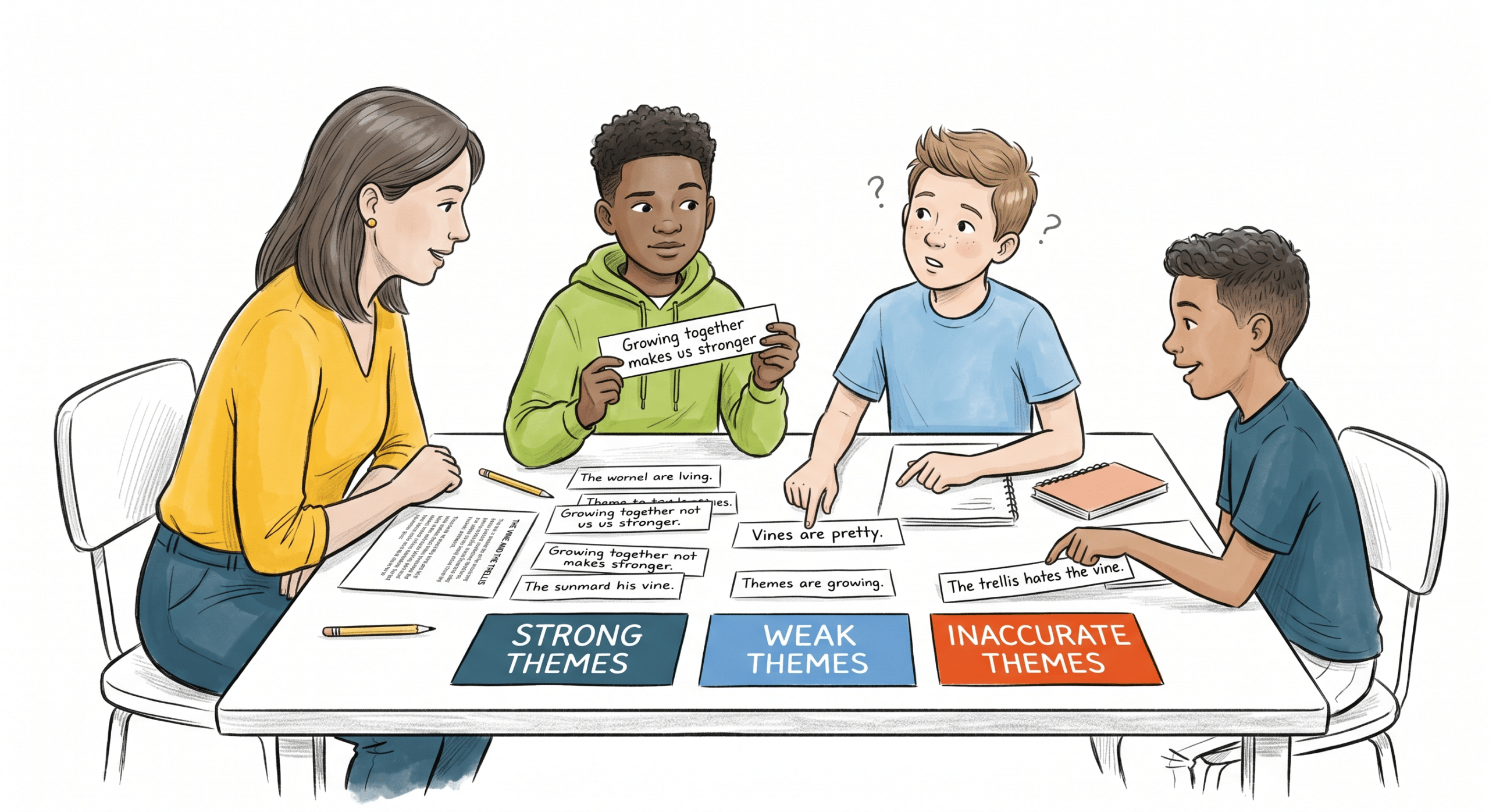
This approach makes thinking more visible. Students are comparing examples of theme statements, noticing patterns, and articulating criteria for high-quality themes. It also shifts who is doing the cognitive work. Students are doing the analysis and surfacing their thinking as they discuss their reasoning.
Chunking the Learning
Another challenge in Tier 2 is cognitive overload. Teachers may present too much new information at one time for students to understand and process. Chunking addresses this by breaking the content up into smaller, more manageable segments or steps. Each segment or step is modeled clearly with a think-aloud and followed by guided practice, before moving on to the next.
Science Example: Chunking Claim, Evidence, and Reasoning
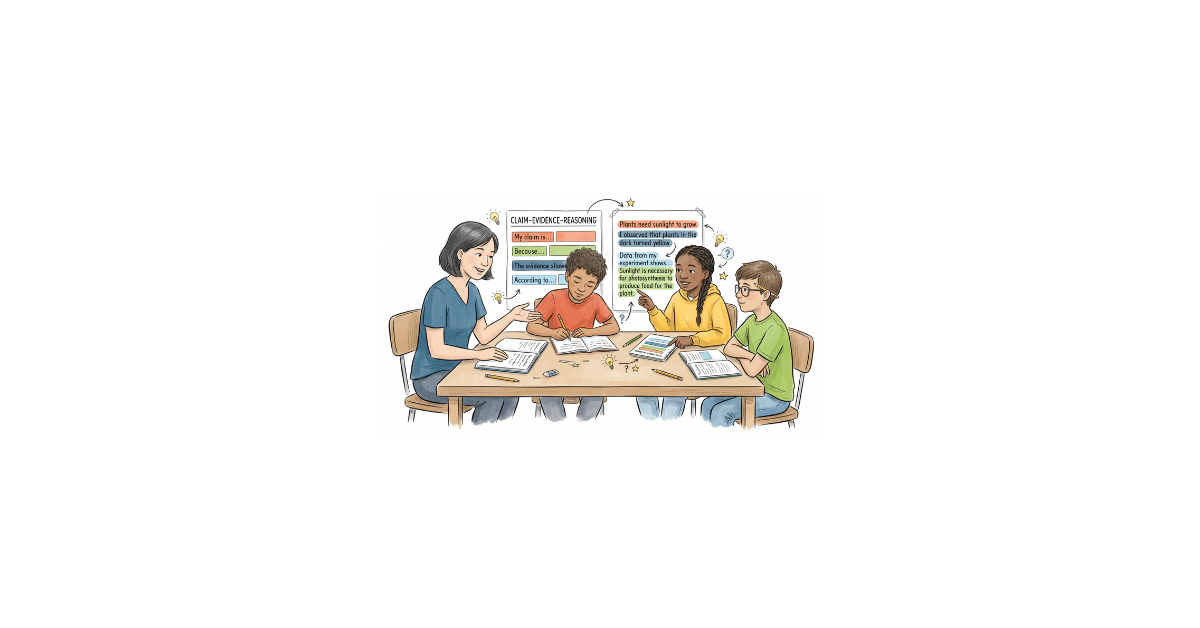
Students are learning how to write a claim, evidence, and reasoning (CER) response. Formative assessment data reveal that a small group of students is struggling. The teacher pulls them for small-group instruction and narrows the focus to writing a claim. They analyze a few examples, co-construct a claim together, and practice writing one independently before the teacher introduces the next step.
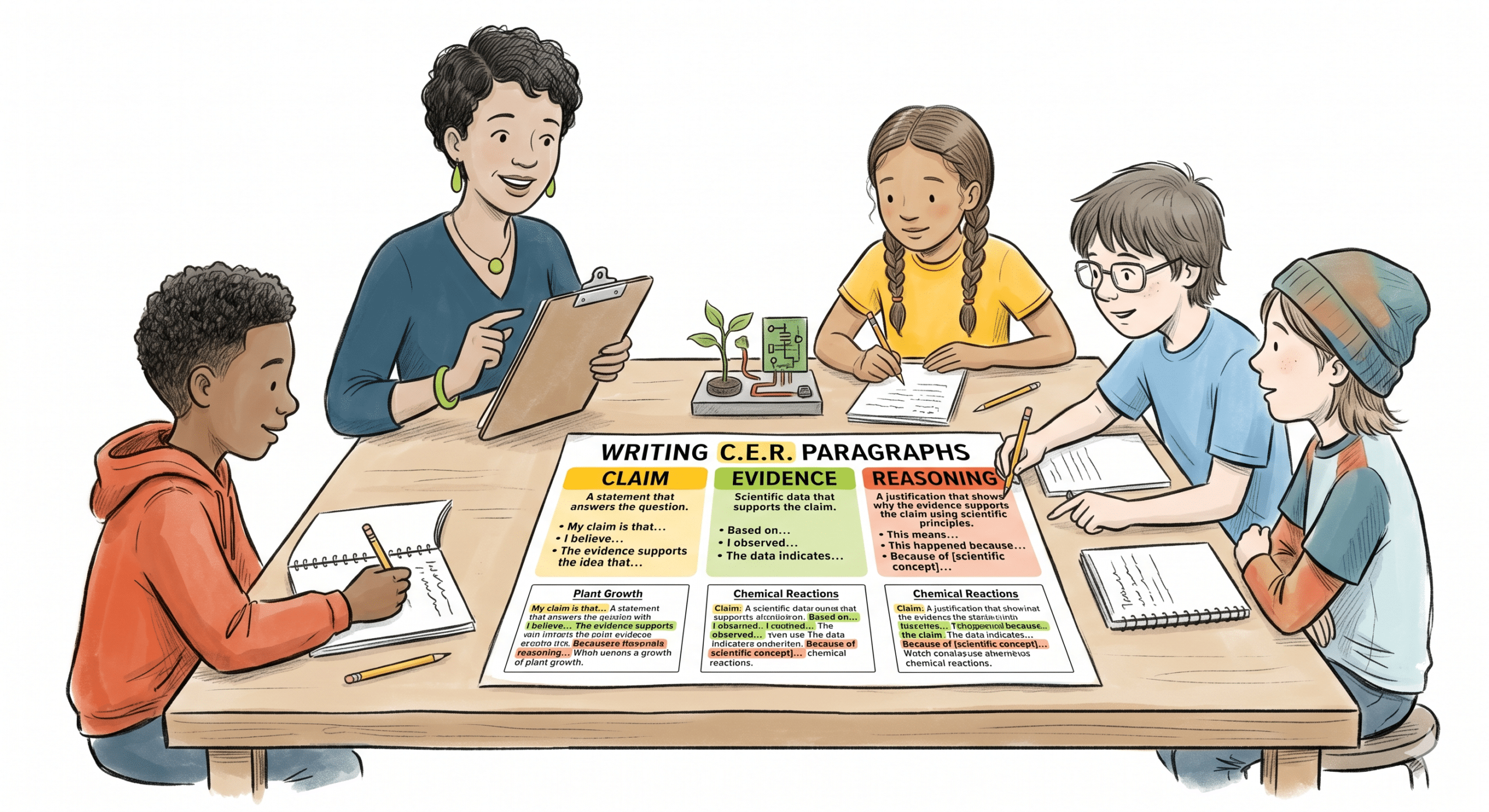
This approach slows the pace in a productive way. Students can build confidence as they experience success with each step in a supportive small group.
Scaffolding Thinking
Tier 2 often does not provide students with the additional support they need to unpack concepts or apply skills. Scaffolding provides structure to help students organize and express their thinking or follow a sequence of steps in a process. These supports are designed to be temporary and make the work more accessible while still maintaining the rigor of the task.
History Example: Scaffolding with a Graphic Organizer
In a history class, students are asked to analyze a primary source document and explain its significance. A small group struggles with the task, so the teacher pulls them into a small group and provides a graphic organizer to break the task into several parts, along with sentence frames to support their written explanations. The teacher guides the first couple of steps and then releases the students to continue on their own. Students use these tools to more confidently move through the task and structure their responses.
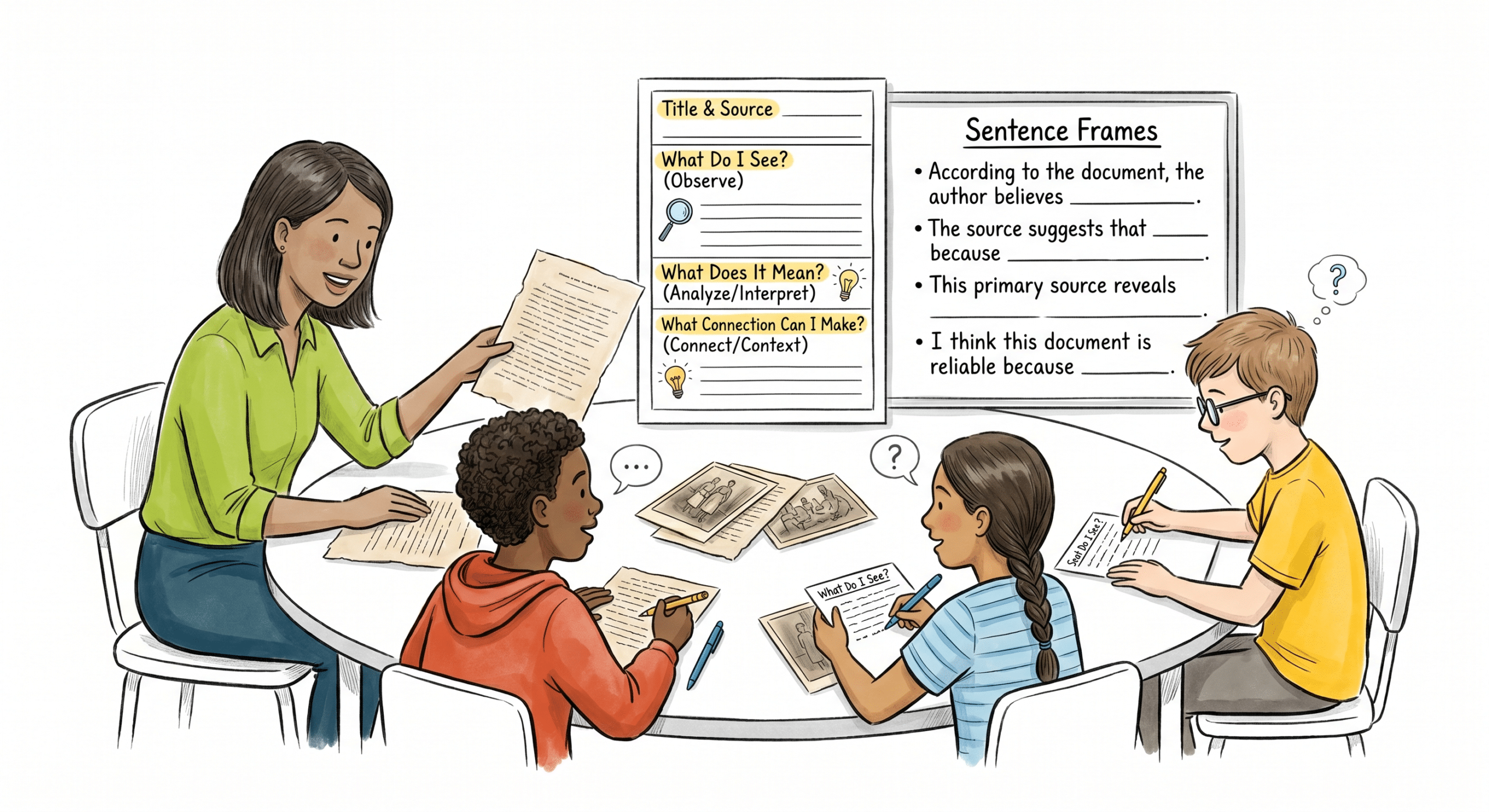
These types of scaffolds can be removed as students internalize the process. The goal is not to simplify the task or make students overly reliant on supports, but to make the thinking required to complete the task more visible and manageable.
Students Doing the Thinking
One challenge facing teachers providing Tier 2 support is that, in an effort to support students, teachers may end up doing most of the cognitive work. They are explaining, modeling, prompting, guiding, and supporting. This risks positioning students as passive participants in the learning.
Needing Tier 2 support does not mean students are not capable of engaging with grade-level content or complex thinking. In many cases, they just need a different pathway into the learning. A common misstep is unintentionally lowering the cognitive demand during Tier 2. Tasks become more procedural and less focused on reasoning, which can limit students’ opportunities to make meaning.
Effective Tier 2 strives to shift the cognitive load back to students. They are asked to explain their reasoning, analyze examples, engage in partner talk, and make their thinking visible. The teacher’s role becomes that of a facilitator, listening closely to what students are saying and doing so they can respond in the moment.
Math Example: Using Concept Attainment to Teach Proportional Relationships
In a math class, students are struggling to understand what defines a proportional relationship. Instead of walking them through the procedure or explaining the concept again, the teacher uses the concept attainment model. Students are given a set of examples labeled “yes/examples” and “no/non-examples.” Working together, they analyze the examples, look for patterns, and discuss their ideas about what makes a relationship proportional.
As students surface their thinking, the teacher facilitates the conversation by asking questions to press for clarity or to encourage them to refine their reasoning. Students revise their ideas as they gather more evidence. Slowly, they construct a clearer understanding of the concept.
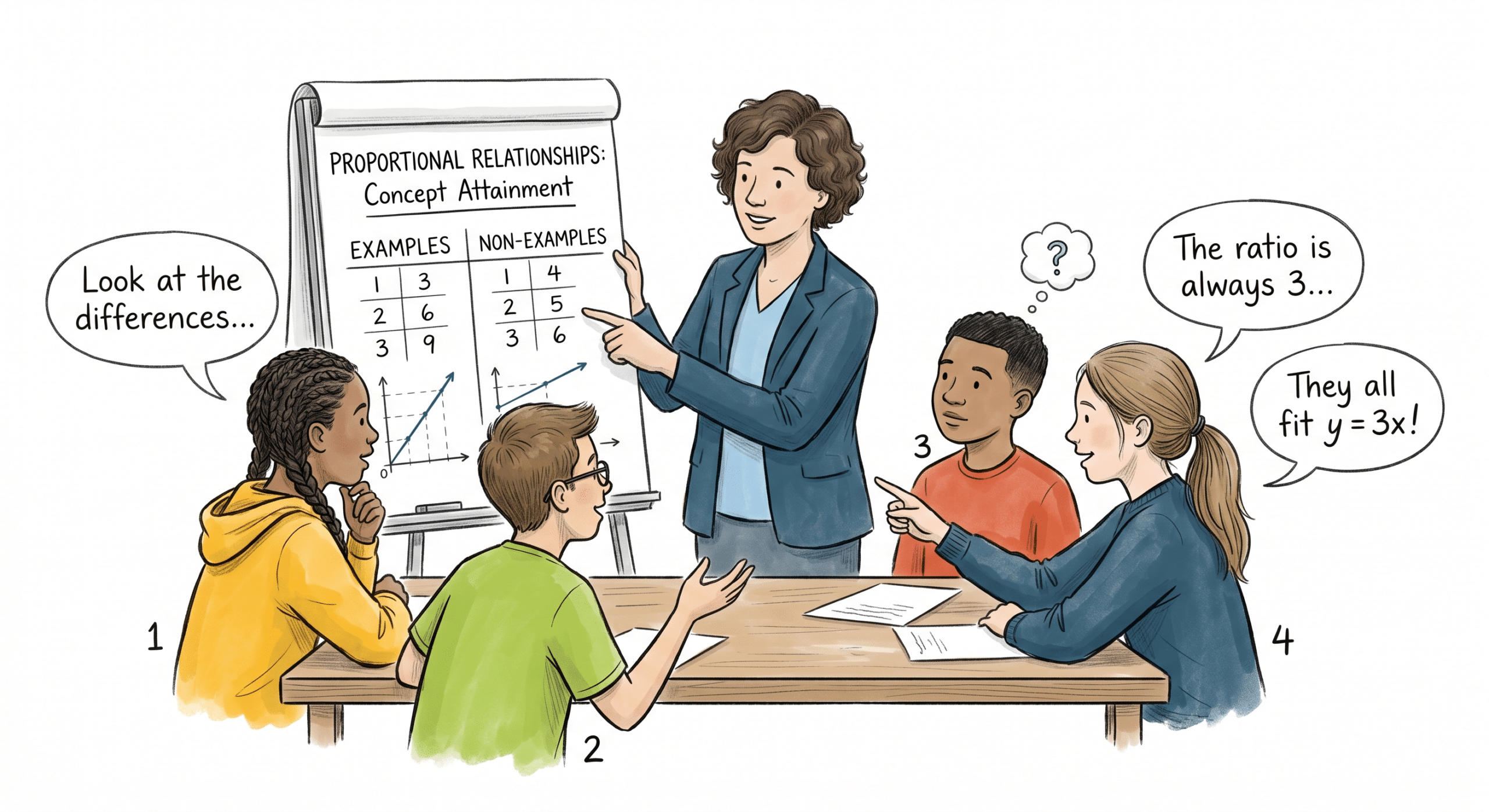
This approach shifts the cognitive load. Students are not following a set of steps modeled by the teacher. They are analyzing, discussing, hypothesizing, and justifying their thinking. The students, not the teachers, are the primary thinkers in the group.
Making Time for Tier 2 in Classrooms
Once teachers feel confident they know what strong Tier 2 support looks like in action, the next hurdle is time. Time is the biggest barrier teachers face when implementing Tier 2. Teachers relying on a whole-group, teacher-led lesson structure find it nearly impossible to consistently carve out time for small-group support or enrichment.
This challenge is especially common for teachers working with a single instructional model: the whole-group lesson. What they need are additional instructional approaches that allow them to address the range of needs in a classroom. When pre- or formative assessment data indicate that whole-group instruction is not meeting the needs of all learners, teachers need a structure that allows them to work with small groups. Without that structure, the lesson can come to a halt, or students end up working on tasks designed simply to keep them busy while the teachers pull small groups.
The Station Rotation Model creates natural opportunities for differentiated Tier 1 and Tier 2 support within the classroom. Students rotate through a series of stations while the teacher works with the small group. That small group may be students who need targeted support or students who are ready for enrichment.
This structure allows teachers to:
- Group students strategically and flexibly
- Provide differentiated instruction and targeted support in class
- Offer immediate, targeted feedback
At the same time, other online and offline stations engage students in meaningful, standards-aligned tasks while small-group instruction is happening.
Call to Action for Leadership
Tier 2 has the potential to close gaps and extend learning. However, its impact depends on how it is designed. Clear instructional goals, strategic use of data, and intentional instructional shifts are critical to ensuring Tier 2 is strong and effective.
If Tier 2 is going to be effective, it cannot rest solely on individual teachers figuring it out on their own. It requires clarity, alignment, and ongoing support at the system level. For school leaders prioritizing Tier 2, consider the following:
- Do teachers have access to meaningful data, and do they know how to interpret and use it to identify specific student needs?
- Are teaching teams or departments using pre-assessment and formative assessment data to proactively plan for Tier 2?
- Do professional learning communities (PLCs) have the time and structure to design aligned assessments, analyze student work, and plan targeted Tier 2 support and enrichment?
- Have teachers seen clear examples of what effective Tier 2 looks like in practice, including the instructional shifts described above?
- Do teachers have access to training on instructional models, such as station rotation, that make small-group instruction possible in the classroom?
Strengthening Tier 2 should not be another isolated initiative. It’s about refining how we use data, time, and instructional design to better meet the needs of every learner.
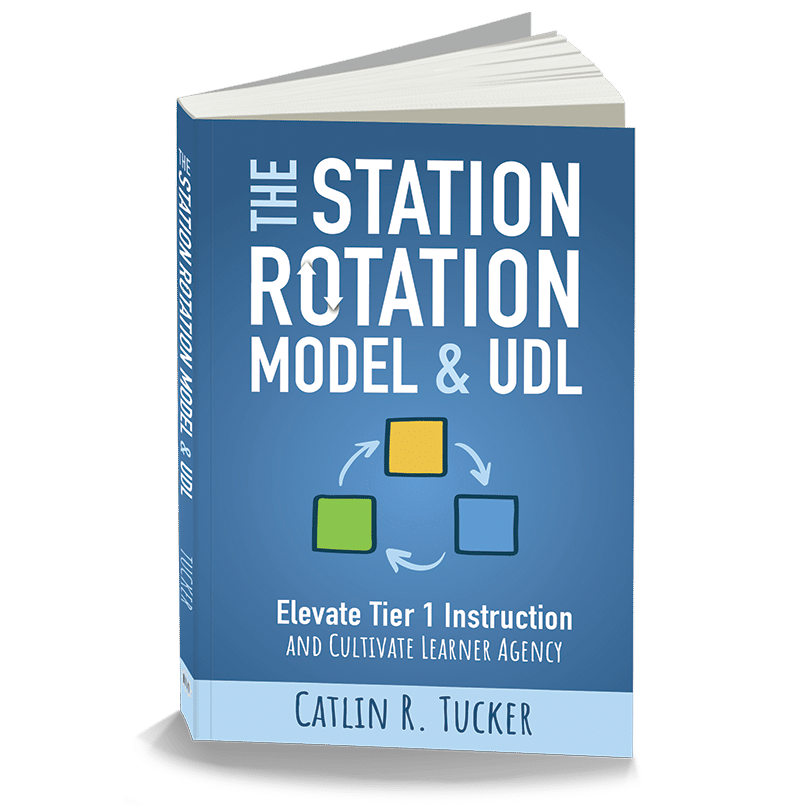
The Station Rotation Model and UDL: Elevate Tier I Instruction and Cultivate Learner Agency is available now! If you and your teachers need additional support, I offer customized professional learning that is hands-on, practice-based, and tailored to your team’s needs. Together, we can support your teachers in utilizing the Station Rotation Model to create space for differentiated Tier 1 and Tier 2 support/enrichment!
No responses yet