
When people talk about AI and the future of work, the conversation often centers on one question. Which jobs will AI replace? It’s an understandable concern, but I don’t think it’s the most useful question, especially for educators. A more important question is: How will AI reshape the work people do within industries and jobs? The answer has significant implications for how we prepare students for a rapidly evolving world of work. This is especially true in Career and Technical Education (CTE), where the goal is to prepare students for careers that are evolving.
I’ve been thinking about that question since reading Applied Co-Intelligence: Preparing Career and Technical Education Learners for an AI-Driven Workforce. The white paper was co-authored by one of my former Pepperdine University professors, Dr. Cameron Sublett, and explores the evolution of AI, its impact on industries, and what those changes mean for CTE. Rather than focusing on which jobs may be displaced by AI, the paper explores how AI is likely to change the tasks, decisions, and skills required across industries. That distinction struck me because it shifted my attention away from AI itself and toward the learning experiences we design. How do we prepare students not just to use AI, but to work alongside it thoughtfully, ethically, and effectively?
AI Exposure Isn’t the Same as AI Displacement
One aspect of the white paper I found fascinating was the distinction between AI exposure and AI displacement. I wanted to unpack that because these ideas are often discussed as if they are the same when they aren’t.
An occupation can have a high AI exposure, which means AI becomes part of the day-to-day work, but it doesn’t replace the people doing that work. In fact, the authors argue that AI is more likely to reshape many jobs than eliminate them entirely. As AI capabilities evolve, workers will increasingly collaborate with AI systems to solve problems, increase efficiency, and improve outcomes. The human side of this work, including judgment, communication, creativity, and ethical decision-making, remains critical.
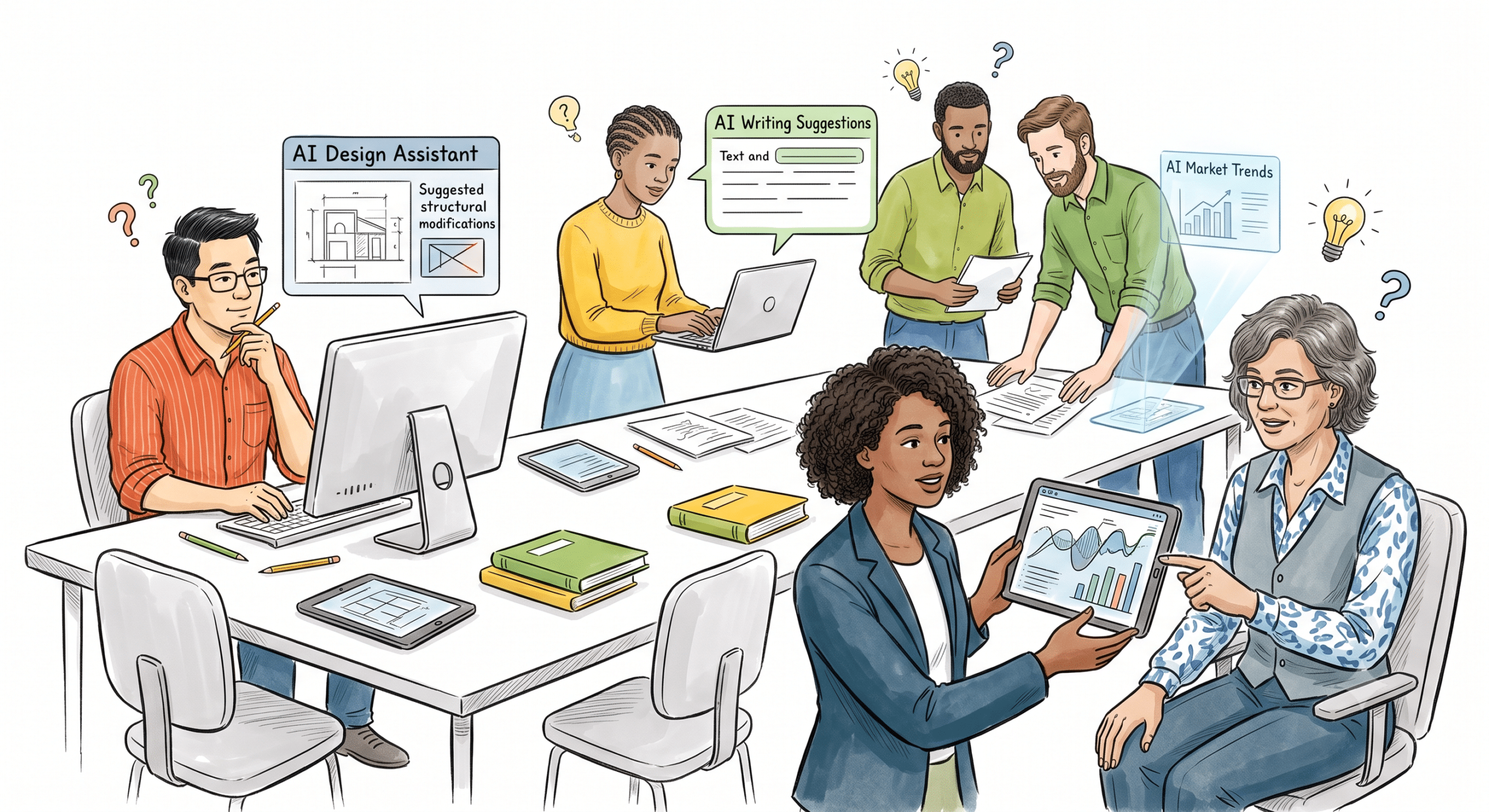
Consider a nurse using AI to support diagnostic decisions, a farmer relying on AI to monitor crop health and optimize irrigation, or a manufacturing technician working alongside predictive maintenance systems. In all of those examples, AI becomes part of the workflow, but it does not replace the expertise required to interpret information, respond to unexpected situations, or make informed decisions. The paper highlights that human workers will increasingly shift toward oversight, human-AI collaboration, and interpreting and acting on AI-generated outputs.
A future in which workers collaborate with AI changes the conversation about how we prepare people for an evolving workforce. We need to ask, How is this career changing? What new knowledge, skills, or dispositions will students need to thrive in it?
The authors cite economist David Autor, who argues that technological disruption rarely eliminates entire occupations. Instead, it reshapes the combination of tasks within them. For educators, particularly those in CTE pathways, this is an important mindset shift. If the work students will do is changing, then the learning experiences we design must also change.
This is where the Applied Co-Intelligence Model becomes especially valuable. Rather than asking educators to simply incorporate AI into existing programs, it provides a framework for rethinking career readiness in an AI-driven world.
The Applied Co-Intelligence Model: A Framework for Rethinking Career Readiness
The Applied Co-Intelligence Model, pictured below, builds on Ethan Mollick’s concept of co-intelligence. That is the idea that AI is most valuable when it functions as a collaborative partner. Sublett and his co-authors extend that thinking specifically to CTE. They recognize that preparing students for an AI-enabled workforce requires more than AI literacy. Students must develop AI expertise in addition to technical and transferable skills they’ll need in a specific occupational context.
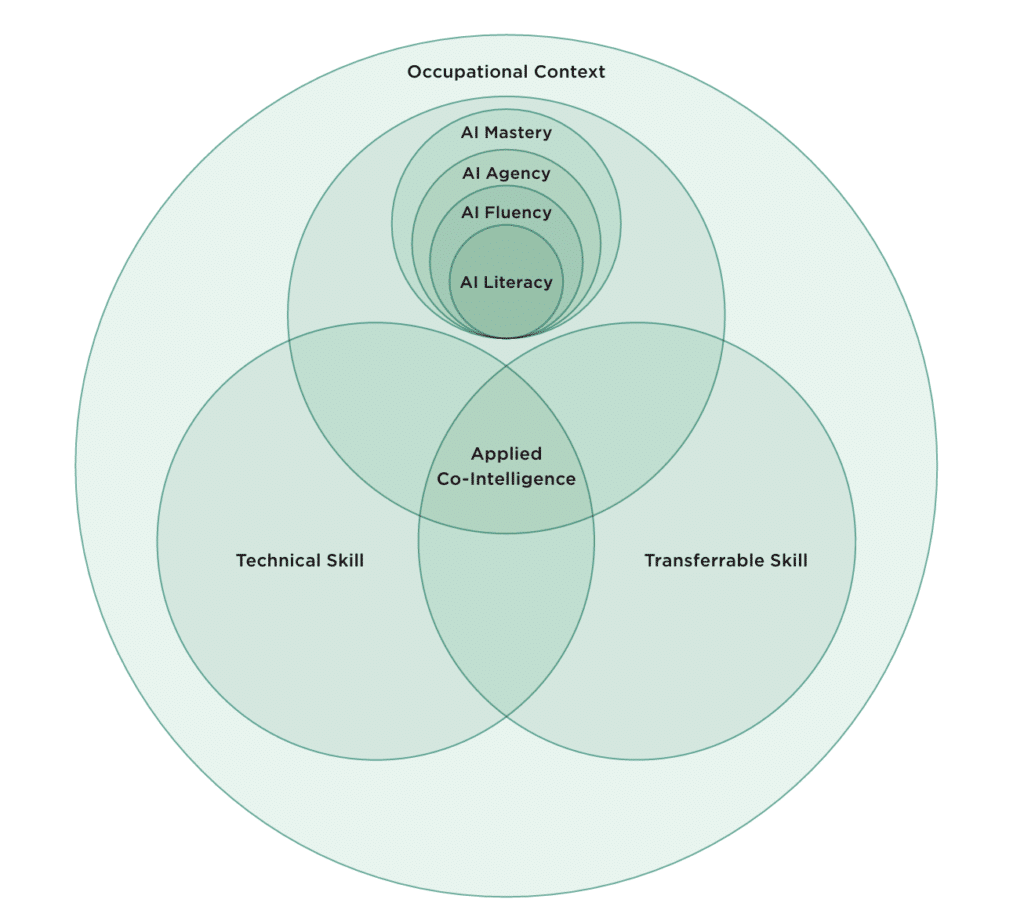
Image Credit: Sublett, Mason, Fresard, & Rimbach-Jones, 2026
The model positions Applied Co-Intelligence at the intersection of AI mastery, technical skills, and transferable skills.
- AI mastery extends beyond basic AI literacy to include the ability to use AI intentionally, evaluate its outputs, recognize its limitations, and determine when it adds value to a task.
- Technical skills encompass the occupation-specific knowledge and procedures students will need to perform in a specific field.
- Transferable skills, such as communication, collaboration, creativity, and teamwork, make it possible for people to adapt as technology and industries evolve.
Surrounding those domains is the occupational context. This recognizes that effective human-AI collaboration looks different in healthcare than it does in agriculture, hospitality, or education.
This model doesn’t position AI as a separate topic to teach or another technology to layer onto existing curriculum. Instead, it challenges us to design learning experiences that intentionally develop all three domains together. The goal isn’t simply for students to know how to use AI. It’s for them to understand when AI adds value (or doesn’t), where human judgment is critical, and how to combine technical expertise, transferable skills, and AI capabilities to solve complex problems in their chosen profession.
What Does This Mean for the Learning Experiences We Design?
Teaching students how to use AI tools isn’t enough. We need to design learning experiences that mirror the kinds of work students will encounter in their future careers. That means we must move beyond assignments that focus primarily on following procedures or recalling information. Instead, we should create opportunities for students to solve authentic problems, make decisions, collaborate with others, and exercise professional judgment. These learning experiences should also help students recognize when AI can strengthen their work and when human expertise is essential.
Performance-based learning provides a natural vehicle for developing these competencies. Well-designed performance tasks aligned to clear course standards ask students to apply technical knowledge and transferable skills in authentic contexts. They challenge students to solve meaningful problems, make decisions, communicate their thinking, and justify their reasoning. As AI becomes part of professional practice across industries, these tasks should ask students to thoughtfully integrate AI into their work. They must critically evaluate AI outputs and exercise their professional judgment to guide their decision-making. Performance tasks create opportunities for students to develop the very combination of technical expertise, transferable skills, and AI mastery that sits at the heart of the Applied Co-Intelligence Model.
Healthcare & Agricultural Examples
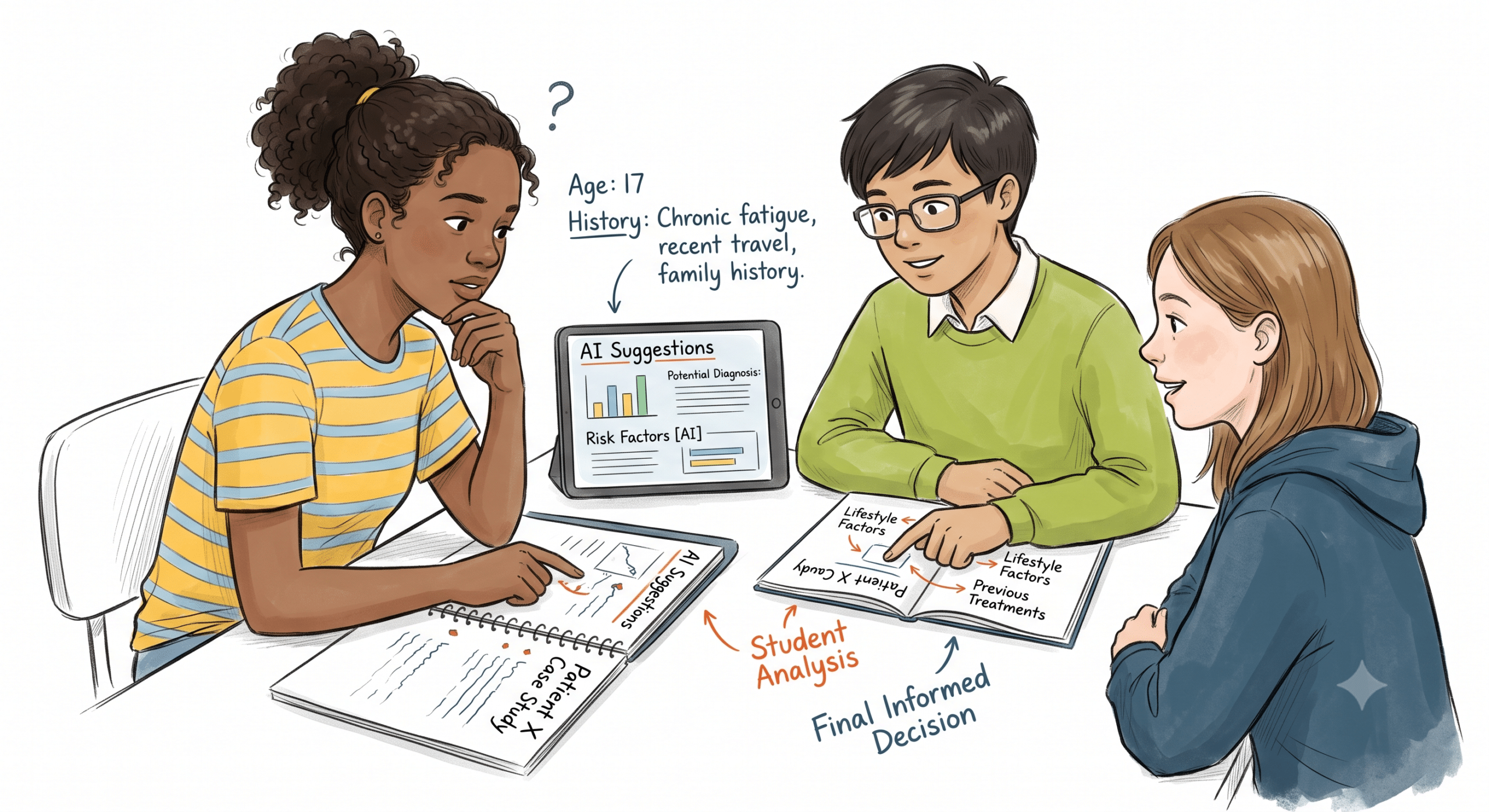
Let’s consider what this might look like in practice. In a healthcare pathway, students are presented with a patient case study and asked to evaluate AI-generated diagnostic recommendations. They must identify any missing information, consider ethical implications, and justify their decision based on both the AI’s recommendations and the patient’s specific circumstances. In an agricultural program, students analyze data from AI-powered crop-monitoring systems and consider factors such as weather conditions, soil quality, and local knowledge. They use this to develop and defend a management plan for a farmer facing a specific crop management challenge. These performance tasks do more than teach students how to use AI. They help them develop the judgment to know when AI adds value, how to critically evaluate its output given a specific situation, and when human expertise should guide the final decision.
Career readiness will increasingly depend on a student’s ability to integrate technical expertise, transferable skills, and AI mastery. Those competencies will not develop through lectures and isolated lessons about AI. They develop through authentic learning experiences that ask students to think critically, solve real-world problems, communicate their reasoning, and reflect on their decisions.
The goal isn’t to add AI to every lesson. It is to thoughtfully redesign learning experiences so students practice the kinds of thinking, decision-making, and collaboration they will need in professions where AI is an increasing part of that work.
As educators design their next CTE performance task, consider the following questions:
- Does this performance task reflect the way professionals in the field are beginning to work with AI?
- Where will students need to exercise human judgment rather than simply accept AI’s recommendations?
- Does this learning experience intentionally integrate technical skills, transferable skills, and AI mastery?
- Are students using AI to deepen and extend their thinking, or simply complete the task more quickly?
- How will students reflect on the strengths, limitations, and appropriate use of AI in this context?
The reality is that we are not preparing students for today’s jobs. We are preparing them for careers that continue to evolve. AI is reshaping the work people do and the tasks involved in that work, so our classrooms must evolve too. We must create learning experiences that prepare students to work thoughtfully, ethically, and effectively alongside AI.
Continue the Conversation
We cannot accurately predict how AI will reshape every career pathway, but we can prepare students to navigate that uncertainty. Cultivating capable and confident students requires that the learning experiences they engage with mirror the complexity of the work they’ll eventually do. To do that successfully, educators need to design and facilitate experiences that challenge students to integrate technical expertise, transferable skills, and AI thoughtfully and purposefully.
That is the value I see in the Applied Co-Intelligence Model as a lens for designing CTE courses. It shifts the conversation away from teaching AI as another technology and toward redesigning learning so students are prepared for careers that will continue to evolve long after they leave our classrooms.
If your school, district, or CTE program is beginning to explore the implications of AI for workforce preparation, I encourage you to read Applied Co-Intelligence: Preparing Career and Technical Education Learners for an AI-Driven Workforce. It offers a thoughtful, research-informed perspective on how AI is reshaping industries, the skills students will need to thrive, and how the Applied Co-Intelligence Model can guide the redesign of CTE programs and learning experiences.
Whether you’re a classroom teacher, instructional coach, school leader, curriculum designer, or policymaker, I think you’ll find valuable insights in this white paper. It helps move the conversation beyond “Which jobs will AI replace?” to the more important question: How do we prepare students for careers where AI will increasingly be part of the work?
The future of work is changing. Our learning experiences should change with it.
One response
Great topic! The most valuable skill in the AI era may be learning how to combine human creativity, problem-solving, and communication with AI tools. How are educators adapting their curricula.