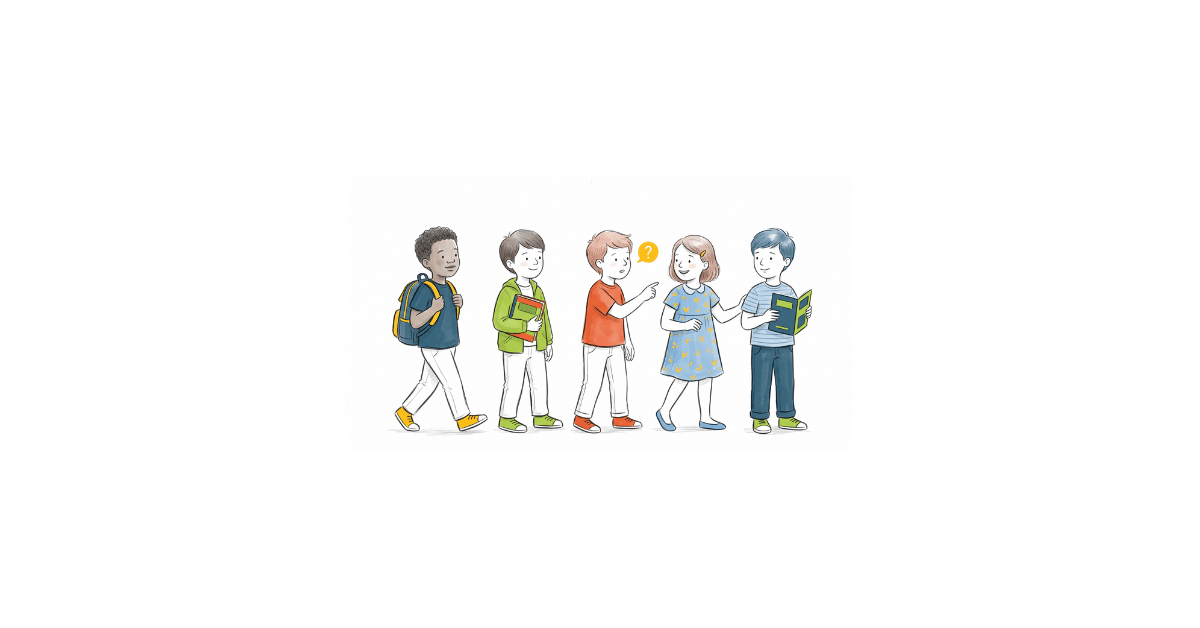
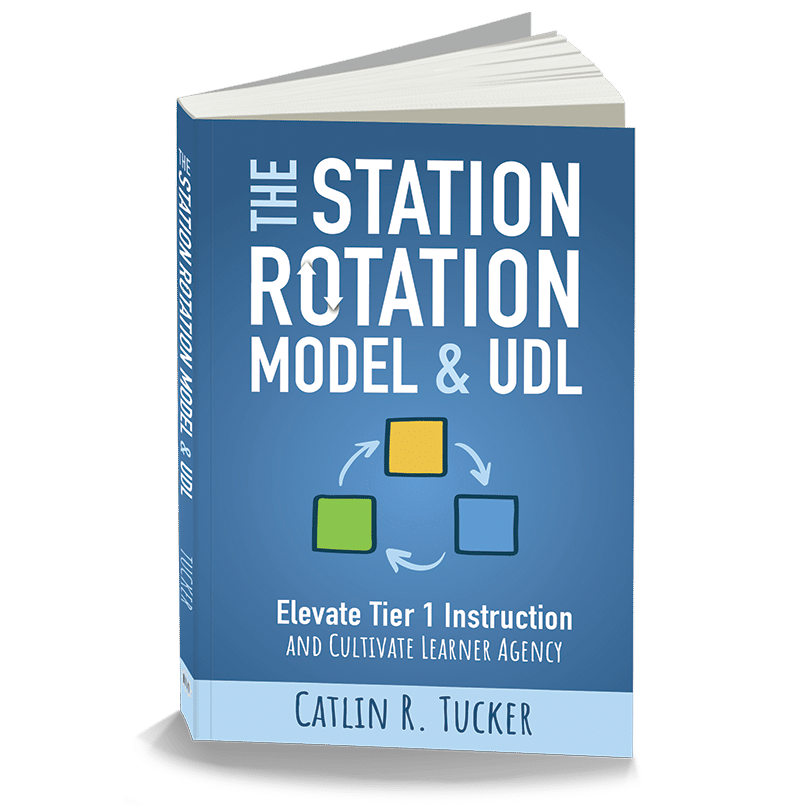
A few weeks ago, a teacher asked for advice on implementing Universal Design for Learning (UDL) and Station Rotation with young learners. She was reading my book, The Station Rotation Model & UDL: Elevate Tier 1 Instruction and Cultivate Learner Agency, and wanted guidance on how to set the stage for this instructional approach in the early elementary grades. This is the first post in a three-part series exploring how to implement UDL and the Station Rotation Model in early elementary classrooms.
In my work facilitating professional learning and coaching elementary teachers, I stress that implementing instructional strategies that release more control to young learners requires thoughtful onboarding. Students need clear routines, consistent expectations, and opportunities to practice everything from rotating between stations to navigating tasks with increasing independence. While the principles of UDL and the design of station rotation are the same regardless of grade level, their implementation must reflect learners’ developmental needs. Fortunately, this is one of the greatest strengths of early elementary teachers. Early elementary teachers are incredibly skilled at intentionally teaching routines, modeling expectations, and patiently helping young students develop confidence and skills as they navigate new learning experiences and environments.
Although this series is written with early elementary teachers in mind, the principles apply to any teacher implementing the Station Rotation Model. In my experience, teachers at every grade level benefit from explicitly teaching routines before expecting students to navigate learning independently. The difference is that primary teachers tend to expect this onboarding process, while secondary teachers often assume students already know how to manage new instructional routines.
Learner Variability Is the Norm
Walk into any kindergarten classroom in September, and you’ll get a front-row seat to learner variability. One student may already be reading simple sentences, while another is just beginning to recognize letters. Some students can work independently for 15 minutes, while others have never been expected to complete a task without adult support. Some eagerly collaborate with classmates, while others are still learning to share materials, solve problems together, and ask for help. They also differ in what sparks their curiosity, the life experiences they bring to school, the languages they speak, the confidence they feel as learners, and the ways they prefer to engage with learning.
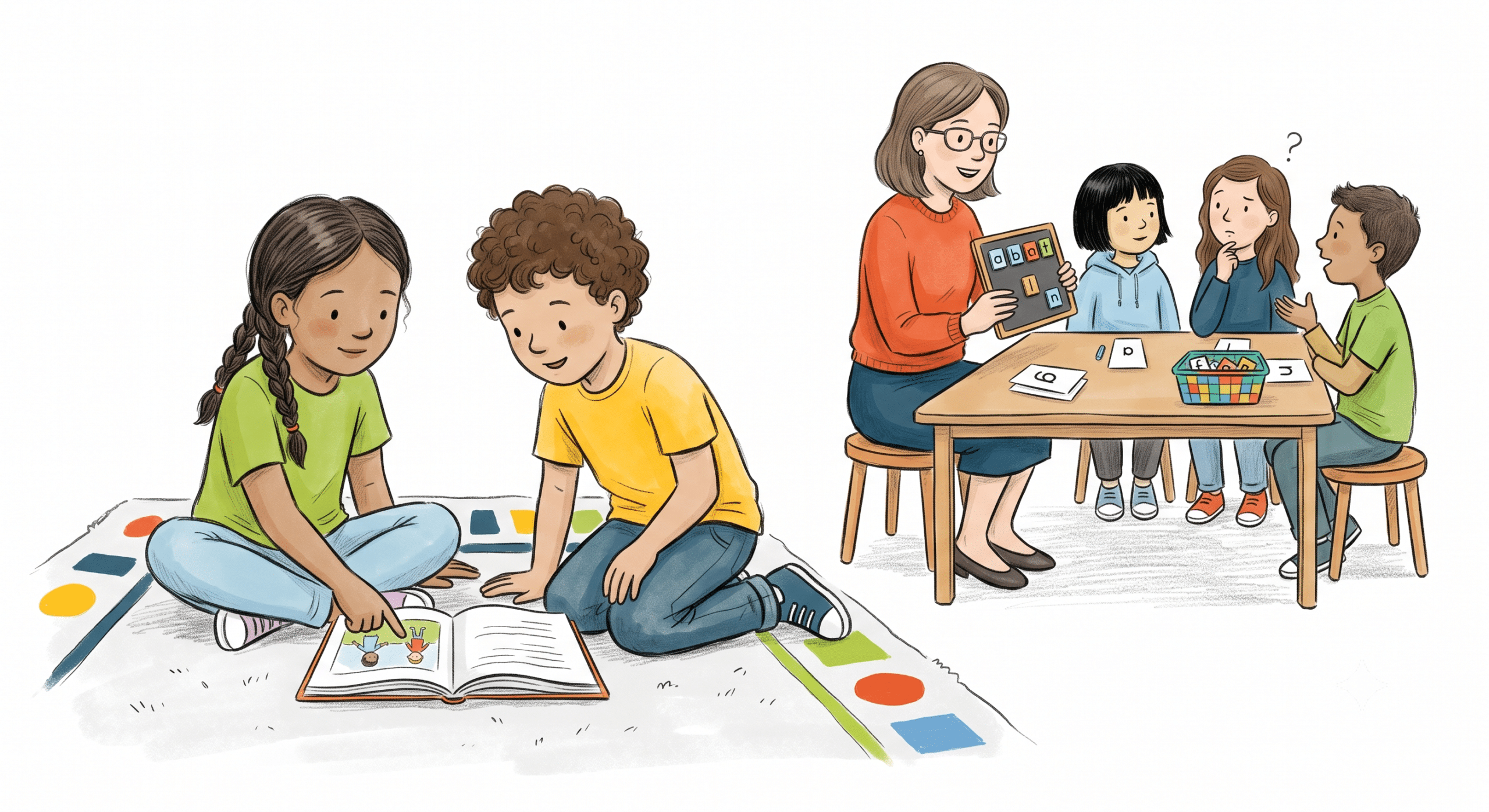
That variability is the norm, not the exception. It’s also why UDL is such a powerful framework for the early grades. Rather than designing for the mythical “middle” student, UDL encourages us to proactively design learning experiences that anticipate variability from the very beginning. Instead of waiting for students to struggle and then reacting, we need to intentionally design instruction to remove barriers before they become obstacles.
The challenge, of course, is that designing for learner variability can feel overwhelming. How do you provide multiple pathways, varying levels of support, and meaningful opportunities for practice when you’re the only adult in the room? That’s where the Station Rotation Model becomes such a powerful partner to UDL.
Unlike traditional centers, where every student typically completes the same activities, the Station Rotation Model allows the teacher to differentiate both instruction and support. While the teacher works with a small group, other students engage in meaningful independent, collaborative, or technology-enhanced learning experiences to reinforce or extend learning. Instead of trying to meet every student’s needs during whole-group instruction, teachers can provide different pathways and varying levels of support as they move through the stations.
Designing for Growing Independence Starts with Routines
When I work with primary teachers, the biggest hesitation they express isn’t understanding the model or its benefits. It’s wondering whether their students are capable of this level of independence. The answer is “yes,” but independence doesn’t happen by accident. Young children are capable of remarkable independence when we intentionally design for it, explicitly teach it, provide opportunities to practice it, and gradually release responsibility. Independence is something we have to teach, scaffold, and strengthen through repeated opportunities to practice.
As educators, our job isn’t simply to teach content. I know there is a ton of pressure to cover a large number of standards and teach a daunting amount of information and skills to students. Too often, that focus on content makes teachers feel like they don’t have time to do what I would argue is an even more important part of this work. Teaching students how to be learners. That work starts in the early grades when students are developing routines, habits, and confidence they will need to navigate the rest of their educational journey.
Students don’t become independent simply because they get older. They become increasingly independent because we intentionally design learning experiences that gradually transfer more responsibility to them over time. That’s where the Station Rotation Model, grounded in the principles of UDL, becomes such a powerful instructional framework. By proactively removing barriers, teaching routines explicitly, and providing appropriate scaffolds and structured choices, we create opportunities for even our youngest learners to experience success while taking increasing ownership of their learning.
Teach the Routine Before the Content
One of the biggest frustrations teachers experience when launching the Station Rotation Model is that students seem to need consistent reminders and redirection. More often than not, the issue isn’t the instructional model but rather the reality that students are trying to learn a new instructional routine while also engaging with academic tasks.
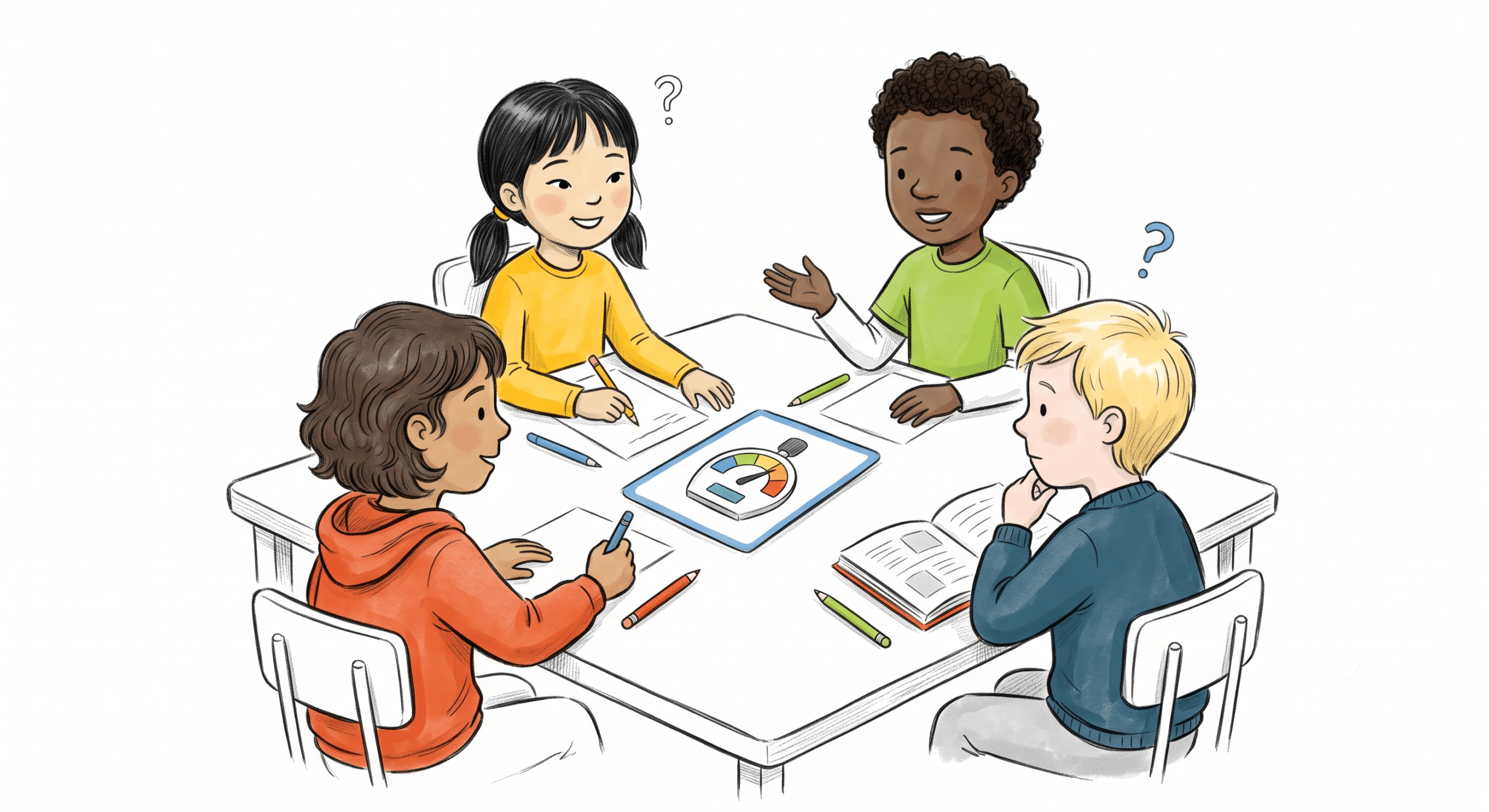
In a station rotation, young learners are juggling a lot. They are thinking about where to go, what materials to use, where to put finished work, and how to navigate a task without the teacher directing the activity. When students are trying to learn a new routine and content simultaneously, the routine can become the barrier. Their mental energy is divided. This can result in distractions, frustration, or off-task behavior.
From a UDL perspective, we must strive to remove barriers that interfere with learning. The goal is to ensure all students can be successful. If students are investing significant cognitive energy trying to remember where to go and what to do, they have less capacity to focus on learning. Instead, we need to teach the routine so thoroughly that it becomes automatic before we also ask young learners to focus on new academic content at the stations that are not teacher-led.
Resist the temptation to rush this process. It can feel like you’re falling behind, but the time you invest teaching routines at the beginning of the year pays dividends every day that follows. Differentiated instruction is the real value of this model, but we have to invest in building a strong foundation first. We must establish routines and practice, practice, practice, until students can navigate the learning experience with increasing confidence.
Station Rotation Routines
Here are a few station rotation routines worth thinking about and practicing before introducing content-specific learning tasks:
- How to rotate from one station to the next
- How to gather and return materials
- How to use classroom tools and supports independently
- What to do when they finish early
- What to do when they get stuck
- How to ask a peer for help before interrupting the teacher
- What to do if they need to go to the bathroom
- What noise or voice level is appropriate at each station
- How to clean up before rotating
When introducing these routines, keep the tasks students engage with at the stations simple and familiar. If students are learning how to rotate between stations, avoid pairing that routine with anything that is relatively new or cognitively challenging. Instead, use familiar books, simple puzzles, review activities, coloring tasks, or collaborative games they already know how to play. This allows students to focus their attention on learning the workflow rather than juggling multiple new demands at once.
One strategy I love is introducing and explicitly teaching new academic tasks and activities at the teacher-led station before asking students to complete them independently. This gives you a chance to model the task, answer questions, differentiate your support, provide feedback, and ensure every student feels successful before they encounter that activity on their own at a station. It also gives you valuable insight into which students may need additional scaffolds or practice before they are ready to tackle the task independently.
Debrief and Discuss Routines
As students begin practicing routines, pause after each rotation for a quick class debrief. Ask students questions like:
- What went well during that rotation?
- Where did we get stuck?
- What should we do differently next time?
These brief conversations communicate that learning the routines is just as important as learning the content. They also invite students to share feedback and suggest ways the class can improve. Over time, students begin to understand that they are part of a learning community. They learn that reflection, feedback, and continuous improvement are everyone’s responsibility, including the teacher.
One of the lessons I took away from watching my children in their Montessori preschool was that independence was carefully taught. Every routine was modeled, practiced, revisited, and celebrated until it became automatic. These young learners were not naturally self-directed. They became independent because the teachers intentionally designed opportunities for them to practice those routines and skills every day.
The same is true for any classroom. When we invest the time upfront teaching routines, we’re not taking away from learning. We are creating the conditions that make deeper learning possible for the rest of the school year.
I always say we make time for what we value in education. If we value students becoming independent, confident, and capable learners, we need to make time to teach the routines that make that growth possible.
Practical Tips
- Introduce one new routine at a time instead of overwhelming students with too many new expectations at one time.
- Use a “fishbowl” to model what successful station work looks like and sounds like before asking the whole class to try it.
- Create cards with simple icons to show the appropriate volume level at a station. That way, students can visually reference this expectation when they arrive at a new station.
- Start with very short rotations (e.g., 5-10 minutes) while students are learning the routines. As their confidence and competence grow, gradually increase the length of each rotation.
- Celebrate progress! Recognize when students use classroom resources before asking for help, transition smoothly between stations, or solve a problem independently. These moments reinforce the behaviors you are trying to cultivate.
Launching the Station Rotation Model in the early grades is all about intentionally building routines. That work creates the foundation for meaningful differentiation throughout the rest of the year. Every minute you spend teaching students how to navigate the learning experience and environment is an investment that pays off in greater independence, more productive small-group instruction, and richer learning opportunities for every student.
In my next post, I’ll explore how thoughtfully designing the learning environment itself can reduce cognitive load and help the physical classroom become a “second teacher,” supporting our youngest learners as they develop growing independence.
Want To Learn More?
Check out The Station Rotation Model & UDL: Elevate Tier 1 Instruction & Cultivate Learner Agency!
2 Responses
Setting up new classroom routines is such a huge task for teachers. I’ve found that breaking down the prep into small steps helps. I use Taskai on my Android to capture all those little instructional tasks so I don’t lose track during the chaos!
Thanks for sharing your approach, Zack!
Best,
Catlin