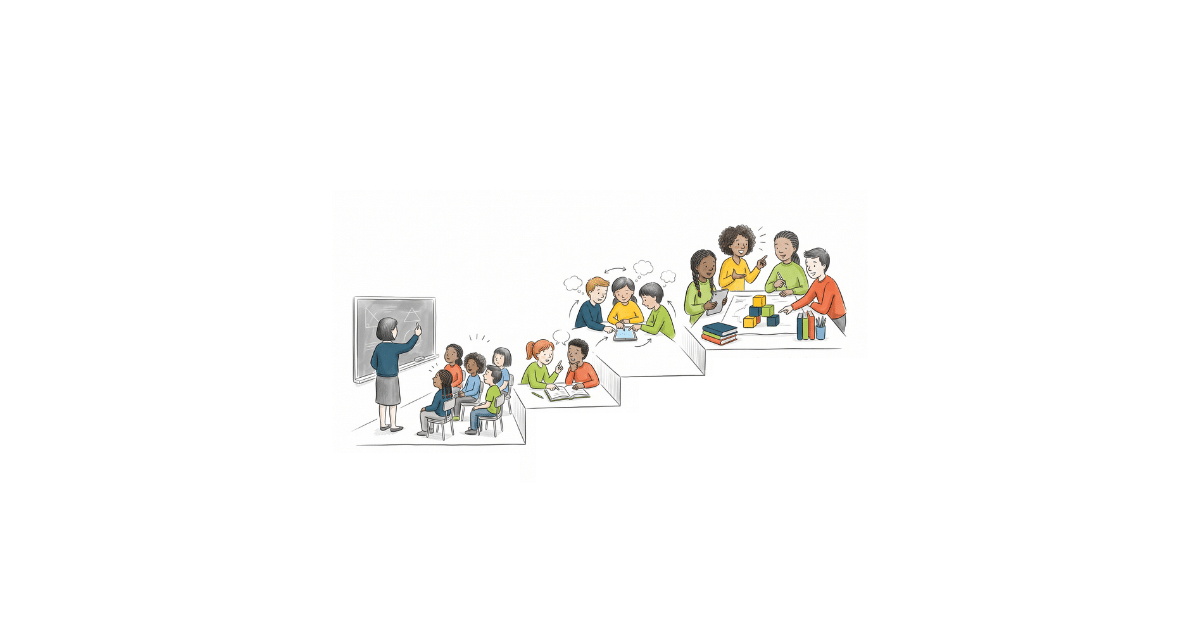
A gradual release process for building student independence with learning strategies
At the beginning of the school year, teachers invest significant time establishing classroom routines and procedures. We teach students how to enter the room, access materials, transition between activities, submit their work, and ask for help. We know students need to be explicitly taught how the classroom functions and workflows operate if we want them to navigate our classrooms with increasing confidence and independence.
We need to approach teaching students how to learn with the same intentionality. Similar to parenting, one of our main goals as educators should be to prepare young people to navigate increasingly complex situations with greater confidence and independence. That requires an intentional, gradual release of responsibility in the classroom. We cannot expect students to become independent, self-directed learners if we make all of the decisions, guide every step, and do the cognitive heavy lifting for them.
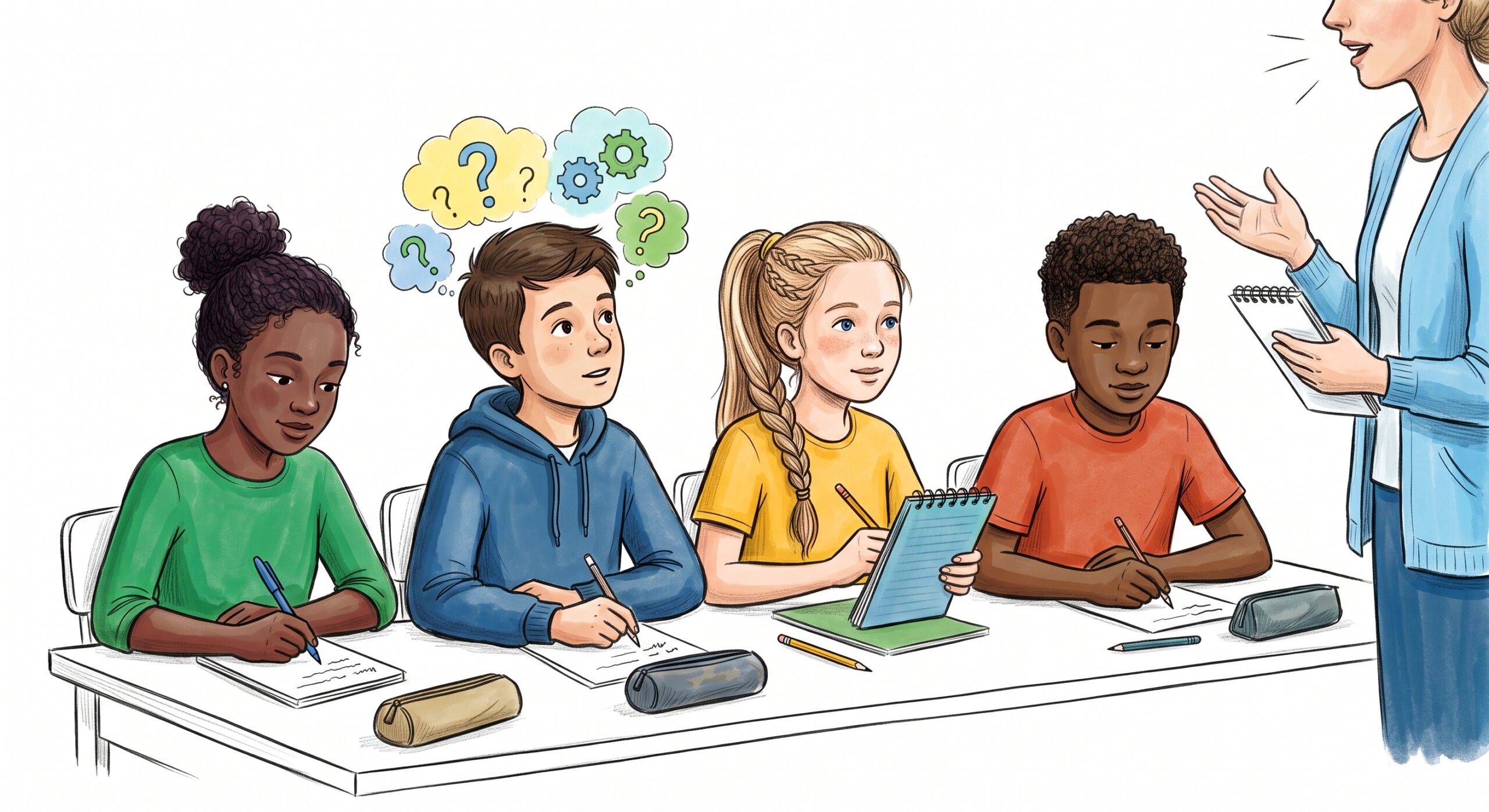
The challenge that most teachers face is the tremendous pressure to cover content. That pressure makes it difficult to justify spending valuable class time teaching students how to learn. We become so focused on what kids need to know, understand, and be able to do for our subject area that we may neglect the skills they need to make sense of information, engage with complex ideas, work effectively with diverse groups of peers, and monitor their progress.
Let’s consider something as common as note-taking. I recently published a blog about guided notes and shared resources on social media about supporting students in taking notes. I received several comments about how students cannot take notes, but I wonder how many of those same teachers spend time explicitly teaching their students how to take notes.
- How should they structure their notes to effectively organize their ideas?
- What should they listen for or look for?
- How do they distinguish an idea from a supporting detail?
- How much should they write?
- How might they use those notes after a mini-lesson or lecture to study for a quiz or test?
If we want students to take notes independently, we have to first explicitly teach them how.
Supporting the Shift to Student-led Learning
The same is true for any student-led learning routine or strategy we value. Students need time to learn how to navigate these strategies with confidence. When I talk about student-led learning, time is often the biggest point of pushback. Teachers worry about how much time it takes to prepare students to work independently or with classmates. But independence requires a time investment. If we want students to facilitate discussions or engage in ongoing self-assessment, we have to teach them how. That means investing time up front to properly onboard them to these strategies.
The time investment may feel like a big ask. After all, time is the one thing most teachers don’t feel like they have enough of. However, investing in students’ ability to learn independently can save teachers significant time and energy over the course of a school year.
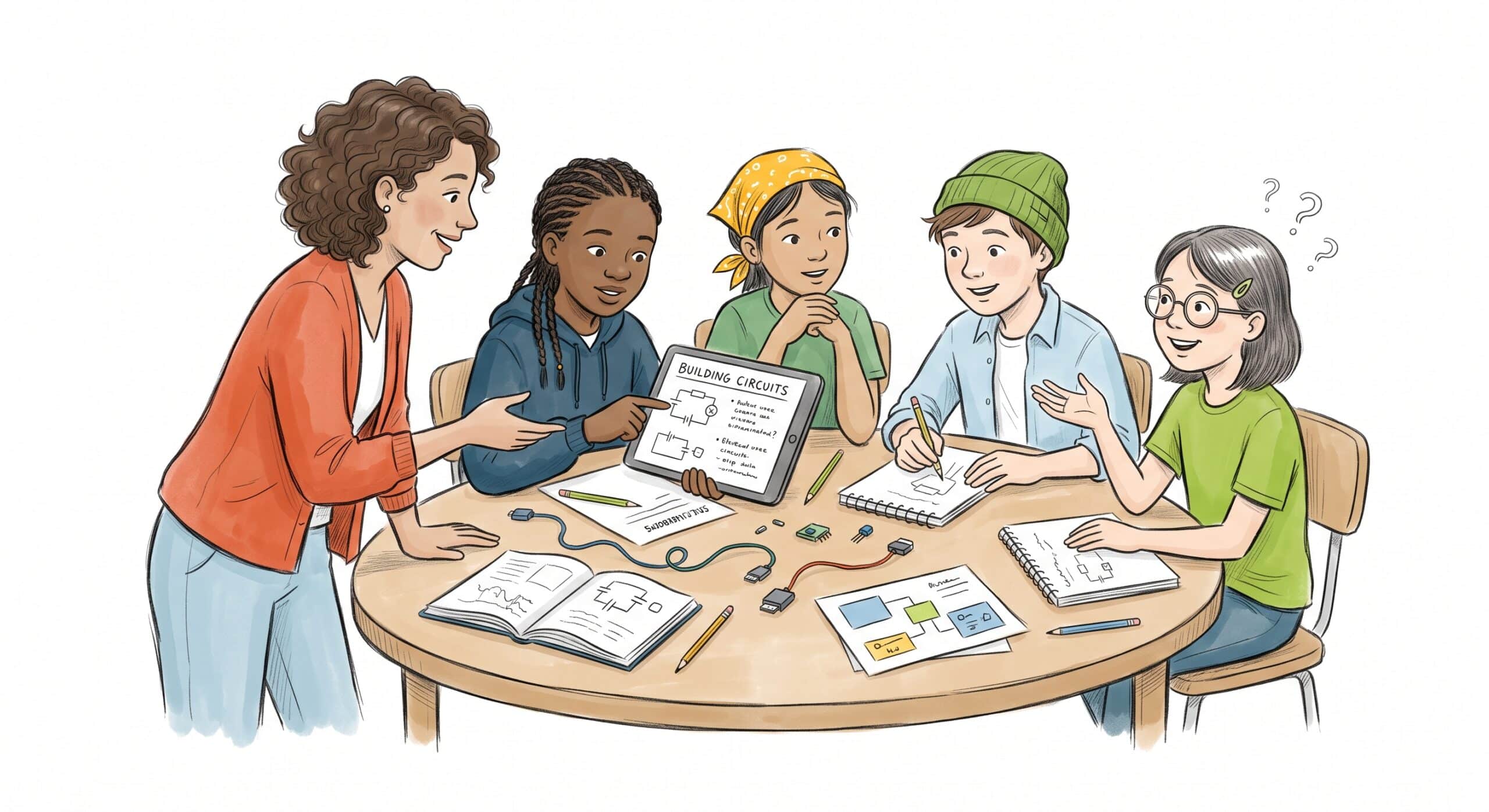
The more students can confidently initiate and navigate learning routines without constant teacher direction, the more cognitive work they can do. That creates space for the teacher to shift from transferring all of the information and directing every aspect of the learning experience from the front of the room. It frees them to spend more time observing, facilitating, giving feedback, and working with individuals and small groups to meet their specific needs.
The payoff also extends well beyond deeper engagement with and understanding of academic content. As students take greater responsibility for their learning, they have opportunities to develop self-regulation, self-management, and responsible decision-making. They have more opportunities to develop skills like collaboration, communication, critical thinking, and creative problem-solving.
These skills are not separate from learning; they are essential to becoming a capable and confident learner. They are also increasingly important in the world students are entering beyond school. As AI’s capacity for handling increasingly complex tasks increases, the ability to communicate, collaborate, think critically, solve complex problems, make responsible decisions, and manage oneself becomes even more valuable. These distinctly human skills need to be developed through explicit instruction and practice in the classroom.
An Onboarding Process for Student-Led Learning
Onboarding students to student-led learning strategies and routines is not unlike teaching them subject-specific skills. We would not expect students to master a complex math process or write an effective argument after simply explaining the directions. We model the process, provide opportunities for guided practice, give feedback, and gradually release responsibility as students develop their abilities and confidence.
When I work with teachers, I use an onboarding process that mirrors the gradual release of responsibility that many teachers use to teach academic concepts and skills. The goal is to make the process feel familiar and manageable while giving students the modeling, practice, feedback, and reflection they need to successfully take on more responsibility for their learning. The process I use has five discrete steps.
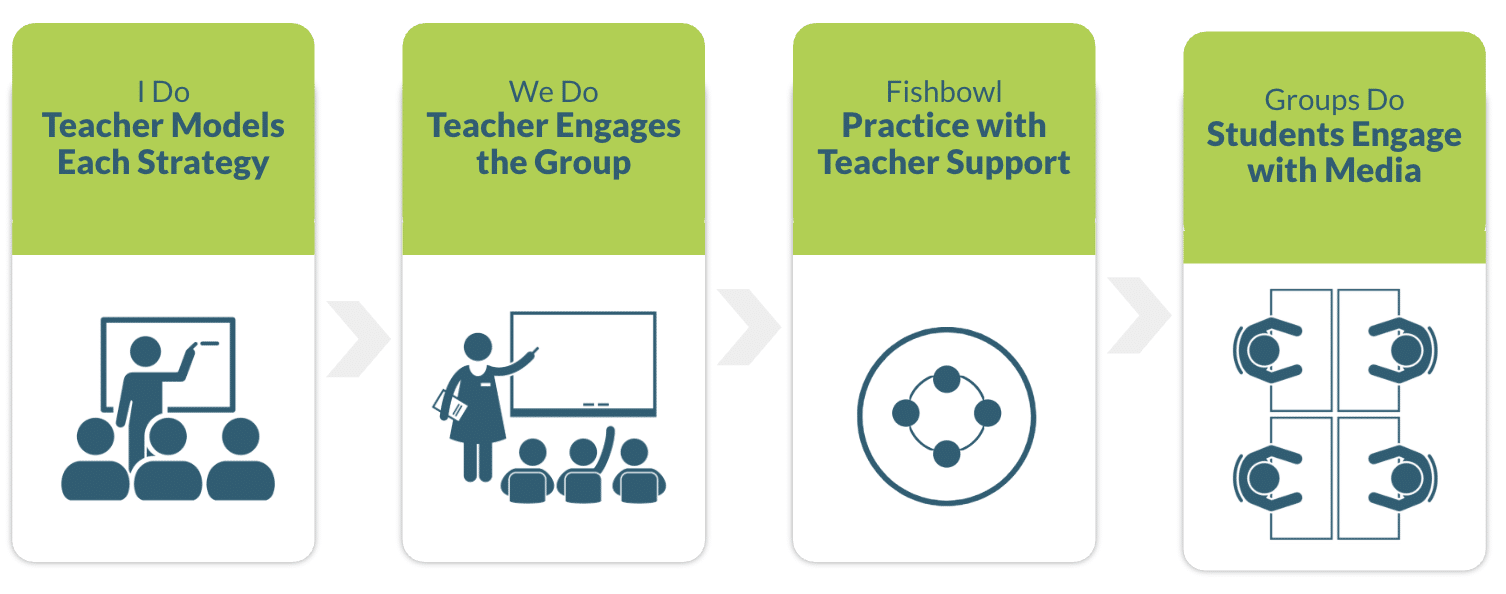
I Do: Explicitly Teach and Model the Strategy
The first step in onboarding students to the new student-led strategy is explicitly teaching them what the strategy is, why they’re using it, and what they will be expected to do. We can’t assume they know how to engage in a productive conversation, give meaningful feedback, or even take useful notes. If we want students to eventually navigate these strategies without us, we need to slow down and teach them the individual skills involved.
Begin by explaining the purpose of the strategy and breaking it into its component parts:
- What does the strategy ask students to do?
- What skills will they need to use this strategy successfully?
- What specific steps are involved in the process?
- What decisions will they need to make on their own?
This is an opportunity to provide students with scaffolds, such as sentence stems or sentence frames, question starters, graphic organizers, checklists, or role cards that they can use for support as they begin using the strategy.
Then, we need to model the strategy. This is where a think-aloud is particularly valuable. Seeing us apply a strategy isn’t enough. They also need to hear the thinking, decision-making, and the cognitive work happening that would otherwise be invisible. As you model the strategy, describe and explain what you’re noticing, the questions you’re asking yourself, and why you’re making particular choices.
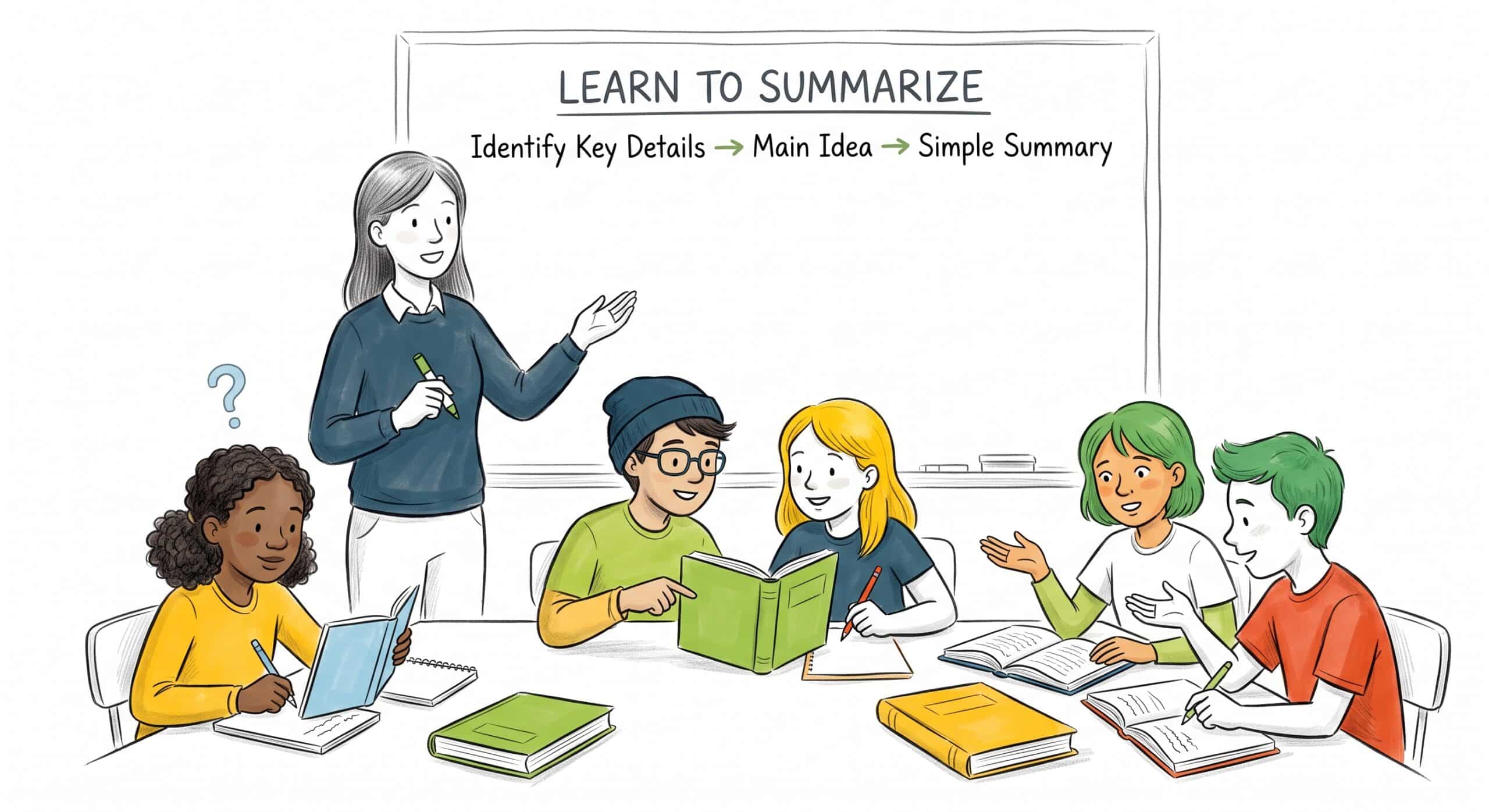
For example, reciprocal teaching requires students to summarize, question, clarify, and predict as they make sense of text or media together. Before students can manage that process independently, the teacher needs to explicitly teach and model the thinking involved in each comprehension lens.
Explicit instruction at this stage takes time, but the goal is not for the teacher to continue doing this work indefinitely. The goal is to make the skills and thinking involved in the strategy visible so students are better prepared to practice them with support.
We Do: Practice Together with Teacher Support
Once students understand the purpose of a strategy, the individual skills involved, and have seen those skills modeled, they need an opportunity to practice them with support. During the “we do,” the teacher shifts from demonstrating the strategy to actively engaging students in using it. The goal is not independence yet, but rather to give students a chance to try the skills themselves while the teacher is available to prompt their thinking, address confusion, and provide immediate feedback.
This guided practice can happen as a whole class with partners or in small groups. The teacher might pose a question, invite students to try a skill, or ask them to compare their thinking or work with a partner. Then the teacher can bring the group back together to discuss their responses. This creates an important bridge between watching the teacher model a skill and being able to use it independently.
The “we do” is also an important opportunity to begin shifting some of the cognitive work to students. Instead of telling students what is important, what question to ask, what is confusing, or what might happen next, the teacher prompts students to make those decisions and explain their thinking. As students practice, the teacher can listen for misconceptions, highlight strong examples, and offer feedback that helps students understand what high-quality implementation of this skill looks like.
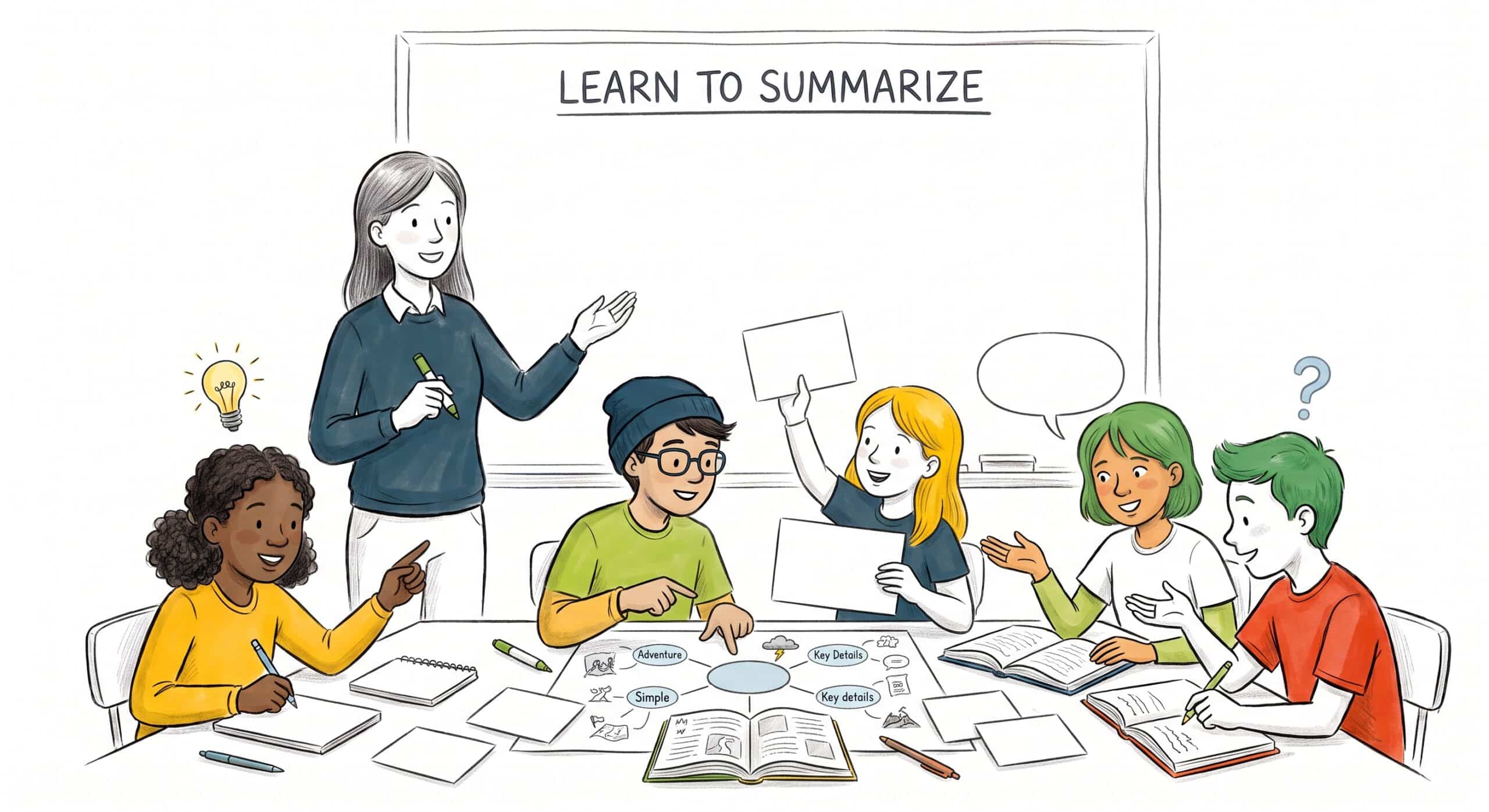
At this stage, the teacher is still actively guiding the process, but they are doing less of the thinking. Students are beginning to practice the individual skills they will need to coordinate on their own. Once they have had the opportunity to practice each comprehension lens with support, they are better prepared to see how those pieces come together in the full reciprocal teaching routine.
Fishbowl: Observe, Analyze, and Refine the Strategy
After students practice the individual skills, they need to see how those skills work together. A fishbowl makes the complete strategy visible. A small group models while classmates observe, analyze, take notes, and provide feedback.
The teacher can invite a small group of students to sit at the center of the room and work through the strategy while their classmates observe. Before they begin, give the students watching a clear focus for their observations:
- What should they look for or notice?
- What does effective use of the strategy look and sound like?
- Where might the group get stuck?
- What small shifts might make the strategy work better?
Providing an observation guide or a short list of success criteria can help students focus their attention. It also prepares them to give specific and useful feedback. The goal of a fishbowl is not for the inner circle to perform the strategy perfectly the first time. The fishbowl creates an opportunity to practice, pause, receive feedback, and try again.
As the small group works, the teacher observes and listens. The teacher pauses the group to provide targeted feedback: What did the group do well? What’s one thing they might focus on improving in the next round? The teacher can then invite the students in the outer circle to share their observations and suggestions.
This process makes feedback an immediate part of the learning. The teacher and peers provide feedback while students are still engaged in the process. Students can then act on that feedback immediately instead of waiting until the strategy is complete. The inner circle then has the opportunity to apply feedback immediately in the next round.
The fishbowl also benefits the students observing. They are not passive spectators. Instead, they analyze the strategy and compare what they observe to the success criteria. They identify effective moves and notice potential challenges. This prepares them to use and improve the strategy themselves.
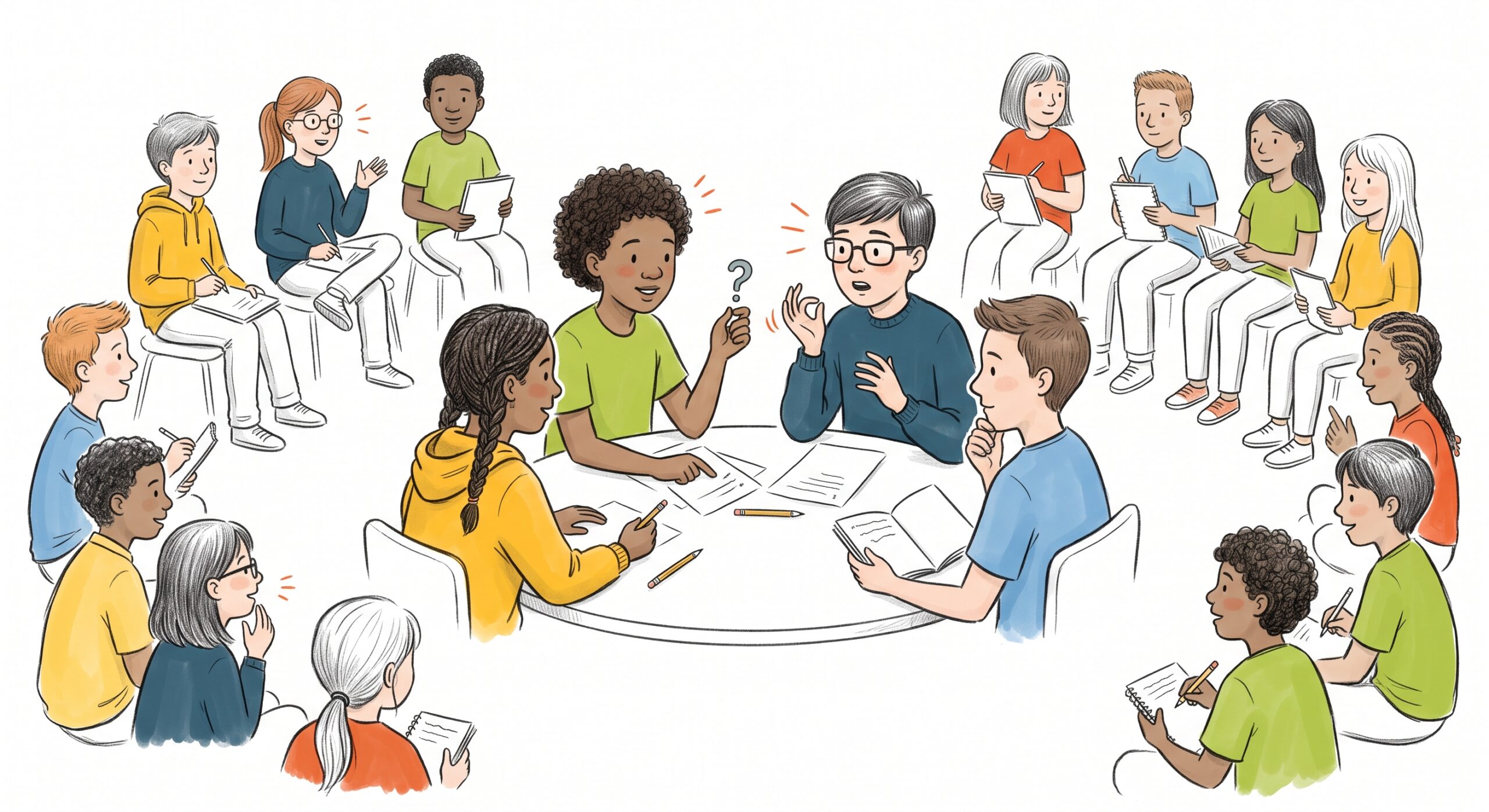
By the end of the fishbowl, students have seen the strategy in action. That will make it easier for them to use it confidently on their own or with a small group.
Students Do: Practice with Teacher Feedback
After students have seen the strategy modeled in the fishbowl, give them time to analyze what made it effective. Then, it is time for them to try the strategy themselves. Depending on the strategy, students may practice independently, with a partner, or in a small group.
At this stage, the teacher releases responsibility for managing the strategy to students. Instead of directing each step or prompting students through the process, the teacher steps back and observes. Students need space to make decisions, work through challenges, and build confidence. They are learning to navigate the strategy without relying on the teacher to tell them what to do next.
That doesn’t mean the teacher disappears from the process. As students work, the teacher circulates, listens, observes, and provides targeted feedback and support. Rather than taking over when students struggle, the teacher can use questions to guide them in problem solving. Teachers should provide just enough support to keep students progressing while preserving their ownership over the process.
This is also an important opportunity for the teacher to gather information:
- Which students are using the strategy effectively?
- Where are students getting stuck?
- What scaffolds are they using or no longer need?
- Are there aspects of the strategy that may need to be retaught or modeled again?
The teacher can use these observations to guide their next moves. Which students are ready for greater independence? Who would benefit from additional practice and support?
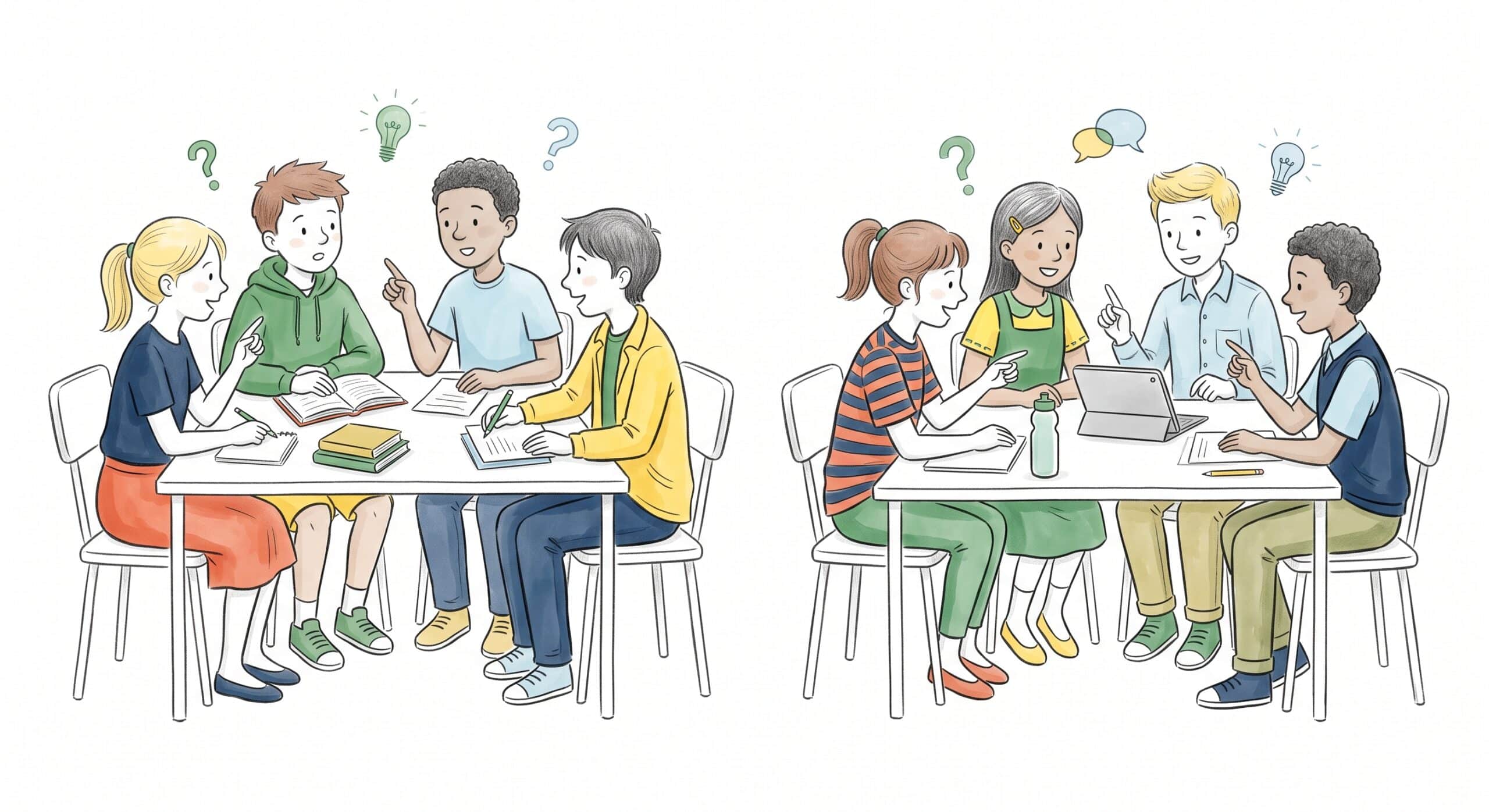
The goal of this stage is to give students repeated opportunities to use the strategy. As they practice, the teacher is available to coach and provide feedback. With practice, students should become increasingly confident managing both the academic and collaborative demands of the strategy, preparing them to use it more independently throughout the school year.
Self and Peer Assessment: Monitor Progress and Provide Feedback
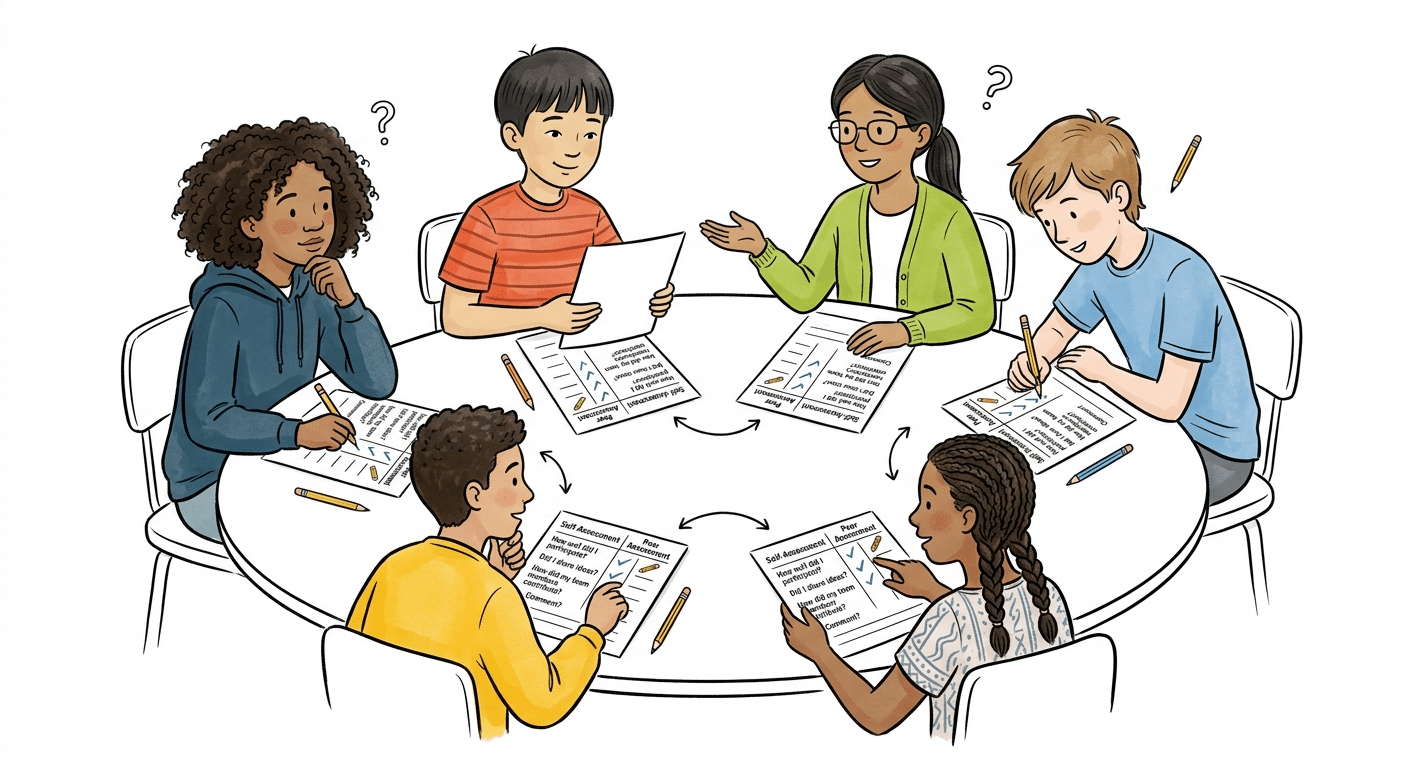
As students begin using a student-led strategy with greater independence, they also need opportunities to reflect on how effectively they are using it. Self and peer assessment require students to think about the quality of their work. They must consider what they are doing well and what areas are in need of growth. To support this process, teachers can create an asset-based continuum describing what skills look and/or sound like at each stage of development.
A traditional rubric focuses on what students may be missing, lacking, or failing to include. By contrast, an asset-based continuum highlights what students are demonstrating and makes the next stage of development visible. For example, a continuum might describe the use of the strategy at four stages: beginning, developing, proficient, and advanced. At each stage, the language describes observable skills and behaviors students are demonstrating. This gives students a clear picture of their current skill level and what they can work toward next. Students can use the continuum to self-assess after practicing a strategy:
- Where would they place themselves right now on the continuum?
- What evidence from their work or participation supports that assessment score?
- What are they already doing effectively?
- What is one skill or behavior they want to focus on improving the next time they use this strategy?
The same continuum can guide peer assessment. Instead of asking students to tell a classmate what they did well or what to fix, students can use the continuum to guide their feedback. This helps avoid vague or deficit-based comments. Students can identify evidence of the skills a peer is already demonstrating and offer a specific suggestion for growth. The continuum creates a shared language for discussing progress. It also positions feedback as information students can use to improve, rather than a judgment of their performance.
The Investment in Independence Pays Off
At this point, you might be thinking this sounds like a lot of time to spend on a single strategy. Onboarding students to a student-led strategy requires us to slow down and explicitly teach the skills involved. We must model our thinking, provide opportunities to practice, and offer feedback. The time we spend doing this foundational work is an investment. Each strategy students learn becomes a tool they can use again and again, allowing them to navigate learning with increasing independence.
Consider reciprocal teaching. Once students understand how to summarize, question, clarify, and predict, they can use those skills effectively in a small group. Now, the teacher has a powerful strategy they can use again and again. Students can engage with a text, video, podcast, infographic, or other source of information and work collaboratively to make sense of it. They have a process for identifying key ideas, asking questions, surfacing and resolving confusion, making predictions, and discussing their thinking with peers.
Students have a structure and the skills to do more of that cognitive work themselves. That shift creates something every teacher needs more of: time.
When students can manage meaningful learning experiences independently or collaboratively, teachers can use their finite class time for work where their expertise and presence have the greatest impact. They can:
- meet with a small group that needs additional instruction
- conference with individual students
- provide real-time feedback
- assess progress
- offer targeted support or extension
The return on that initial investment also extends beyond a single lesson or strategy. Students are learning how to manage themselves and their learning, work productively with their peers, monitor their understanding, and reflect on their growth. With repeated opportunities to practice these skills, they become more independent, self-directed, and metacognitive learners.
The reality is that onboarding takes time. However, the alternative is spending the entire school year directing and managing learning experiences that students are capable of learning to navigate themselves.
The ultimate goal is to invest time early so we can release more responsibility later. The more students learn to lead, the less teachers have to carry.
No responses yet