
Students don’t enter our classrooms with the same prior knowledge, skills, experiences, language proficiency, or learning needs. Yet, traditional instructional models often assume that students are ready to learn the same content, at the same pace, with the same level of support.
When we design a lesson for the mythical middle student, we risk creating barriers for students who need more scaffolding and support while limiting opportunities for students who are ready for greater complexity or challenge. This places teachers in a difficult position. They are expected to provide grade-level instruction while simultaneously identifying and responding to a wide range of learning needs.
Carol Ann Tomlinson and Tonya Moon wrote Assessment and Student Success in a Differentiated Classroom (2013), which emphasizes the importance of using assessment to understand students’ readiness, interests, and learning needs. Assessment is not just a tool for measuring what students have learned; it can also inform how we design instruction. Eysink and Schildkamp (2021) also describe assessment-informed differentiation as a process that involves two parts: preparing differentiated instruction using assessment evidence, and monitoring and adjusting instruction as students learn.
How Proactive and Responsive Differentiation Work Together
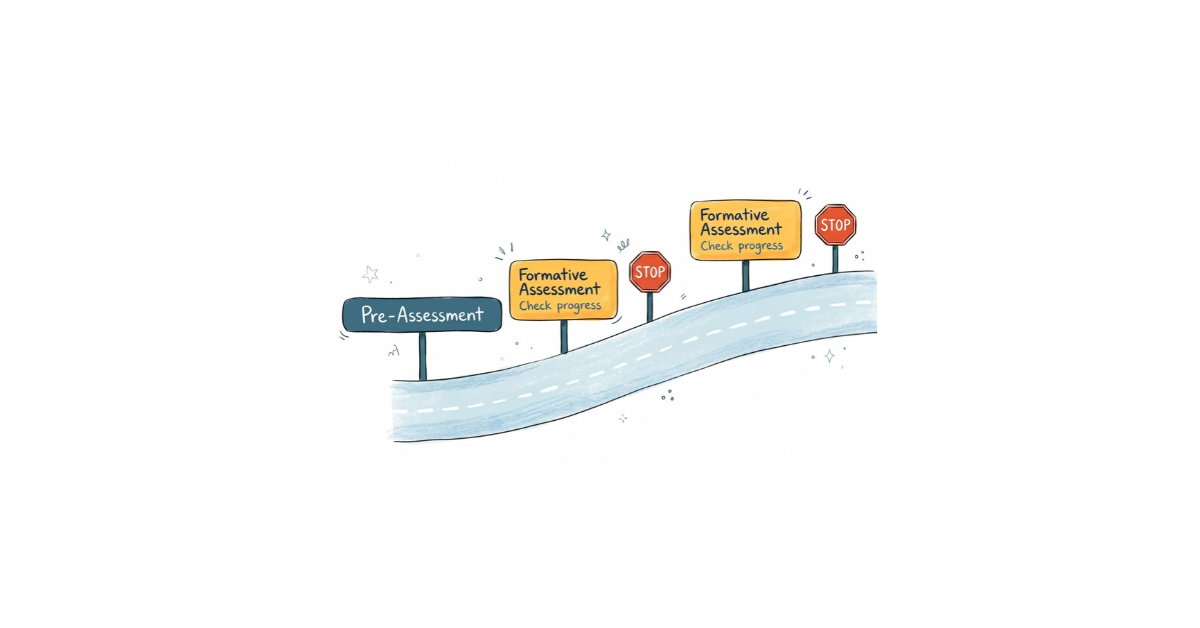
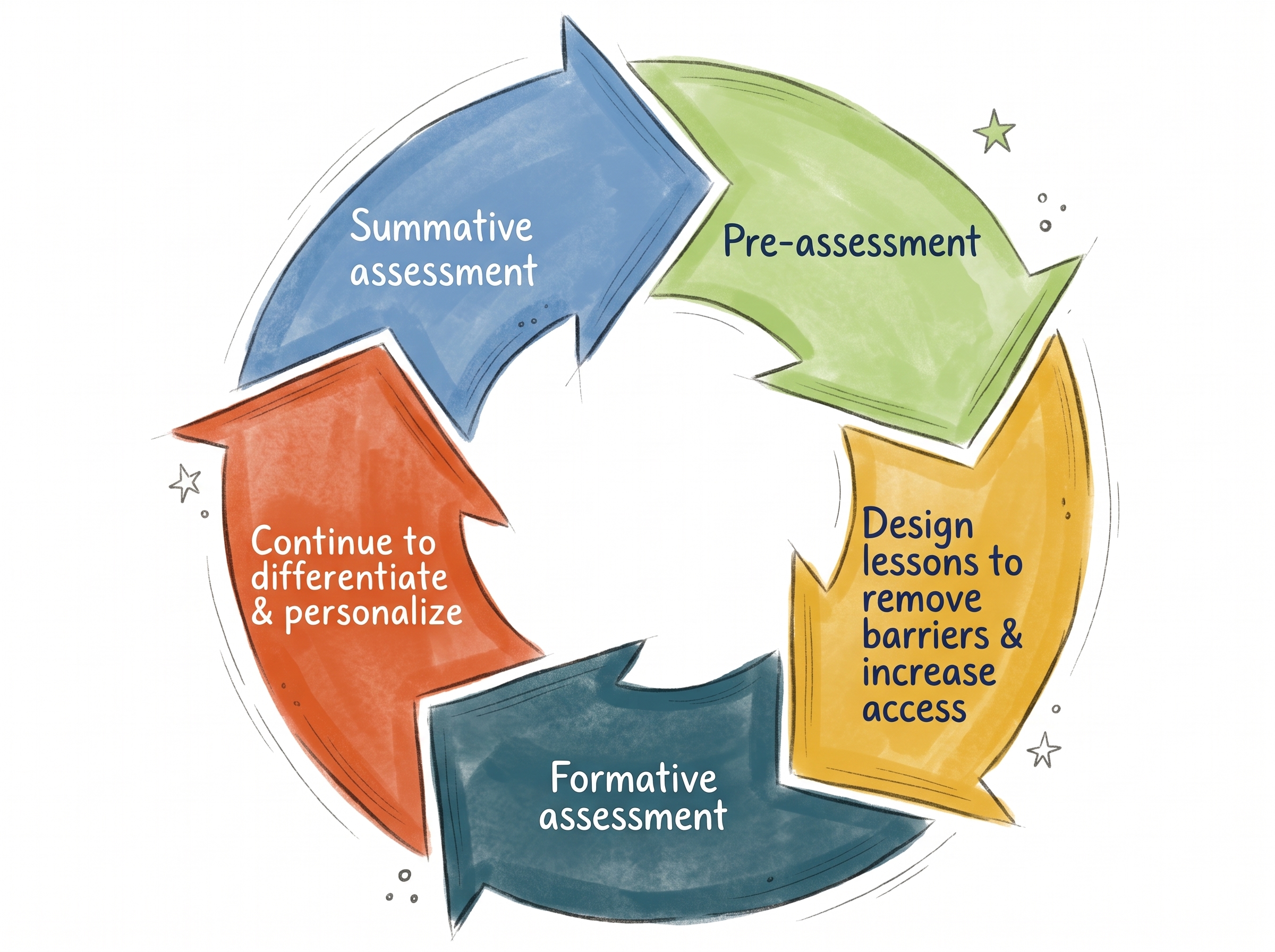
I encourage teachers to think about data and differentiation as part of a continuous cycle of assessment, instructional design, and adjustment. Pre-assessment data helps us proactively design learning experiences that anticipate students’ needs. Ongoing formative assessment data helps us respond to students’ needs as they engage in learning. Summative assessment provides evidence of what students have learned at the end of the learning sequence or unit that can inform our next instructional decisions.
Proactive Differentiation: Using Pre-Assessment Data to Anticipate Needs
Proactive differentiation begins before instruction. It requires us to anticipate learner variability and intentionally design for differences in students’ knowledge, skills, and needs. Teachers use pre-assessment data to identify what students already know, understand, and can do relative to a specific learning target. This includes assessing the foundational concepts and prerequisite skills students will need to engage successfully with the upcoming lessons. Without this information, we risk designing instruction that assumes students have a foundation they may not yet have.
For example, a pre-assessment might reveal that some students are missing prerequisite skills, others have a partial understanding of a target concept, and a third group has already demonstrated proficiency. Instead of delivering the same instruction to every student and waiting to see who struggles, the teacher can use this information to make intentional design decisions. A teacher might plan targeted small-group instruction, create scaffolded learning experiences, adjust the complexity of tasks, or provide opportunities for students to extend and apply their learning.
The goal isn’t to create an entirely different lesson for every student. It’s to use the evidence of students’ strengths and needs to make instructional design decisions that increase access, support, and challenge.
Responsive Differentiation: Using Formative Assessment Data to Adjust Instruction
Even when teachers proactively design differentiated learning experiences, they cannot anticipate every challenge students will encounter or predict exactly how their understanding will develop. Responsive differentiation involves using ongoing formative assessment data to make informed adjustments to instruction and support.
As students engage in learning, teachers gather evidence through questioning, observation, discussion, student work, self-assessment, formative feedback, and checks for understanding. The evidence provides insight into how students are progressing, where misconceptions are emerging, and when students are ready for additional challenge. Teachers can use that information to adjust the pace or complexity of instruction.
Responsive differentiation can happen in the moment or between lessons. Teachers may notice a misconception during a small-group lesson and address it immediately. Alternatively, they may analyze exit tickets after class and use that information to adjust the next day’s instruction. In both cases, the assessment evidence informs the instructional response.
Comparing Proactive and Responsive Differentiation
| Proactive Differentiation | Responsive Differentiation | |
| Assessment | Pre-assessment and diagnostic | Formative assessment |
| Guiding Question | Where are students beginning in their learning? | What do students need to continue progressing? |
| Timing | Before instruction | During and between lessons |
| Purpose | Anticipate needs and design appropriate learning experiences | Monitor progress and adjust instruction to address emerging needs |
| Instructional Decisions | Flexible groupings, scaffolds, pre-teaching vocabulary, targeted instruction, task complexity | Flexible regrouping, feedback, guided practice, reteaching, additional support or challenge |
These are not two separate and competing approaches. They are interconnected parts of an ongoing process designed to meet the diversity of needs in classrooms. Evidence collected during one lesson can inform how we proactively design the next.
What Do Proactive and Responsive Differentiation Look Like in Action?
Let’s explore how a teacher might use proactive differentiation and responsive differentiation within a single learning sequence.
Step 1: Begin with a clear learning target and pre-assessment strategy
Imagine a middle school math teacher preparing to teach students how to solve multi-step equations. Before beginning instruction, the teacher administers a brief pre-assessment that asks students to solve a few equations of increasing complexity and explain their reasoning. The goal isn’t to assign a grade; it’s to understand what students already know and where they might need support. The result reveals three general patterns:
- Some students struggle with prerequisite skills, including integer operations and one-step equations.
- Other students can solve one- and two-step equations but struggle when variables appear on both sides.
- A third group demonstrates proficiency with multi-step equations and is ready to apply their understanding to more complex problems.
This information gives the teacher a clearer picture of students’ readiness than simply starting with whole-group instruction. Pre-assessment doesn’t need to be long or formal. A short skill check, quick write, concept map, error analysis activity, or small-scale performance task can provide valuable information. The key is to design pre-assessments that produce actionable evidence aligned with the learning target.
Step 2: Use pre-assessment data to proactively differentiate instruction
As the teacher plans the learning experience, they use pre-assessment evidence to identify the instructional support, scaffolding, and level of challenge different students need. For example, the teacher might provide worked examples and visual representations for students who need additional support, make reference materials available to students who are still developing proficiency, and create opportunities for students who demonstrate mastery to explore more complex applications of the learning target. These decisions allow the teacher to plan instruction that is appropriately challenging and aligned to students’ starting points.
With these needs in mind, the teacher designs a lesson using the station rotation model to differentiate instruction. At the teacher-led station, students receive targeted instruction based on their specific needs. One group works on prerequisite skills, using explicit modeling, guided practice, and scaffolding. Another group focuses on solving equations with variables on both sides and explaining their reasoning. The third group explores more complex equations, analyzes multiple solution strategies, and applies their skills to challenging problems. The teacher can use an “I do, we do, pairs do” structure to gradually release responsibility while adjusting the level of modeling, scaffolding, and complexity for each group.
Meanwhile, students engage in meaningful learning activities at the other stations that align with the learning target but do not depend on the teacher for support. This example illustrates how proactive differentiation translates assessment evidence into intentional instructional decisions. The teacher uses what students already know to plan targeted instruction, select appropriate scaffolds, and adjust the complexity of learning activities before instruction begins.
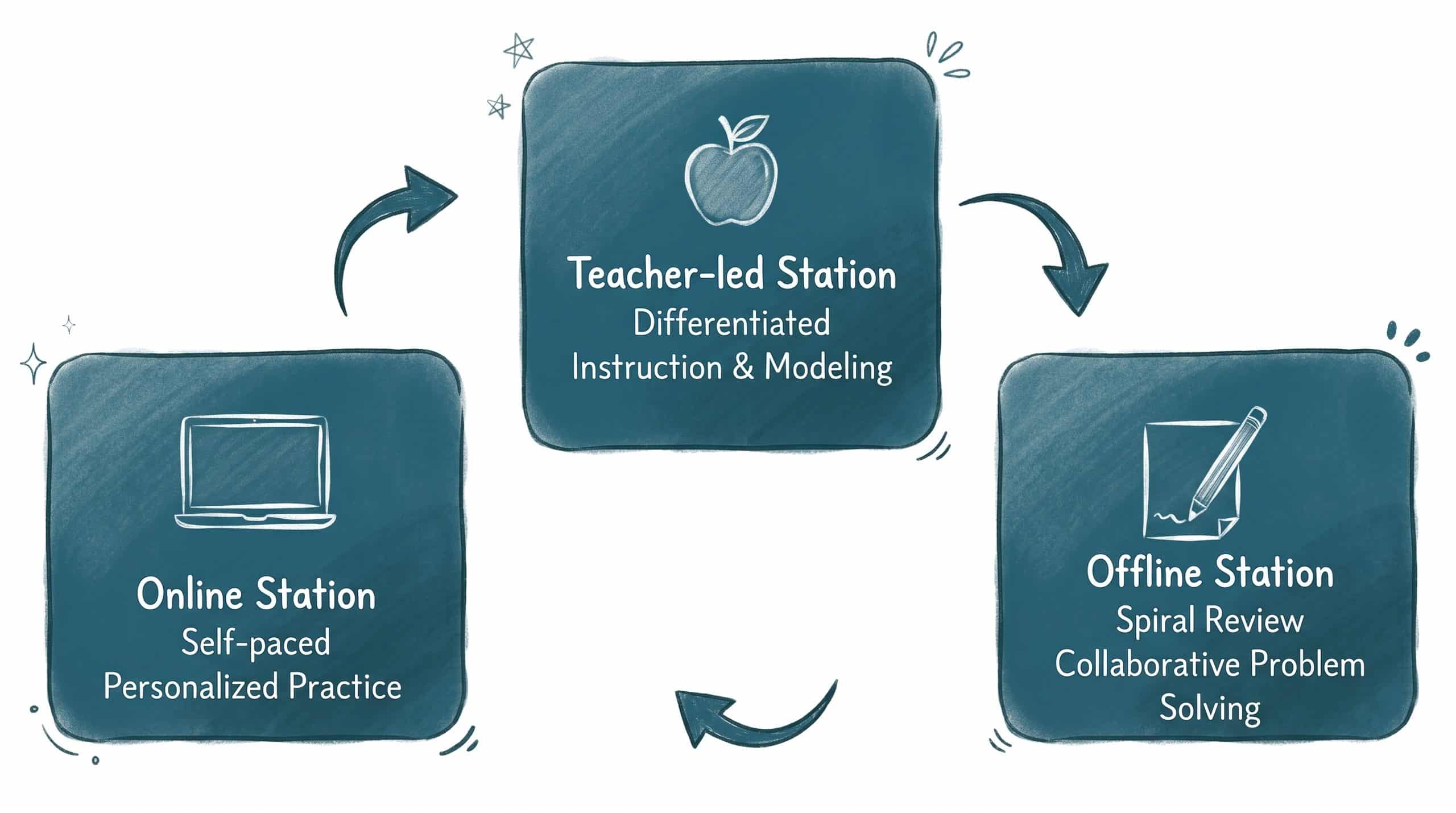
It is also important to recognize that grouping students is not, by itself, differentiation. Differentiation happens when the teacher adjusts instruction, scaffolding, feedback, practice, and challenge based on what the data reveals. Although the station rotation model provides a useful structure for differentiated small-group instruction, proactive differentiation isn’t limited to this model. Teachers can use pre-assessment data to design whole-group instruction, anticipate misconceptions, plan purposeful pauses for processing, select appropriate scaffolds, or create more challenging applications of a skill.
Step 3: Embed formative assessment throughout the learning experience
Once instruction begins, the teacher continues gathering evidence of student learning. During the teacher-led station, the teacher listens to students explain their reasoning, observes their problem-solving strategies, and asks questions that make their thinking visible. At the other stations, students might engage in error analysis, explain their solutions to a partner, or complete a spiral review to revisit previous material.
The teacher might use an exit ticket asking students to solve an equation and explain a key step in their process. These formative assessment strategies provide information about how students are progressing toward the learning target. I encourage teachers to embed these opportunities throughout instruction rather than waiting until the end of the lesson.
For example, the chunk-pause-process cycle creates opportunities for teachers to pause instruction and engage students in meaningful processing activities. Cooperative learning strategies, quick writes, retrieval practice, and structured partner conversations can make thinking visible while actively engaging students in the learning. The goal is to gather evidence that helps answer the question: What do my students need to continue progressing in their learning?
Step 4: Use formative assessment data to respond to students’ needs
As the teacher reviews students’ work and listens to their explanations, new patterns emerge. Several students who initially struggled with prerequisite skills may be making progress and ready to work on more complex equations. A few students who appeared proficient in the pre-assessment may be having difficulty applying their skills to unfamiliar problems. Another group shares a misconception about maintaining equality while performing operations on both sides of an equation.
This new evidence informs the teacher’s next instructional decisions. The teacher may regroup students for the next station rotation, provide targeted instruction to address that shared misconception, gradually remove scaffolds for students who are making progress, or offer additional challenge and complexity to students who are ready to extend their learning.
Notice that the groups are not fixed. Students move between groups as their understanding develops and their needs change. This flexibility is essential. Students’ learning needs are not static, so our instructional decisions shouldn’t be either. The teacher can continue the cycle of gathering evidence, interpreting students’ needs, and making adjustments throughout the learning sequence.
At the end of the unit, summative assessment provides a broader picture of what students have learned. That information can help teachers evaluate the effectiveness of instruction and identify areas that may need additional attention in future lessons.
Differentiation Is a Continuous Process
Teachers cannot anticipate every learning need, and they shouldn’t be expected to make every instructional decision in the moment. Proactive differentiation allows us to use what we know about students’ prior knowledge, strengths, and instructional needs to remove barriers and design appropriately challenging learning experiences before the lesson begins. Responsive differentiation allows us to remain flexible, using evidence gathered during learning to adjust instruction as students’ understanding develops. Both approaches are essential to ensuring students receive the support and challenge they need as they progress toward learning goals.
These approaches work together to create environments in which students have access to meaningful learning experiences, receive the support they need, and are appropriately challenged. When we view differentiation as a continuous process rather than a collection of strategies we use when students struggle, we can move beyond reacting to learning challenges and begin designing with learner variability in mind.
Differentiation Doesn’t Have to Be Done Alone
Using assessment data to proactively design and responsively adjust instruction takes time and intentional planning, but teachers don’t have to do this work alone. Teaching teams can collaborate to design common pre-assessments and formative assessment strategies aligned with their learning goals. They can analyze the evidence together, identify patterns in students’ strengths and needs, and brainstorm ways to differentiate instruction.
School leaders can support this work by creating dedicated time in professional learning communities (PLCs) for teachers to engage in this process. Instead of spending that valuable collaborative time primarily on logistics or administrative tasks, teams can focus on what the data reveals about student learning and how they will respond instructionally. This not only makes collaborative planning time more meaningful and productive, but it also distributes the work of designing differentiated learning experiences across a team or PLC, rather than leaving individual teachers to figure it out on their own.
No responses yet