
Related Podcast
Research suggests the jigsaw strategy can have a significant impact on student learning. John Hattie identifies it as having the “potential to considerably accelerate” achievement. Its effect size is comparable to strategies like feedback, lesson design, and integration of prior knowledge.
When you consider what the strategy asks students to do, that impact makes sense. Rather than just reading or listening, they are responsible for making sense of information and supporting their peers in understanding it. This requires them to process information more deeply than they would in a more passive learning experience.
The jigsaw strategy asks students to take ownership of a specific piece of the learning, knowing they will be responsible for helping others understand it. That act of teaching and explaining is one of the most effective ways to deepen understanding. Students must determine what matters, organize their thinking, and communicate it clearly, all of which contribute to meaning-making.
Why Jigsaw Works
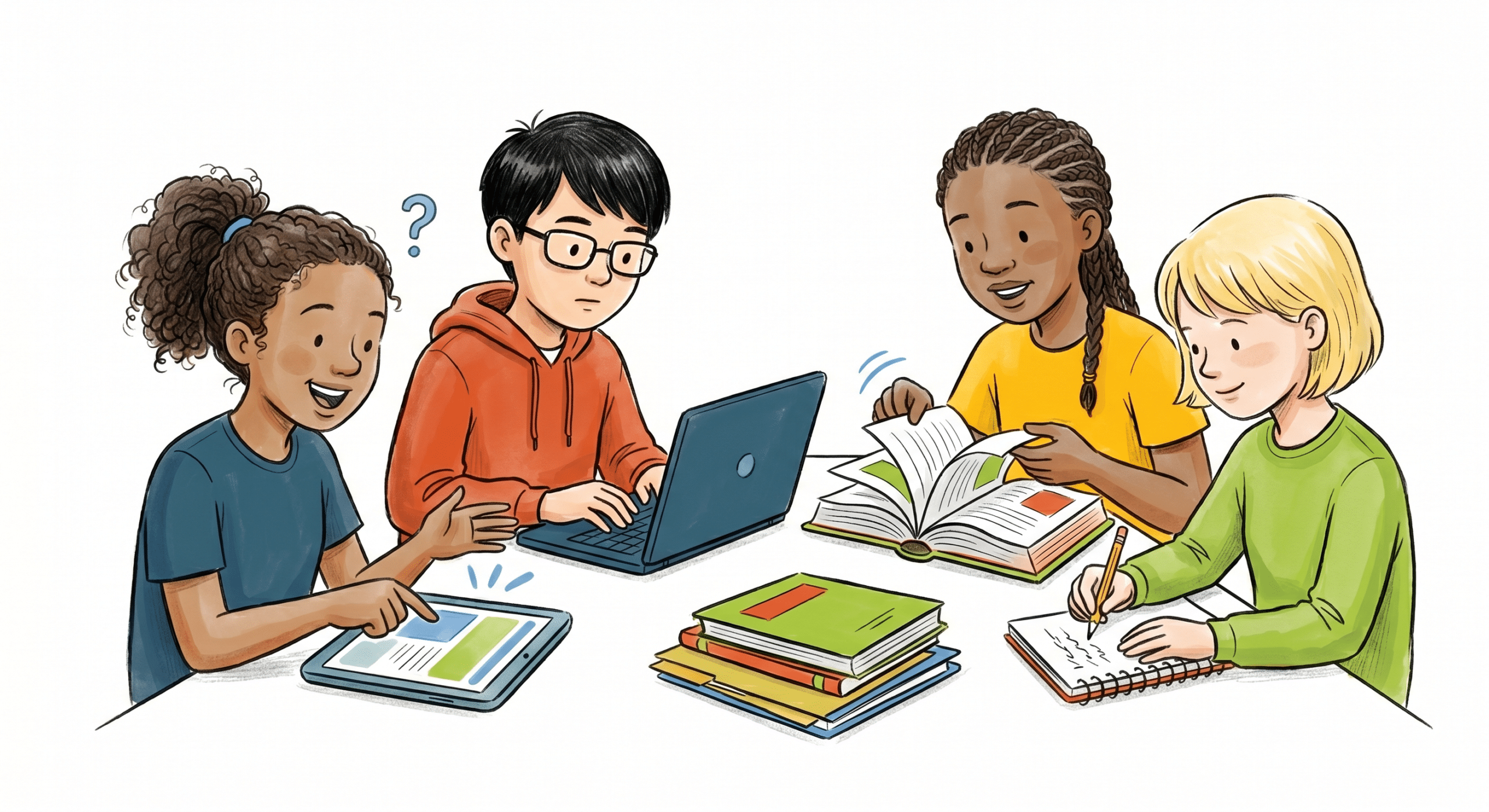
The jigsaw strategy positions students as active participants in the learning process. It’s one of the techniques that Dr. Novak and I featured in The Shift to Student-Led because it creates opportunities for students to engage in discovery, construct meaning, and learn from one another. Rather than passively receiving information, the jigsaw asks students to take responsibility for making sense of content and helping their peers understand it.
This approach provides students with opportunities to:
- Develop expertise on a topic, text, concept, or issue.
- Explore information at a pace that works for them.
- Discuss their thinking and confirm their understanding with classmates.
- Teach their peers, which reinforces their own understanding.
As students become “experts” on their topic, they must think critically about information, identify the most important points related to their content, organize their thinking, and communicate clearly to help their peers understand. All of this requires students to engage cognitively with the content.
Let’s start with a quick overview of how the jigsaw strategy works.
The Jigsaw Strategy: How It Works
In a traditional jigsaw activity, students begin by working in “expert groups” to develop a deep understanding of one piece of a larger topic. Once they’ve developed their own expertise on their content, they regroup and teach what they learned to their peers.
The process typically follows these steps:
Step 1: Divide the Content
Break the larger text, topic, concept, or process into several smaller sections. The teacher can either assign each group a section to investigate or give students the agency to choose a subtopic that interests them.
Step 2: Explore & Develop Expertise
Students work with their expert group to investigate their topic. When possible, teachers should provide students with multiple pathways to explore the information, allowing them to read, listen, or watch to learn more about their topic. Providing multiple means of representation can remove barriers so all students can access the information. I also recommend that the teacher ask students to capture their notes as they explore. If students need scaffolding and support, providing concept maps, graphic organizers, or guided notes can help them identify key terms and concepts as they explore the material.
Step 3: Prepare to Teach
Expert groups work together to identify the most important information and figure out how they can effectively teach each other. They may collaborate to create a visual (e.g., a poster or slide), a flowchart, a concept map, an outline of key points, or another artifact to use when presenting their content to peers.
Step 4: Jigsaw Time!
An expert from each concept area joins together to create a new “jigsaw group.” Each expert teaches their section to the group. As they present what they have learned, the group focuses on active listening, asking questions, and taking notes.
If teachers are concerned that presenting might feel overwhelming for individual students, they can strategically pair students to move through this process together. Partners work together to develop expertise on their assigned topics and then collaboratively teach their peers what they learned during jigsaw time. Although the jigsaw groups will be larger because each content area is represented by two students, the shared responsibility can increase confidence, support participation, and make the experience more enjoyable and less overwhelming for students.
Step 5: Synthesize Learning
After all experts have shared, students reflect on all of the parts of the topic, text, process, or issue. They may make connections, engage in conversation, create a visual, complete a writing task, or pull their learning together. This task should help them deepen their understanding of the topic as a whole.
This final step also provides the teacher with valuable formative assessment data. These final activities can help teachers informally assess how effective the jigsaw was in helping students learn the content. If gaps, misconceptions, or misunderstandings surface, teachers can address them specifically.
Using The Jigsaw Strategy in a Station Rotation
While many educators associate jigsaw with whole-class lessons, it can also be a powerful addition to the station rotation model. By embedding an “expert investigation” into one station, teachers can increase student ownership, collaboration, and cognitive engagement. A station dedicated to learning about a specific topic that students know they will be responsible for teaching the next day also creates a higher level of accountability for the work happening at the station.
In a station rotation, the jigsaw strategy can be embedded in one station in the rotation as an “expert investigation” experience. At this station, students work in small groups to explore a specific concept using curated resources and guiding questions. Together, they build their understanding and capture their thinking in a format they can use later to teach their peers.
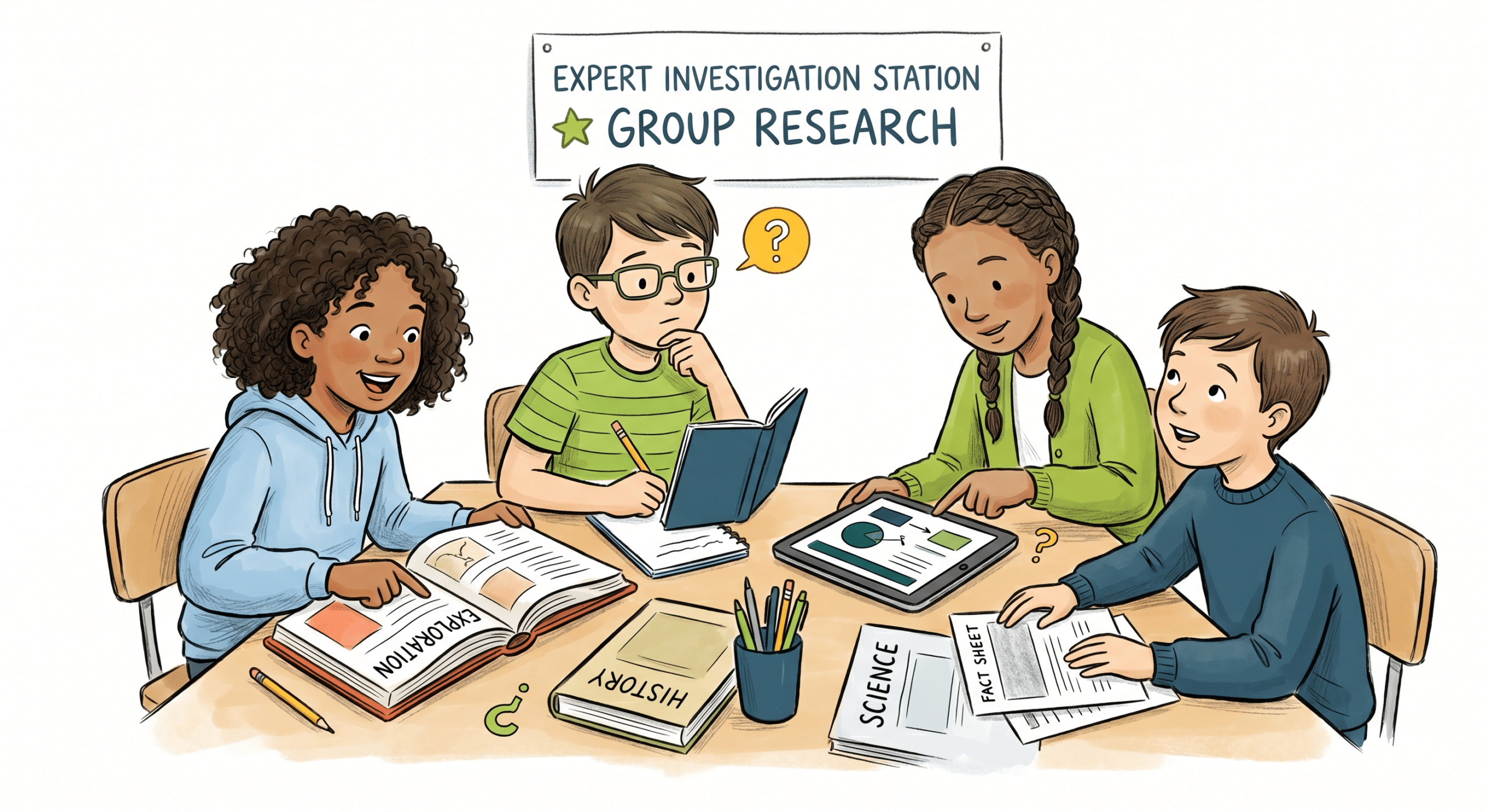
As groups of students rotate through the expert investigation station, each group focuses on a different section of content. For example, in the first rotation, the group will explore part one of the content. In the section rotation, the group will explore part two of the content. This approach preserves the structure of station rotation while encouraging cognitive engagement at the expert investigation station. The goal is not simply to complete a task, but to develop enough clarity and confidence that they can support others in learning that content.
AI Integration: Teachers who want to provide multiple pathways into the information to address learner variability and support meaningful choice can create a NotebookLM for each section of the content and use the studio tools to create a video, podcast, explainer, infographic, slide deck, etc. on each topic. That way, each group has a link to their notebook of resources and can explore the information in a format they think will be most accessible.
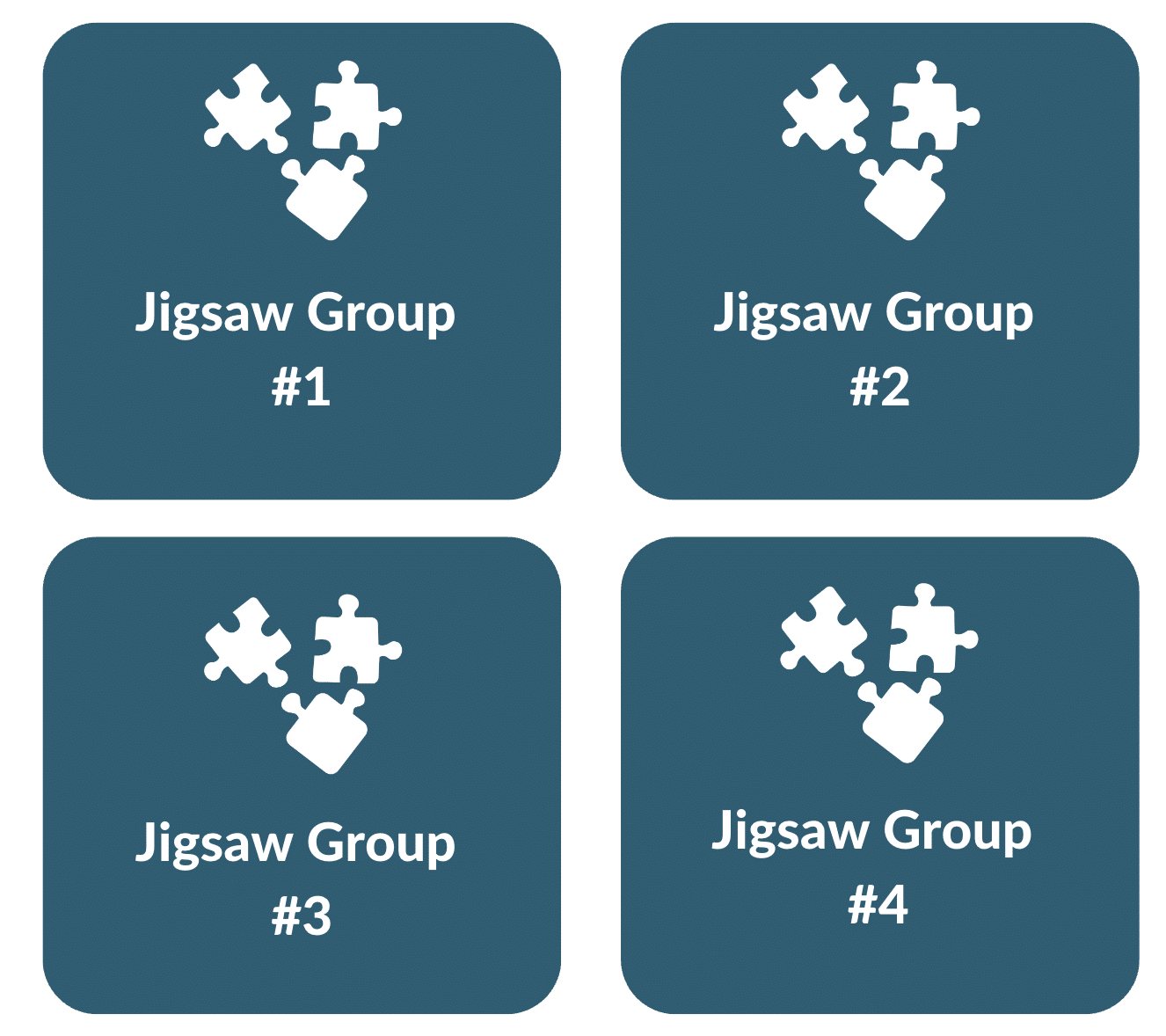
Then, in the jigsaw phase, which will likely take place in the subsequent lesson, teachers have the option to run part two as another station rotation or a whole-class experience. If teachers want to use a station rotation for part two, they need to regroup students so there is an expert from each section of content grouped together. Then one station is the jigsaw station, where they teach each other.
Day 1: Station Rotation (Part I)
Day 2: Station Rotation (Part II)
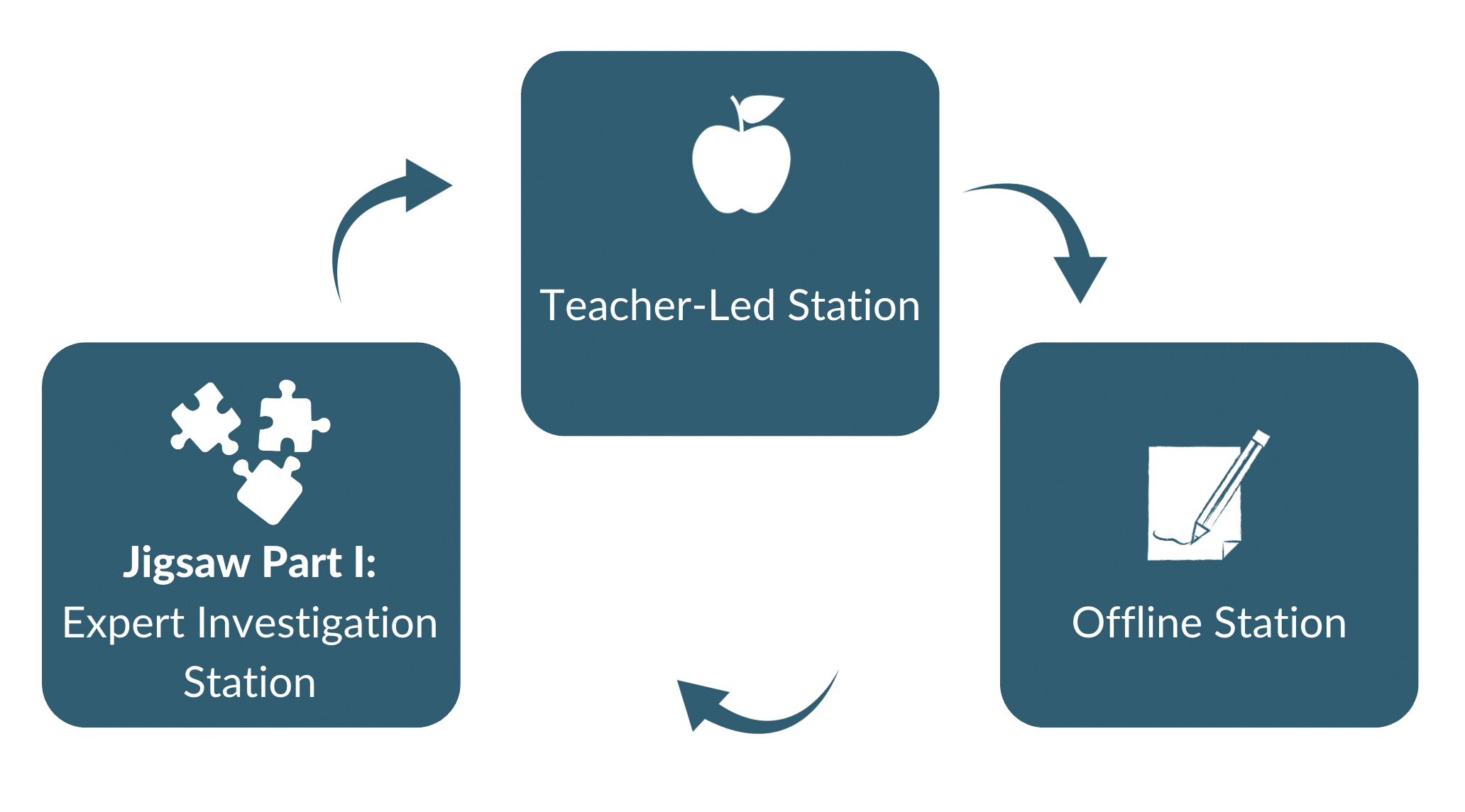
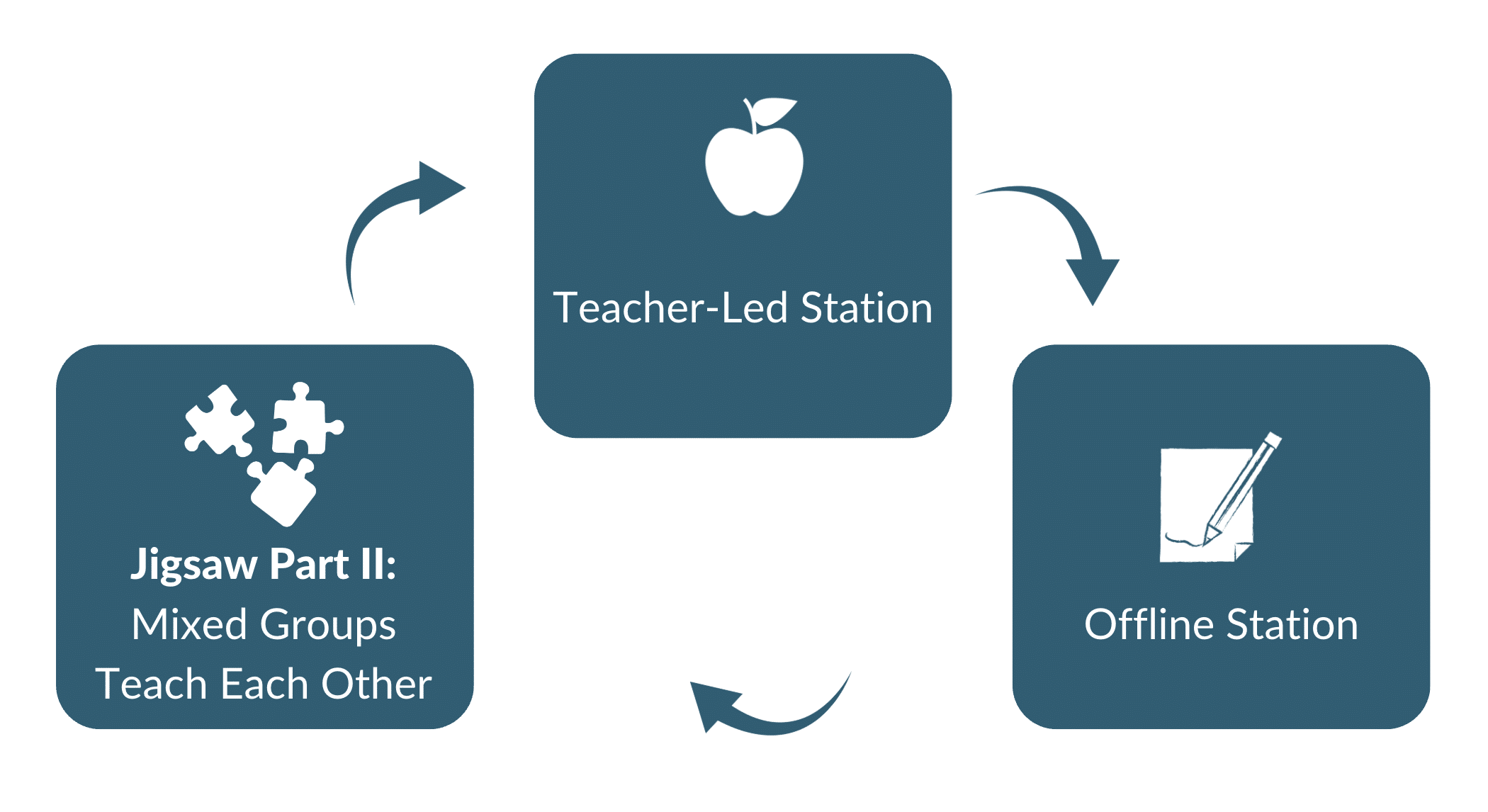
Alternatively, teachers can use a whole-group lesson and have jigsaw groups teach each other simultaneously.
Day 1: Station Rotation (Part I)
Day 2: Whole Group (Part II)
FAQs
This strategy does introduce one more moving part to the station rotation method. Here are some questions I receive often in my sessions:
Q: What if students don’t learn the information I want them to learn?
A: This concern comes up often, and it is valid. When students are responsible for teaching each other, it can feel risky. That is why it is important to pair this strategy with ongoing formative assessment. By intentionally checking for understanding throughout the process, teachers can identify gaps and step in with targeted support when needed.
Q: What if a student doesn’t take it seriously and ruins it for their group?
A: One advantage of the station rotation version is that students are working collaboratively to develop expertise, which reduces the likelihood that one student is solely responsible for the learning. If you are concerned about the teaching phase, you can also have students present in pairs so the responsibility is shared.
Q: How do I ensure all students are actively participating during the jigsaw phase?
A: This comes down to structure and expectations. Providing clear roles, setting time boundaries, and using accountability tools like note-catchers or reflection prompts can help ensure that all students are engaged in both teaching and learning. Over time, students become more comfortable with these roles as they gain experience with the process.
Q: How can I support multilingual learners or students with IEPs or 504 plans who may struggle with the information?
A: One way to differentiate this activity is to make the information available in multiple formats. This is a place where AI tools can be especially helpful. Teachers can adapt a single text into audio, simplified language, or visual formats, allowing students to access the content in ways that align with their needs.
In addition, teachers can provide scaffolds such as guiding questions, sentence stems, or partially completed graphic organizers to support students as they process and prepare to teach the information. Strategic grouping and clearly defined roles can also help ensure that all students are able to participate meaningfully in the learning experience. These supports help ensure that all students can access the content and contribute to the group.
The Goal: Cultivate Independent Learners
In many ways, it is easier to simply deliver the information ourselves. It feels more efficient and more controlled. However, that approach can work against what we are ultimately trying to cultivate in students.
As students move through their academic careers, they need to become more capable of making sense of information, communicating their thinking, and learning with and from others. Strategies like jigsaw create structured opportunities for students to practice those skills.
When students are responsible for understanding content well enough to teach it, they are engaging in deeper cognitive work. They are moving beyond just consuming information; they are processing, organizing, and communicating it in ways that support both their own learning and that of their peers. Those are the skills that extend beyond any single lesson or classroom.
4 Responses
This is a brilliant breakdown of pairing the jigsaw strategy with the station rotation model! Embedding the “expert investigation” phase into a single station is a fantastic way to drive student accountability and deep cognitive engagement without overwhelming the classroom layout. I especially appreciate your realistic approach to the logistics—using strategic student pairings and leveraging AI tools like NotebookLM to remove barriers for diverse learners is incredibly practical. This is a must-read, highly actionable piece for any educator looking to cultivate true student independence!
Thank you, Liz. I am thrilled this was helpful. The jigsaw is an effective strategy for shifting students to the center of the learning experience. I want more teachers using station rotation to feel confident using it.
Best,
Catlin
Do you have examples/suggestions of how this would work in a middle school math classroom? (Is this part of your asynchronous course?)
Hi Kristin,
Absolutely! While the jigsaw is often associated with reading and discussion, it can work really well in math when students become experts on different strategies, concepts, or problem types and then teach their peers. For example, in a middle school unit on solving equations, each expert group could investigate a different type of equation: One-step equations, two-step equations, equations with variables on both sides, and equations with the distributive property.
Each group would:
—Learn the process and reasoning behind their equation type.
—Solve several examples together.
—Identify common mistakes students make.
—Create a simple visual or anchor chart to support their explanation.
Another option is to focus on different problem-solving strategies. For example, in a proportional reasoning unit, expert groups could explore tables, graphs, equations, and double number lines. Students then teach their strategy to peers and compare the strengths and limitations of each approach.
Unfortunately, I did not include this in my course, so I hope that is helpful.
Best,
Catlin